Slipping into extremes

One time in a class discussion I was leading, a conversation between two students started to get heated. They had opposing views: specifically, one student very much identified as a feminist and the other student did not. But I simply said that there were tradeoffs with both of their views. On one side, they would lose some nuance about unique, person and individual experience. On the other side, they would lose being able to look at and figure out solutions to systemic problems. It wasn’t that one person was right, and one person was wrong, but that they had different possible solutions to the same problem. Both were valid and might work, and both involved both some tradeoffs and different prioritizations.

But when I read things on the internet, I don’t often hear the sort of language. Mostly, I hear people telling others to pick one side or the other and that there is nothing good on the other side. I have heard this in many different discourses: politics the most strongly, but also in workplace, religious, and other environments as well.

Some problematic examples:

  • We should not trust experts who came from an elite, problematic academic setting.
  • Anyone who is pro-Palestinian is also antisemitic; anyone who is pro-choice is pro-abortion; anyone who is pro-LGBTQ rights is anti-family; anyone who is anti-racist is anti-white.
  • If you are a member of a certain church, you are part of a cult and have been subject to brainwashing.
  • MLMs are evil and anyone associated with them should be avoided.
  • If you are crunchy, you are also anti-vax and part of the alt-right pipeline.
  • Homeschooling is the only right way to raise your kids. -or- Homeschooling is child abuse.

The opposite of some of those views can also be problematic.

There is a lot of rhetoric that is simply “anti-” right now. Anti lots of different things, on all sides of the spectrum. But maybe we should just be anti-extreme? Maybe we should focus more on being good people instead of arguing and vilifying others?

I have a professor who gave some really good advice: until you understand the appeal of a different viewpoint, you can’t really argue against it. You have to understand enough that you can see why people think that way and that it makes sense. And then you can argue against that view.

I remember listening to a student who was arguing against a specific viewpoint, but did not yet understand it. That viewpoint seemed almost nonsensical to them, so it was easy to argue against it. But I knew and had talked to a professional who worked in that area, I realized that the student’s formulation was simply incorrect. They had completely missed this whole piece of the puzzle.

Not understanding other people and other views quickly leads to extremism. Extremism is not simply holding an extreme view, but thinking that any other view is incorrect, evil, or something to be feared.

Sometimes, when someone holds a reasonable view, they can get attacked by those who disagree with them. This sort of attack usually doesn’t lead to a change of a views, but to doubling down, moving to a more extreme side, and sometimes engaging in hate and bullying behavior.

We need to return to a better understanding of one another. I have my own views and my own opinions, but usually things are so nuanced and complicated. There are problematic views and solutions that don’t work very well, but there’s very rarely only one side of an issue and only one solution that would work. Even if truth is simple, life is still complicated.

There are good things that I am going to stand up for: I believe in compassion and care to individuals. I believe that we should support those who are struggling and need help. I believe that we should often refrain for judgment and get to know people first. I believe that the world needs to be improved, and that we should work on creating value and solving problems.

I believe that sometimes, I don’t understand an issue, and that I should spend more time listening.

I have tried to avoid snark and judgmental rhetoric that, while entertaining, is not uplifting or useful. I have tried to view sources and news stories that give multiple sides to an issue. I have tried to remember that things can get complicated and people make mistakes.

I want to see more respect in our rhetoric, a movement away from extreme views and towards more kindness to each other. We won’t always get it right, but we can keep trying.

Judging Others

We all judge other people. We do it daily. It’s super easy to say that someone hasn’t done the right thing. But it’s a lot harder to actually live and make those decisions and try to do your best.

The fact is, we all struggle, we all fail, and we all succumb to weakness.

So how do we stop judging other people?

Well, first, sometimes we can just keep our mouths shut. That’s always helpful.

Second, we can remember that we don’t need to condemn individuals and their actions–that’s not our job. We are usually not in a position where we need to determine if someone else’s actions were right or wrong. It’s not helpful to our friends and family; they need our love more than they need our advice about what to do or our opinion about what they have already done. And when we judge strangers, we pretty much are guaranteed that we are getting it wrong anyway.

That’s not to say that we have to be completely tolerant and say that morals are relative and everyone can make their own decisions and there is no right or wrong. There still can be right and wrong, good and evil–but we don’t need to go around applying those standards to individual actions we see or hear about and then condemning people and calling a person right or wrong, good or evil.

We can determine if something is right or wrong for ourselves. We don’t usually need to do that for anyone else. They are responsible for their own actions, and they are not accountable to us for them.

Of course, there are times when judgment is helpful–usually when someone else’s actions directly affects our lives. Sometimes we may have to separate ourselves from people in some way because they have a negative impact on our own life. But that doesn’t mean that we have to harshly judge them in the process. We can still hope for the best and give people space to choose right and wrong.

I make thousands of mistakes; I hope people will give me the benefit of the doubt and know I’m still trying to do the right thing. I want to do the same for others. I want to judge less and love and support a lot more.

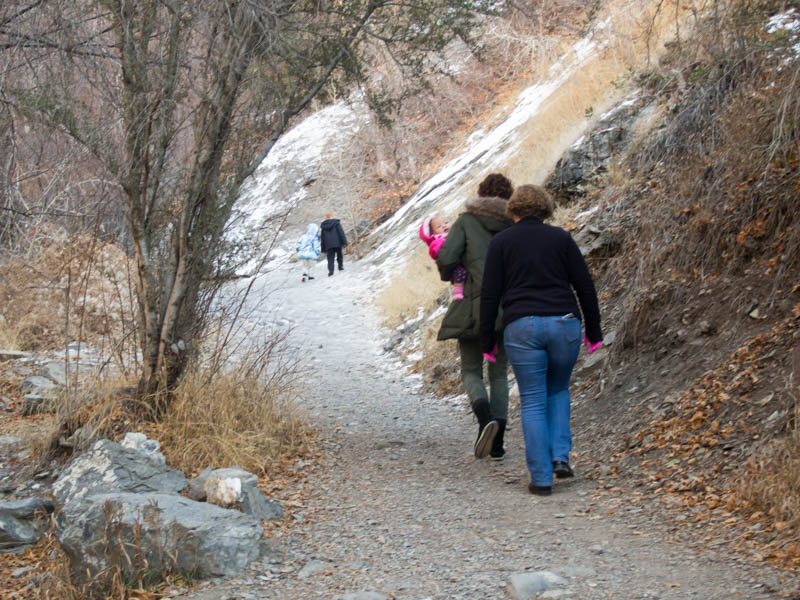
We’re in this together and we’re usually trying to head in the same direction. It’s better to keep hiking and to help people up than to point and laugh when they fall.

OLYMPUS DIGITAL CAMERA

5 Ways to Serve

1_WbJGuDw-7ZTaaPGuHR5xJA

I like to think that I am a selfless person who serves others, but the reality is that sometimes I’m as self-obsessed as anyone and my service attempts can be pathetic attempts to make myself feel better instead of actually helping anyone.

Last year, I set a goal to serve someone every day and write it down. I didn’t want to serve just so I could check it off my to-do list; I want to genuinely love and help other people. But I’m not always in the right mindset, so I set the goal as a reminder to think outside myself.

This is some of what I learned:

1. Serve small.

Often we want to make a big difference. We want to change the world. We want to give away a million dollars, start a new organization, and travel to faraway countries. We think that if we serve, we need to do it in really big ways. And then we don’t do anything.

I have been guilty of getting excited over giving away hundred of dollars to some great cause and then refusing to give away a single dollar at a grocery checkout. I want to make a big difference and in the process, I forget to do small, daily things.

Often we want to serve in big ways to make ourselves feel better. I truly believe small things can make a bigger difference than those really big things. Small things can happen consistently in a way that changes ourselves and the people around us.

Once, when my husband was in surgery, my uncle called me. He just called. It was a small thing, but it meant so much to me. It helped me know that I wasn’t alone, and that was what I needed the most.

If we think about true friendship, it exists in small things — a text, a smile, a single conversation, or a small and thoughtful present. Most people around us need support in small ways, and if we are too worried about doing big things to make ourselves feel better, we forget to take the time to say hello, to respond to an email, or to reach out and listen for a few minutes.

People don’t need us to solve their problems and change their whole lives; mostly, they just need a friend who will consistently be there for them.

2. Think about people.

Service isn’t about dollar amounts and hours spent. Service is about people. The people that you know and the people that you come across in your daily life are the people who need you.

We all have our struggles. The rich and famous need help and love sometimes, just like the poor and forgotten. It’s easy to want to help destitute strangers; it’s a lot harder to really get to know someone and support them in a meaningful way.

Often, we serve in ways that make us feel good, but they are not actually helping any specific person. For example, we might feel good about donating specific items — food, stuffed animals, blankets, whatever. We can imagine how those items could help some stranger. But giving stuff and money isn’t as valuable as giving of ourselves.

I try to think of my children, my family, and my neighbors — the people I see every day. They often need help, and I can do the the little that I can.

When I found out my sister was pregnant, I wanted to do something for her, even though I lived hours away. So I ordered her pizza for her family. I would have never thought of it unless I was thinking of her specifically and wanting to help her out.

3. Don’t judge.

It is so easy to judge people who are having a hard time. It’s so easy to say that they aren’t coping very well; they are at fault; their problem would go away if only they could be better.

Often, we refuse to give because we judge.

Stop the judgment and just give anyway.

Your money may not be used in a way that you would agree with. You might be hurt sometimes. You might be rejected. You might find yourself needing to forgive someone.

But forgive. And don’t expect anyone to be perfect. We all make mistakes. We need help because we make mistakes. We need to teach and help each other to become better. We need to have hope that people can genuinely change.

We need love without judgment at certain times in our lives; and we can give that love to others.

Many times when I have struggled with some mental health issues, my mom has taken the time to listen to me, without judgment. It helped me get through that moment and to know that I was still worthwhile.

4. Be present.

Our phones and social media can often take us away from the people we need to serve the very most.

Look up and around you. Notice the people that are there. Take the time to be present with what is actually happening in your life.

Writing texts or commenting on posts or reading the news are not bad things to do — but sometimes we can get so caught up in the scrolling that we never bother to look up and see who is next to us.

We can be kind to the people we encounter at school, work, and wherever else we go. We can be present in our own homes and our own families. And when we are present, we might discover that the people that need our help the most are right there. Just look up.

Often we can intentionally plan for ways to serve others; but sometimes service must be spontaneous, a response to a feeling that we might not fully understand.

I was walking through a store when I saw photo album that reminded me of a family member. I almost walked by it, and then I decided to pick it up and buy it for her.

5. Try, even if you are completely inadequate.

Over the years, I have had friends that have had intense and difficult problems. I have wanted to help them, and I didn’t know how. Nothing I could do would solve their problem in any meaningful way.

Sometimes, I was absent because I felt so inadequate. I was worried about saying the wrong thing, thinking that there was nothing I could do.

Sometimes, I have tried and failed. I have gone to help someone and it didn’t work. I have said the wrong thing. I have had awkward conversations that went nowhere. I have offended.

But I’m going to keep trying. Because my imperfect efforts are better than nothing. Because sometimes those awkward conversations actually do help, even a little bit. Because real friends are present in hard times. Because being inadequate is not a good excuse.

I wanted to give my friend flowers when I found out she was going through some hard times. I lived too far away from the store, but I went out and I got some sticks and some pieces of paper and I made her flowers. I’m not incredibly crafty either, but I tried. I almost didn’t give them to her because I felt they were inadequate. But I brought them over anyway. And months later, they are still on her shelf.

Just try. Try even if you aren’t sure how. Try and you’ll find that you become more adequate and more able to help.

Conclusion

Our lives are not really about ourselves. Our lives can be spent in serving and helping the people around us, even in small ways. As we keep trying to make a difference, we will find a greater degree of happiness and love.