Thoughts on higher education

I’ve been a student for somewhere around a decade of my adult life and taught some college classes.

There is a lot of things I like about higher-education:

  • Getting a well-rounded education and learning about a wide variety of topics that can make you a better person
  • Improving a huge variety of skills: critical thinking, problem solving, reasoning, writing, interacting with people, grit and determination, etc.
  • Training for job skills and other ways to contribute to society
  • Being surrounded by people you can learn from
  • Some professors are just really good at what they do and change students’ lives
  • Learning how to keep learning on your own and what questions to explore
  • Learning how to become a better person in difficult circumstnaces

There are also things I don’t particularly like:

  • Underpaid teachers, particularly adjunct positions
  • Many teachers with limited pedagogical training and poor pedagogical techniques
  • Class size minimums that force large class sizes
  • Grades (grades mean very little, and yet are so important)
  • Large expenses for students for tuition, fees, textbooks, etc.
  • Large student debt without a clear way to pay it back
  • Bias and ideologies, limitations on academic freedon
  • The constant feeling of stress and burnout from both teachers and students
  • The feeling that schools sometimes don’t really care about students

Higher education has enabled me to become a better version of myself and given me opportunities and skills to help others. It’s been worth it to learn and grow and be in that environment.

But I get frustrated sometimes too. There is no perfect school, and no way to build a perfect school. It’s just messy, with some good things and some bad things thrown in there.

I want my kids to go and get a college education, but they need to be smart about it too: don’t go into debt you can’t pay back easily. Remember the values that you have and set good goals and work to achieve them. Find good friends and people that will help you become better. Know that college won’t be perfect, but you can still take charge of your own learning and get what you need to out of it. It’s also okay to fail sometimes, and to take breaks, and to figure out your own path.
Buying and Owning Books

I don’t like buying books. Sort of. Let me explain.

When I own a book and I haven’t read it yet, it makes me feel guilty and weird. It feels overwhelming, like a huge responsibility that I need to read this book, and if I don’t do it soon, I’m doing something wrong.

I know lots of people who own books and they like collecting them and having them and reading them when they feel like it. I am not that sort of person.

What I like to do is read books first and buy them second.

I recently purchased three books. I’ve read them all before, but I loved them, and I want to refer back to them. Those are the sort of books I like to own.

I’m not a big physical book reader. I prefer reading audiobooks and e-books. But I still find physical books handy for reference. I just pulled out an economics textbook the other day to check on something. I like having books on the shelf that remind me of what I’ve read and what I’ve loved.

So this is my ideal way of interacting with books: listen to the audiobook, read it on my Kindle, or read/highlight a pdf. Then if I really love it, I want to buy an actual version of it that I probably won’t ever read, but I will refer back to on occasion.

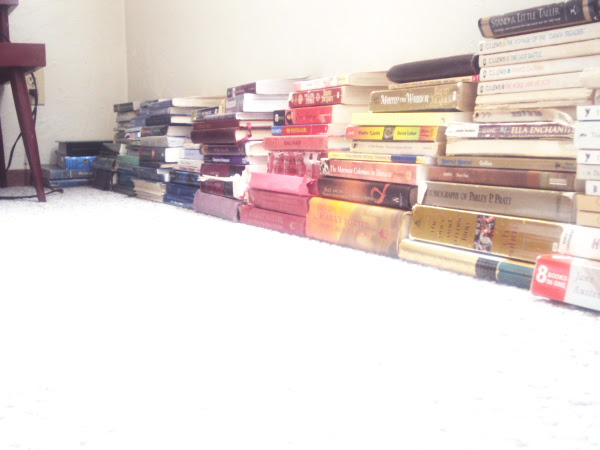
Sidenote: I got rid of all my philosophy books after I graduated from school the first time. I didn’t think I would ever need them again. I sort of regret that, but I also moved a lot, and it isn’t fun to move lots of books around.

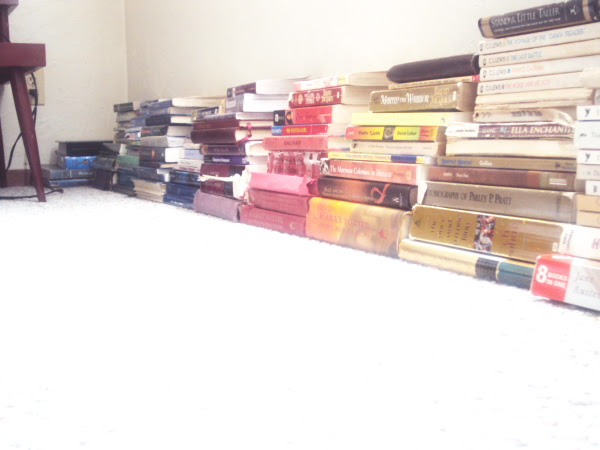
(My books in 2013. I got rid of a lot of them.)

Honesty

I was in a behavioral economics class today, and the teacher mentioned a recent article that talked about how some academics had been faking their data. There is a lot of pressure in academics to get published, and to write papers with interesting results. And so some people manipulate their data in order to get those results.

I did my own study a while back. The results were not conclusive. There wasn’t really much of a statistical effect. And that’s pretty normal, because when you study humans and human behavior, the main result from any study at all is that people vary.

But that isn’t very interesting. So people lie instead. And then there are a whole lot of studies out there that can’t be replicated and don’t mean anything.

There is one pretty well-known study about fines and daycare. The paper says that when late fines were introduced into a daycare system, this actually caused an increase of late parents. But if you look into the study more, it hasn’t been replicated (and some other studies suggest that fines do deter behavior just fine). The data and reporting may not be entirely accurate. So while the result is interesting, it may simply be a fiction.

Scholars need to be more honest when data doesn’t come up with any results. But we also need to be more honest about how most of the results of human behavior studies aren’t that conclusive.

And people need to just be more honest in general.

I’ve been grading a lot of student assignments, and I think at least 5% of the students use artificial intelligence to either help with or do the assignments for them. This is against the class policies. Maybe that’s not a big percentage, but it might be a lot higher, as it can be difficult to actually determine if someone is using A.I. or not. I spend a lot more time grading because I have to try to figure out who is using A.I. or not. It’s not the usage of A.I. that is necessarily a problem, but the dishonesty of passing off A.I. as their own work.

Sometimes I don’t want to trust anymore. I don’t want to trust scholars who have incentives to make up their data. I don’t want to trust students to act with academic integrity.

But I have to trust. And I know that a world where I can’t trust anyone would be absolutely miserable.

I need to work on my own honestly sometimes–I don’t generally lie, but sometimes I will remain silent. Sometimes I need to open up, speak up, and be more vulnerable about where I am at and what I am struggling with.

Maybe some of this dishonest comes from these pressures to perform: publish papers, go to school, get good grades, be successful. And struggling doesn’t feel like an option. Coming up with inclusive results isn’t an option. Running out of time to do an assignment isn’t an option.

We need to be more okay with failure. We need to expect it in the people around us and expect it in ourselves because it’s going to happen. And that expectation can make honesty so much easier.

Graduate School

I have started graduate school. As I walk around campus, I look for people who are my age, and I don’t see many of them. Most people there are younger than me, and many are older than me as well. Sometimes I do feel a bit out of place–I know that there are graduate students my age, but I am settled in my life in a way that feels very unique: happily married, owning my own house, raising four kids.

Sometimes I feel a bit strange going to school. Unattached to my children, I somehow have transported myself to where I was 13 or 14 years ago, and yet I am not the same person. I think about them often, and I feel more alive and more of myself when I look to them.

But now I exist where people don’t know me as a mom of four children. By way of introduction, they want me to state my area of research, something that I am still figuring out. I’m not really figuring out what I want to study–I’m just figuring out the terms of how to categorize it. “Practical reason,” I finally decide to say, and then I add, “And economics,” just because it’s interesting. And I still very much like economics, and find myself slipping an economic term into a philosophy paper because different fields of study aren’t really that different after all.

There is always too much to learn, but I try to be a bit mindful of my time and my resources: I can’t go after every interesting idea and topic, but yet there are so many interesting ideas and topics.

It is a strange thing to tell people that you are getting a Ph.D., but in philosophy. As if the two things cancel each other out somehow. Smart, but completely unpractical. I get to spend years of my life writing things that no one will read, learning things that not many people care about.

But it fits me right now. And every time I learn, I want to maintain in the back of my head: how is this practical? Why would I care about it? Why would other people care about it? And hopefully, find some element of something useful and true in the sea of everything.