10. How do I become more decisive?

  1. Instead of trying to determine the decision with the best results, view life more as an experiment, where the results are unknown and you just have to go for it.
  2. You will choose food that doesn’t taste good and activities that aren’t worth the time and money. You will waste time and effort and energy in choosing something that is not optimal. This will happen no matter how much you try to make the right decision, because you simple don’t have all the options available to you right away.
  3. View decisions as an ability to learn: choose a good option, and then learn if it’s right or wrong for you while you are doing it.
  4. Be patient. Large decisions can take time, and that’s okay. Don’t force yourself to make important decisions you aren’t ready for.
  5. Stop trying to maximize the value you get for your money, and instead just call something good enough.
  6. Set limits, like only looking at the first page of search results when shopping online or only looking in a single store. Purposefully narrow your options so that the decision becomes easier.
  7. Let someone else make unimportant decisions, or decide by default.
  8. Make decisions ahead of time instead of making them in the moment.
  9. Have a fallback that you go to when you can’t decide.
  10. Pretend you are making a decision for someone else.
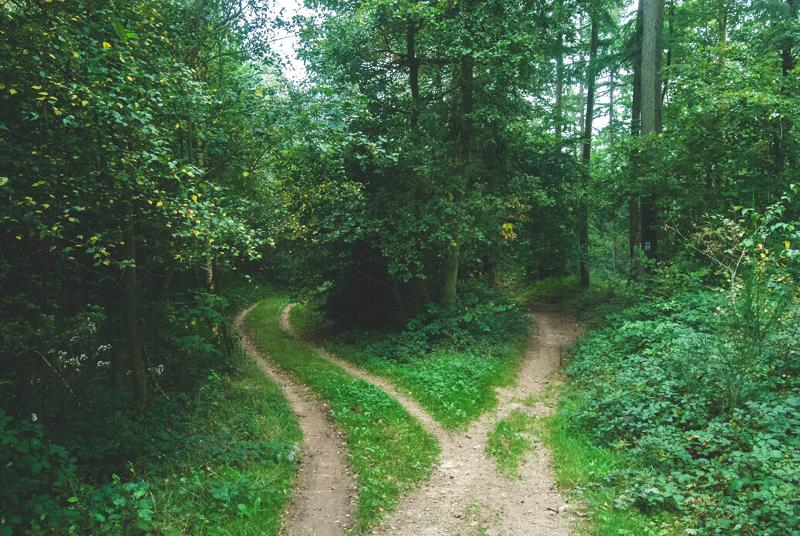
Photo by Jens Lelie on Unsplash

9. Why are the important things in life fleeting and the unimportant things so time consuming?

I’ve been attempting to track my time lately, and in this attempt, I’ve noticed that moments that matter can take a very small portion of my life.

In 10 minutes, I can do something significant: help my children, connect with my spouse, or complete a project that has been on my to-do list for ages. I can say hi to a neighbor, read scriptures, and pick up the house. I can meditate, pray, or exercise.

But then I get stuck trying to buy home insurance or I sort through emails or go shopping or try to find the answer to a simple question on the internet. I can get lost for hours, and at the end of it, I’m not happy with how I spend my time.

There is something named the Pareto Principle that says that 80% of the consequences come from 20% of of the causes.

If I apply that to my life, 20% of what I do has meaningful results, and 80% of what I do doesn’t really matter. And that seems sort of accurate to me.

Is there a way around this? To have more of my actions be meaningful? Or do I just try to keep working the best I can, and try to savor the meaningful moments when they come?

(Photo by Austin Distel on Unsplash)

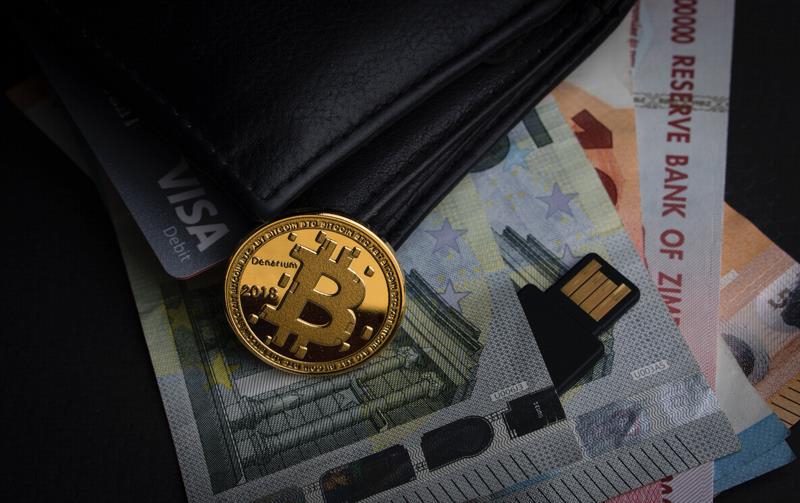
8. What is cryptocurrency?

I don’t really know what cryptocurrency is, and you probably don’t either. So here’s what I’m discovering:

  • It’s digital.
  • It’s not backed by the government, like fiat currency is, but you can use fiat currency to buy cryptocurrency.
  • It has no real value.
  • It is used more to invest and make a profit than to actually pay for things, but it can still be used to pay for things.
  • Bitcoin is the most popular cryptocurrency, but there are lots of them.
  • Blockchain makes cryptocurrency work. A blockchain is a chain of records on a network, and it exists for everyone who owns a cryptocurrency. Blockchain makes it impossible to just create numbers and engage in fraud.
  • There has to be some sort of scarcity to make cryptocurrency work–if new cryptocurrency can be made, then it has to be some sort of regulated process.
  • There has to be a way to verify and prove that you actually own and use cryptocurrency–this is related to cryptography, so there has to be strong security involved.
  • You can mine bitcoin. Mining bitcoins is getting new bitcoins as a reward for auditing/verifying bitcoin transactions using computers doing intense computer things.

So could I start my own cryptocurrency? If I spent enough time and energy learning about computers and coding and blockchain, I could. But starting a new cryptocurrency doesn’t mean that it is worth anything.

Am I going to get cryptocurrency anytime soon? I’m not planning on it. But while I haven’t really trusted cryptocurrency, I still do trust the numbers in my bank and Venmo and Amazon and PayPal and the stock market–and cryptocurrency doesn’t seem that much crazier.

7. How do I stop wasting time?

According to an app that I use, I spent almost 6 hours one week on Google. I spent 3 hours 15 minutes on Netflix. I spent 3 hours on Gmail. And I spent another 3 hours on YouTube. I spent less time on Facebook, as I have been checking it once a week (which is completely sufficient).

But 6 hours searching for things on the internet? I don’t know if that is totally accurate, but I do spend too much time looking up what randomly comes into my brain. I am sure that some of my searches are productive, but many of them are not.

I often will stop one method of wasting time only to fill it up with another one. I stop checking Facebook only to look at the news more often. I stop watching Netflix only to watch more YouTube.

I don’t want to waste time, but I persist.

(Most of this discussion has been wasting time by staring at a screen–but this is not the only way I waste time. I recently spent 10 hours reading a book that I had already read before, and I don’t see how that’s much better than watching 10 hours of movies.)

I get distracted very easily sometimes. I do things that are easy and fun, instead of taking the time and effort to focus and work hard.

So how do I focus? How do I prioritize?

  • Planning what I want to do in a day and when I want to do it.
  • Get out of the house and change my location.
  • Keep trying even when I get distracted, and bring myself back to focusing again.
  • Fill up my life with enough good things to do that I don’t have time and energy to sit there and be bored.
  • Use routines so that I know what to do next instead of constantly trying to figure it out.
  • Block of certain hours for focus and certain times for leisure.
  • Review my goals, values, and commitments regularly.
  • Get enough sleep, exercise, eat, and drink water.
  • Take breaks by getting off the computer when I’ve been on it for a while.
  • Track my time so I have to be accountable for where the minutes go.
  • Have lots of good things to do that I really enjoy doing and want to do.

Any other suggestions that help you?

6. Are skunks dangerous?

We heard scratching noises. We had always wondered if a skunk was going to fall down into the window well, and it turns out, a young skunk had fallen down into the window well. When it saw us, it hid in a cardboard box that the kids had left there.

Dillon put a board down so it could crawl out, and we went to sleep. The next morning, I went out to see if it had climbed out. I knew it may still be in the box, but I thought it had climbed out already. I got into the window well, picked up the box, and stuck it up on the ground.

The young skunk was still in the box. And it eventually crawled out and wandered away, quite unconcerned about everything that had happened.

I have been quite close to skunks recently. I’ve also been close to a chipmunk (it ran into our house and I trapped it so it could go outside) and a fawn (it got stuck in our fence, but when we got close to it, it finally pulled itself free). But the skunks are different: they haven’t seemed to care much that I was there.

I was afraid of skunks like many people are, because skunks smell horrible. But I’ve never heard of a skunk spraying a person: only dogs and cars.

People still hate them: I once was walking past my neighbors house and I heard a commotion. She was yelling something and brandishing a broom, and I realized that he was trying to get a mother skunk with three young skunks off of her porch. And the skunks did eventually run away (though not very quickly).

One time, we had a skunk wander onto our deck while we were sitting there. It barely noticed us, and went on its way. Skunks can’t see very well (though they can hear and smell), so they can be a bit oblivious of what is going on around them.

From a skunk’s point of view, humans are deadly: we run over skunks all the time with our cars, and then people often trap and shoot skunks because they hate the idea of them.

But skunks aren’t dangerous to us: they aren’t aggressive. They give lots of warming before they spray–it’s a defense mechanism, not a weapon. And the spray isn’t poisonous; it’s just unpleasant. About the worst thing that they do is spray dogs, and that’s sort of the dogs’ fault.

Skunks aren’t the enemy here.

5. What is certain?

There was one time when I met someone new and I was certain that I had met her before. Eventually, I realized that I had seen her in a Zoom call, so her face was sort of familiar, but we had never actually met.

Brains can be weird. I have feelings that accompany thoughts, and these feelings of uncertainty or familiarity or fear help me make good decisions. I needs those emotions in order to act rationally.

But certainty is odd: it can function as an emotion, but it’s fallible. Even if I feel absolutely certain of something, that doesn’t necessarily make it true. I can misremember things. I can have an incomplete understanding. I might simply be wrong, no matter how certain I feel. (Certainty might also be thought of as a statistical principle, similar to confidence.)

I really hate uncertainty. I like to assume I know things that I really don’t. I jump to conclusions and run away from uncertainty as quickly as I can.

So what is actually certain in life? I know I exist and that my family exists and the world exists; I am certain about what I see and hear and feel. I am certain about many ideas that I have learned over the years.

But I think I could doubt everything in my existence if I really wanted to and be uncertain about everything.

So maybe being certain is just making a leap of faith based on fundamental assumptions so that I can keep making decisions in life. Certainty is merely convenient and useful: it helps lead to efficiency so that I can process the world and act quickly.

(Some of these thoughts came from reading The Tale of the Dueling Neurosurgeons: The History of the Human Brain as Revealed by True Stories of Trauma, Madness, and Recovery by Sam Kean.)

4. What I am committed to?

What have I already committed to in my life?

  • I was married and I will spend my life and eternity with my husband, Dillon.
  • I got pregnant and will take care of my children for as long as they need me to.
  • I was baptized and promised to believe in God and follow his commandments.
  • I said I would write 150 blog posts between now and the end of the year.
  • I signed up to take the GRE test in September.
  • I reserved places to stay for my summer vacation.
  • I got a building permit to renovate my house.
  • And I have committed to try the best I can to become a better person. That means working on goals that improve my spiritual, physical, mental, and social areas of my life.

Sometimes commitment is hard, because things are scary and life can get difficult. Commitment means that I keep going, even when it is crazy difficult and life is uncertain.

Real commitment means that there is no need for a cancellation plan. When I more fully commit, I lock the escape door, get rid of the fire escape, and tear apart the life boats. I’m going down with the ship, even if it burns. I have no thought of escape; I am committed throughout it all.

I had ancestors that were so committed to what they believed that they gave their lives for it.

When things get hard, commitment means that I keep going anyway. That I just don’t agree to something when it is easy, but I agree when it hurts. I don’t quit; I don’t give up; I stay true to that which I value.

3. What does sacred mean?

I’ve been thinking of the word sacred a lot lately. My oldest son was baptized today, and that moment was sacred, an overwhelming feeling of joy and importance rolled up together.

There are many times in my life where I have felt that something was sacred. Some of it has been religious moments: in the temple, in church meetings, or during personal scripture study. But there have been lots of other moments too.

Going to the mountains. Christmas morning feels sacred. The births of my children. Moments when I closely connect with someone else. Service to others. Funerals. Weddings.

Maybe that feeling of sacredness is being able to connect with something divine for just a moment. And it’s so easy to pollute that with everything else going on in my life.

blossoms in water

2. Is it better to focus on one thing or many things?

I have a lot going on in my life: my main job is to take care of my four children,. But then I’m also trying to take care of my house and my yard and work on our renovation.

In our renovation, we have a lot of projects going on at the same time. We’re doing our bathroom and our electrical and trying to figure out flooring.

I’m also working on a data science class, editing a book I wrote, writing this blog, doing a free online philosophy class, and preparing for the GRE. (And I spent a lot of time today reading a book.)

Would it be better if I just focused on one thing?

I know switching focus takes a lot of time, so it seems to be more efficient if I just completed something before adding in other projects.

On the other hand, I get bored easily. When I’m working on lots of different things, it feels like I’m getting more done.

I don’t have an answer to this. Any thoughts?

1. Why do we care about happiness?

Happiness is one out of many positive emotions. In Brené Brown’s list of core emotions, she lists good emotions such as belonging, empathy, excited, gratitude, curious, joy, love, and surprised. But even feelings that I don’t like can bring positive moments into my life: anger can lead to action; anxiety can lead to safety; grief comes from love.

Psychologist Daniel Kahneman mentions that we don’t really want to be happy–we want to be satisfied with our lives. Happiness can be fleeting, but satisfaction lasts a whole lot longer and is built from goals and hard work. We work and live more to be satisfied, not to be happy.

Yet in many conversations with others and in my own thought patterns, I am often dwelling on happiness. Am I happy? Is someone I love happy? But if happiness is fleeting, how is that a good measure of my life being in a positive space?

I felt happy yesterday. We went up into the mountains and I was canoeing around on a lake surrounded by evergreen trees, racing the sun as it slowly slipped behind the mountain. I assembled fishing poles for my children and watched the video Dillon had taken of the fish that almost landed in the canoe.

That was happy. But the happiness didn’t last forever. I can’t have moments like that my whole life–and I don’t want to. This morning, I sat and worked on studying and learning and writing–and those things don’t directly bring me happiness, but I like that I do them.

Lori Gottlieb mentions that people can change their life by changing the stories they tell themselves. So if I change my story so that I’m not always dwelling on happiness and searching after happiness, maybe I would become more satisfied with my life, more able to pursue what I really value.