Finding Hope Amid Anxiety: A Call for Integrity

I feel a lot of anxiety right now about the future. Not really my future, but the future of everything. I look at the news regularly, and it makes me worry. I was in a conversation where everyone was just feeling bleak, that things were going to worse–not just big picture problems, but smaller things too. There are constant worries that things may not turn out, that life will get harder. That we are not okay.

I have seen a person get fired for doing the right thing and a person up for promotion despite previous wrongdoing. People seem to dispose of ethics and morals and helping others. Instead, they pursue what they can get away with, what is technically legal, and what makes them better off. And these people are often hypocrites: declaring their beliefs of integrity while secretly acting in other ways. I think many people are not aware of their own hypocrisy: they don’t realize that what they are doing is wrong.

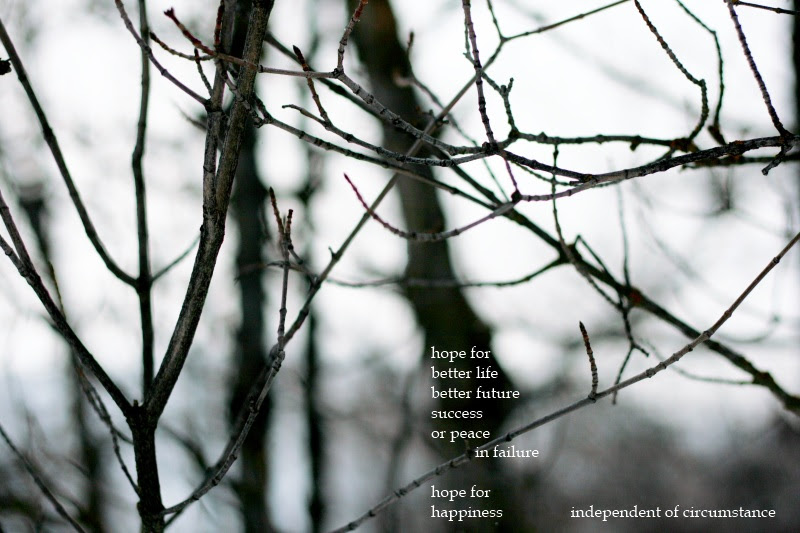
But I do have hope.

And that hope is mainly rooted in the fact that there are still lots of good people fighting for good things.

The fights that we have with each other are not fights of good people versus evil people. Most people think they are good. Most people are trying to do the right thing. So our fight is not like a fantasy battle where there are heroes and villains and we want the heroes to win and the villains be eliminated.

Instead, people are often misinformed, deluded, and confused. Most people are not villains, but imperfect people who have lost their way. Though we should not trust misguided people with responsibility and power, we are not in a battle to eliminate them. Instead, we want to change the conversation. We want to bring more sense and reason. Instead of being afraid of each other, we want to be able to work together to find what we have in common and pursue better solutions.

The fight is one of persuasion and information. We fight to bring dark secrets into light. We fight to discover what is true. We fight to care for each other.

We don’t fight against each other. Instead, we fight against bad ideas. We fight against corruption. We fight for the disadvantaged. We fight for good outcomes.

And I will keep my hope. I will keep doing what I think is right and contribute to my family and my community. I will stay informed. I will encourage the people around me to keep living good lives, to be people of integrity. And I will try to live what I preach.

Honesty

I was in a behavioral economics class today, and the teacher mentioned a recent article that talked about how some academics had been faking their data. There is a lot of pressure in academics to get published, and to write papers with interesting results. And so some people manipulate their data in order to get those results.

I did my own study a while back. The results were not conclusive. There wasn’t really much of a statistical effect. And that’s pretty normal, because when you study humans and human behavior, the main result from any study at all is that people vary.

But that isn’t very interesting. So people lie instead. And then there are a whole lot of studies out there that can’t be replicated and don’t mean anything.

There is one pretty well-known study about fines and daycare. The paper says that when late fines were introduced into a daycare system, this actually caused an increase of late parents. But if you look into the study more, it hasn’t been replicated (and some other studies suggest that fines do deter behavior just fine). The data and reporting may not be entirely accurate. So while the result is interesting, it may simply be a fiction.

Scholars need to be more honest when data doesn’t come up with any results. But we also need to be more honest about how most of the results of human behavior studies aren’t that conclusive.

And people need to just be more honest in general.

I’ve been grading a lot of student assignments, and I think at least 5% of the students use artificial intelligence to either help with or do the assignments for them. This is against the class policies. Maybe that’s not a big percentage, but it might be a lot higher, as it can be difficult to actually determine if someone is using A.I. or not. I spend a lot more time grading because I have to try to figure out who is using A.I. or not. It’s not the usage of A.I. that is necessarily a problem, but the dishonesty of passing off A.I. as their own work.

Sometimes I don’t want to trust anymore. I don’t want to trust scholars who have incentives to make up their data. I don’t want to trust students to act with academic integrity.

But I have to trust. And I know that a world where I can’t trust anyone would be absolutely miserable.

I need to work on my own honestly sometimes–I don’t generally lie, but sometimes I will remain silent. Sometimes I need to open up, speak up, and be more vulnerable about where I am at and what I am struggling with.

Maybe some of this dishonest comes from these pressures to perform: publish papers, go to school, get good grades, be successful. And struggling doesn’t feel like an option. Coming up with inclusive results isn’t an option. Running out of time to do an assignment isn’t an option.

We need to be more okay with failure. We need to expect it in the people around us and expect it in ourselves because it’s going to happen. And that expectation can make honesty so much easier.

Lying, Sneaking, and Obstruction of Justice: Children and Politicians

I have some really great children that I love a lot. But they make mistakes. They are old enough to know when they haven’t done the right thing. But they are still learning, so their instinct is to hide.

They don’t like to tell me when something goes wrong. (I can tell by the screaming sometimes.) They sometimes give me the right answer instead of the one that is actually true. (“Did you brush your teeth?” “Yes.” “Your toothbrush is dry. Go brush your teeth.”)

Kids like to hide things like gum and candy wrappers. They will lie about what happened and say they didn’t do it when they really did. They don’t ask permission and they sneak and they hide. I think this is pretty normal for every kid out there. I know I did it.

But this behavior, while it seems childish, can continue on and on. We all are guilty of lying, sometimes more often than we think. We hide and sneak. We try to save face and appear better than we are.

I was thinking about how when politicians and powerful people get into trouble, I often hear the words “obstruction of justice.”  They are doing the same things as my children: hiding candy wrappers, telling falsehoods, and trying to appear like they are doing the right thing when they are not.

It’s hard to tell the truth. It’s really hard to admit when you make a mistake. It’s hard to always ask for permission. It’s hard to live with integrity, where you don’t have anything to hide.

I once broke a computer at work years ago. It was a huge mistake. And I had to tell them about it. So I did, even though I was a bit scared. But it turned out just fine. Everyone makes mistakes. It’s when you don’t admit the mistake that it really becomes a problem.

I know my husband, as a manager, would much rather his employees talk to him about the mistakes they make instead of just hoping it goes away. He’s had multiple employees damage vehicles without admitting any fault. They all get found out, and it would have been so much easier for them if they would have admitted what they did when they did it.

When we tell the truth and admit our mistakes, frankly and honestly, we feel better and we are able to move forward. We usually can’t hide things very well. They resurface and they come up. But if we just admit what we did was wrong, we apologize, and we work to make it right, we find ourselves happier, in control of our life, and more able to develop good relationships and help others.

People actually think higher of those who admit they are wrong. We try to hide our shame sometimes so people will like us, but in reality, the effects are the opposite. Vulnerability is a positive thing, not negative, and we would all do well to be more forthcoming about fixing our mistakes instead of hiding them.

Sometimes the most powerful people haven’t learned this lesson. I’m trying to teach my kids: telling the truth is so important. I am often much more supportive and gentle when my kids admit a mistake than when I find out on my own. When we want an increase of love, we do that by seeking help in confessing and fixing, not in hiding.