Leaving and Staying

I have great respect for personal experience and where that takes people.

Almost two decades ago, when I started college and I was barely an adult, I thought that I wanted to stay a republican and not become a democrat. I was worried that the influences at college might sway my political views. But my opinions and political views changed, for lots of reasons. I went to political meetings and found myself frustrated with the attitudes I found there. I cared more about compassion towards others, and listening more than shouting. I left. I am very glad that I did not stick with my naïve18-year-old views.

Sometimes we leave. Sometimes we stay.

Commitment is often really helpful: it helps us get through the hard moments. When we commit fully to a goal or value, that commitment can help get us through some tough decisions. I once committed not to eat desserts for a month, and that commitment led to some health benefits and a greater sense of self-mastery. We might commit to not check social media, or to get out of comfort zone, or go to bed early. We can also commit to values, like honesty, truth, and love. These are good commitments.

But commitment can be harmful too if it’s not fully informed or is not adaptable to needed change. I don’t want to commit to some sort of dogma that I later learn is flawed and problematic. And because there is lot I don’t know, I need to leave myself open for change.

When I started graduate school, I was again worried that school would change my beliefs. I wanted to commit to where I was at right then, to be able to stay in the exact same beliefs that I had. But that sort of commitment felt wrong to me, and I realized that I needed to have an open mind and let me experience change me. There is so much I don’t understand; so much I don’t know yet.

I am religious person, and my faith is important to me, but it’s changed and evolved a lot over my lifetime. I was a good girl when I was young, and I didn’t have many questions. I didn’t rebel, and I didn’t swear, and I always did what I should. But now I do have a lot of questions, and I feel more rebellious and sometimes I push the boundaries. It’s not a big change, but it’s there.

Somedays I felt like I was on the precipice of leaving or staying–I wasn’t quite sure what was next. I know of really good people who have made radical changes in their beliefs and their religion. Most of it is intensely personal and can be painful as well. When our identities shift and change, we can feel untethered, uncertain, unknown to ourselves.

But there was one day when I realized that I was no longer on that precipice anymore. That I was staying. Staying for now and maybe staying for forever. But I don’t know where the future will bring. I will keep changing throughout my life.

Knowledge and belief and commitment are an experience that is not always linear. Sometimes we leave and then come back. Sometimes we stay when we want to leave. Sometimes we leave and feel relief. Sometimes we stay and find peace. Sometimes we go through a lifetime of all of that in various areas of our life.

It’s okay to leave, if that is where your journey is taking you. It is also okay to stay.

Most of all, it is good to let your journey be your journey. And in that process, we also do not judge other people for where they are at. We can realize that we’re all just trying the best that we can.

Who Gets Saved?

Salvation is a common concept in religion. It may mean lots of different things, but perhaps it can be summarized as individuals becoming something beyond their own selves. It is something that is not only desirable, but it is often the entire purpose of existence.

But who gets saved?

Do you need to believe certain things? Do you need to practice certain things? Is it available to all, or only to a few?

Many different religions and different denominations have different answers to this. For some, it seems that only a few get saved, those that are most righteous, or who engage in certain practices, or have a certain amount of knowledge (salvation is exclusive).

But that may seem unfair. Shouldn’t everyone at least have the chance to be saved? Some people want a more inclusive view of salvation instead.

And is there only one way to get saved, or are there many?

I’m a member of The Church of Jesus Christ of Latter-day Saints, and I have recently heard some misconceptions about who gets saved, according to that faith. Some people think that the Church only teaches that a few select people get saved, and the rest of the people are condemned, and that seems way too exclusive.

But I don’t think salvation is really exclusive. Much of the Church’s teaching about salvation are in Doctrine and Covenants 76. While Christian churches believe in heaven and hell, this section goes beyond that and describes three degrees of glory: a celestial, terrestrial, and telestial kingdom.

What is sometimes forgotten is that these are all degrees of glory, where everyone is in a good place. When this revelation was received, many struggled with it because it was seen as too universal. That everyone receives glory and salvation, not just a few. Instead of a division of heaven and hell that lasts for forever, heaven and hell are temporary, and what is eternal for almost everyone is some degree of glory.

While the degrees of glory are divided up into three categories, there are actually more degrees than that. And these degrees aren’t so much some sort of reward, but reflects what a person wants, and how they want to live forever.

So what if all these things are true?

  1. Everyone will have a knowledge of truth.
  2. Salvation is free and open to all.
  3. You can choose whether to be saved or not.
  4. So those people who do not want to be saved–they don’t want to become anything bigger than themselves–don’t have to.

This is an inclusive view of salvation, but it doesn’t mean that everyone gets saved in a certain way. Everyone who wants to and choose to be saved is. It’s there. It’s available. It’s inclusive and applies to everyone. Unless they chose not to. Or they only want part of it.

I think that offers a lot of hope.

Slipping into extremes

One time in a class discussion I was leading, a conversation between two students started to get heated. They had opposing views: specifically, one student very much identified as a feminist and the other student did not. But I simply said that there were tradeoffs with both of their views. On one side, they would lose some nuance about unique, person and individual experience. On the other side, they would lose being able to look at and figure out solutions to systemic problems. It wasn’t that one person was right, and one person was wrong, but that they had different possible solutions to the same problem. Both were valid and might work, and both involved both some tradeoffs and different prioritizations.

But when I read things on the internet, I don’t often hear the sort of language. Mostly, I hear people telling others to pick one side or the other and that there is nothing good on the other side. I have heard this in many different discourses: politics the most strongly, but also in workplace, religious, and other environments as well.

Some problematic examples:

  • We should not trust experts who came from an elite, problematic academic setting.
  • Anyone who is pro-Palestinian is also antisemitic; anyone who is pro-choice is pro-abortion; anyone who is pro-LGBTQ rights is anti-family; anyone who is anti-racist is anti-white.
  • If you are a member of a certain church, you are part of a cult and have been subject to brainwashing.
  • MLMs are evil and anyone associated with them should be avoided.
  • If you are crunchy, you are also anti-vax and part of the alt-right pipeline.
  • Homeschooling is the only right way to raise your kids. -or- Homeschooling is child abuse.

The opposite of some of those views can also be problematic.

There is a lot of rhetoric that is simply “anti-” right now. Anti lots of different things, on all sides of the spectrum. But maybe we should just be anti-extreme? Maybe we should focus more on being good people instead of arguing and vilifying others?

I have a professor who gave some really good advice: until you understand the appeal of a different viewpoint, you can’t really argue against it. You have to understand enough that you can see why people think that way and that it makes sense. And then you can argue against that view.

I remember listening to a student who was arguing against a specific viewpoint, but did not yet understand it. That viewpoint seemed almost nonsensical to them, so it was easy to argue against it. But I knew and had talked to a professional who worked in that area, I realized that the student’s formulation was simply incorrect. They had completely missed this whole piece of the puzzle.

Not understanding other people and other views quickly leads to extremism. Extremism is not simply holding an extreme view, but thinking that any other view is incorrect, evil, or something to be feared.

Sometimes, when someone holds a reasonable view, they can get attacked by those who disagree with them. This sort of attack usually doesn’t lead to a change of a views, but to doubling down, moving to a more extreme side, and sometimes engaging in hate and bullying behavior.

We need to return to a better understanding of one another. I have my own views and my own opinions, but usually things are so nuanced and complicated. There are problematic views and solutions that don’t work very well, but there’s very rarely only one side of an issue and only one solution that would work. Even if truth is simple, life is still complicated.

There are good things that I am going to stand up for: I believe in compassion and care to individuals. I believe that we should support those who are struggling and need help. I believe that we should often refrain for judgment and get to know people first. I believe that the world needs to be improved, and that we should work on creating value and solving problems.

I believe that sometimes, I don’t understand an issue, and that I should spend more time listening.

I have tried to avoid snark and judgmental rhetoric that, while entertaining, is not uplifting or useful. I have tried to view sources and news stories that give multiple sides to an issue. I have tried to remember that things can get complicated and people make mistakes.

I want to see more respect in our rhetoric, a movement away from extreme views and towards more kindness to each other. We won’t always get it right, but we can keep trying.

Thoughts on Money and Value

I think I would like to live in a world where people wanted to maximize value and they did not want to maximize wealth.

But in the world we live in, people make a lot of money by actually reducing value in the world. And some people earn very little or no money creating a lot of value. Value and money can be very different from each other, and money is not often a good indicator of actual value.

What do I think is valuable? Caring for each other. Families and raising children. Nature and the environment. Friendship. Beauty and art. Eradicating diseases. Peace.

What do I think is not very valuable? Cryptocurrency. Pennies. Luxury name brands. People being mean to each other. Hatred. Taking advantage of others. Wealth building upon wealth in an inexplicable way. Reputation.

I don’t get paid for the most valuable work that I do. That’s just how it is. But I’m not seeking to maximize my wealth–I just want to be able to be self-sufficient and not worry about money much, and then be able to pursue those valuable things.

Some people really seek careers that add value, but it’s hard to do that when many careers that add the most value often don’t pay that well (like teachers). But if you go into management and finance, suddenly you get paid so much money to make all these decisions that don’t actually improve anyone’s life.

Some people want to maximize wealth and then think they can add value–if you’re really rich, you can do a lot of philanthropy. But I still think there should be value added along the way, and that those on top can make sure to support those who are supporting them.

If people were concerned about maximizing the things that they actually value, the world would improve at a much faster pace. But if we only think about money as value, we get things all twisted about, and we end up destroying what good value there is.

Further Reading: The Value of Everything by Mariana Mazzucato

Finding Hope Amid Anxiety: A Call for Integrity

I feel a lot of anxiety right now about the future. Not really my future, but the future of everything. I look at the news regularly, and it makes me worry. I was in a conversation where everyone was just feeling bleak, that things were going to worse–not just big picture problems, but smaller things too. There are constant worries that things may not turn out, that life will get harder. That we are not okay.

I have seen a person get fired for doing the right thing and a person up for promotion despite previous wrongdoing. People seem to dispose of ethics and morals and helping others. Instead, they pursue what they can get away with, what is technically legal, and what makes them better off. And these people are often hypocrites: declaring their beliefs of integrity while secretly acting in other ways. I think many people are not aware of their own hypocrisy: they don’t realize that what they are doing is wrong.

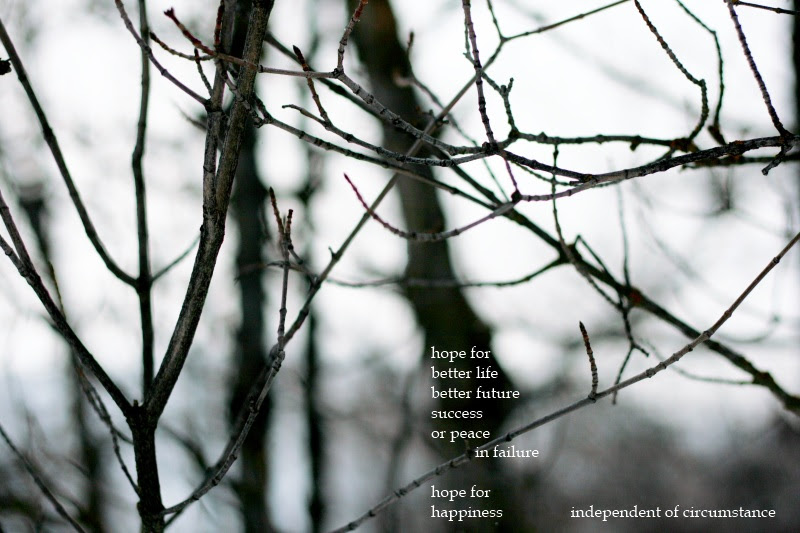
But I do have hope.

And that hope is mainly rooted in the fact that there are still lots of good people fighting for good things.

The fights that we have with each other are not fights of good people versus evil people. Most people think they are good. Most people are trying to do the right thing. So our fight is not like a fantasy battle where there are heroes and villains and we want the heroes to win and the villains be eliminated.

Instead, people are often misinformed, deluded, and confused. Most people are not villains, but imperfect people who have lost their way. Though we should not trust misguided people with responsibility and power, we are not in a battle to eliminate them. Instead, we want to change the conversation. We want to bring more sense and reason. Instead of being afraid of each other, we want to be able to work together to find what we have in common and pursue better solutions.

The fight is one of persuasion and information. We fight to bring dark secrets into light. We fight to discover what is true. We fight to care for each other.

We don’t fight against each other. Instead, we fight against bad ideas. We fight against corruption. We fight for the disadvantaged. We fight for good outcomes.

And I will keep my hope. I will keep doing what I think is right and contribute to my family and my community. I will stay informed. I will encourage the people around me to keep living good lives, to be people of integrity. And I will try to live what I preach.

Time

I was watching John Green’s video about the average American, and he said something that haunted me: the average American spends more time in social media than going outside.

I was doing that.

I love being outside, I really do, but it seems like all the work I have to do is often indoors. My research is inside. My housework is inside. Lots of things are inside. And that’s fine.

But when I need a break, do I go outside, or do I go into a screen?

And I usually go into a screen. Much more than I really want to. It can become a default: whenever I feel stressed and overwhelmed, go to a screen (or stay on the screen).

I don’t want to do that anymore.

Yesterday, I was cleaning out the car and I went to put some stuff in the trash can, and I looked up at the sky. The sky was clear, and I could see the Milky Way cutting through it. It was the sort of sky where there were stars absolutely everywhere.

I noticed. And I tried to get my kids to come and see (they came, but didn’t care quite as much). I delayed the things I had to do to just stand out there, craning my neck up to see the universe above me.

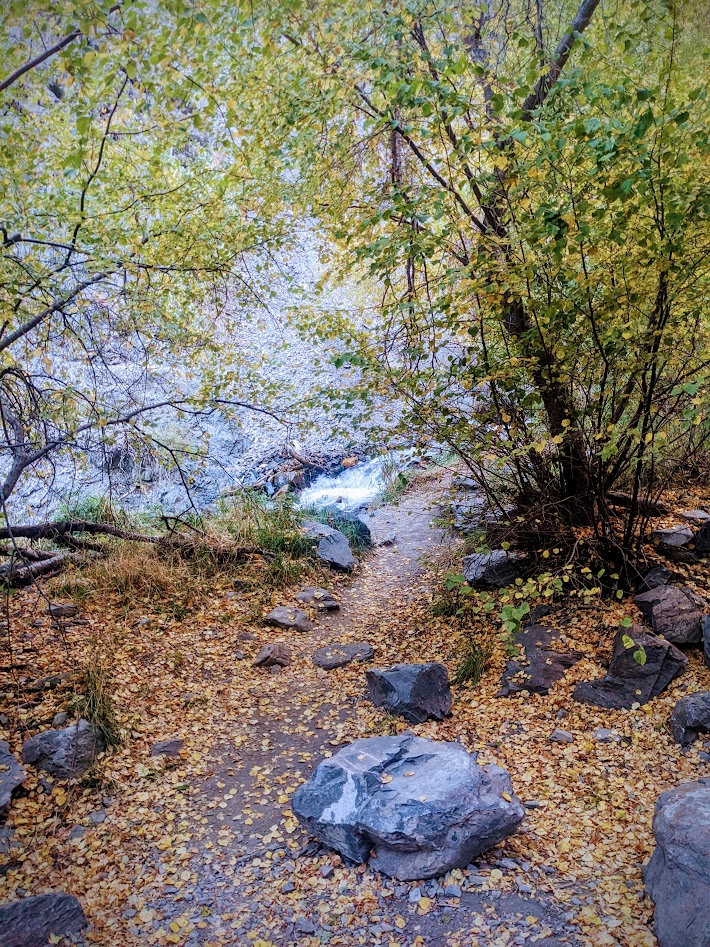
I went on a walk today, and it is the perfect kind of weather: a little bit windy, the sort of temperature you can wear whatever you want and it will be only a little bit uncomfortable, and crunchy leaves flying across the ground. The world is turning yellow, the sky was cloudy, muting the sun. It was beautiful.

The things that I often use for stress relief actually cause me more stress. They tired me out and drain me.

What actually invigorates me is going outside, playing with my kids, being active. Having space to exist.

I’ve spent a lot less time on my phone and on a screen the last few days, and I have felt freedom and a lot more peace inside.

Trying to split my mind between my life and junk on my computer is just hard. Being in my life is a lot better.

Connection over Mastery

What is the most important part of your career?

I’ve read quite a few books about productivity that talk about concepts such as mastery and flow: how to deep focus and get more done. In my career, I want to write clear papers with good arguments and be an expert in certain subjects. I want to be able to present and publish and eventually finish a dissertation.

However, at the opposite end of whatever work you do, there is someone else.

So the point of productivity may not be about accomplishing something and becoming the expert–it’s about affecting others. Maybe productivity isn’t really about mastery and flow. Productivity can be about connection and relationships instead.

Love is so much more important than expertise. Think about being a parent: it doesn’t really matter if you are an expert on parenting. It matters more that you love your kids.

And maybe that’s applicable to more areas than we think it is. You can easily see how it would matter in something like teaching or social work.

But what about something like writing and design work or policy work? How can prioritizing love and relationships make a difference there?

It seems like when we are creating something we are aimed at this product. But the product does not exist in a vacuum. The product is used by people. And so every project and product is also part of a relationship, between the creator and the user.

It can be hard to see that connection, but I think it makes the products so much better if a creator can see the relationships that surround what they create.

Total Solar Eclipse

We drove to Texas in order to see an eclipse.

In 2017, we lived in the path of totality of a total solar eclipse. My kids were all little then, the oldest barely in school and the youngest literally breastfeeding during the eclipse. Dillon was working at the state park we lived at and coordinating all the visitors who had come. Some of my family came out to experience it with us.

When it was over, I just wanted to experience it again. And I had to wait almost 7 years, but we put the 2024 eclipse on our calendar (on the wrong date, but we fixed it later).

Things changed a lot in 7 years. We moved and moved again. Dillon switched jobs a few times. I started graduate school. We renovated a house. Our kids are now all in school, all old enough to remember.

5 months before the eclipse, I reserved a campsite in the path of totality at Cedar Hill State Park. And then eventually made the rest of the travel arrangements. As the day got closer, though, I was worried: cloud cover. I kept checking the weather app, and it never changed. There was always cloud cover.

But we drove over 20 hours to Texas (and then over 20 hours back). We planned out stops along the way and saw some cool things: a faux waterfall, structures built almost 1,000 years ago, my aunt, vintage RVs, rocks interspersed with iron or copper, old airplanes, turtles swimming in a river, longhorn cattle, vintage video game consoles.

I was somewhat distracted during the trip as I am towards the end of the semester, and final papers are looming. I had to do some school work even when I just wanted to be on vacation.

The day of the eclipse came, and the clouds rolled in. We went on a hike in the morning through forest and grasslands, and the air was misty with humidity.

And then the clouds rolled away as the eclipse started.

I have words I could use to describe the eclipse: awe, sublime, beauty. In the middle of totality, I felt like I needed to get a picture, but I could never capture that moment. Pictures and videos do not show what it is like. It is an experience: aesthetic, spiritual, awesome.

The sun had come out and the day was hot, and then the temperature dropped. The birds stopping singing. The crickets chirped. I could see planets and stars and the moon and the sun all together in the heavens.

It was worth it.

***

We drove back home after it rained on our camping stuff. We dropped by a museum filled with random old stuff, a conservatory of tropical plants, and a frontier prison where we heard macabre stories. We arrived home to clean up, drive off our camping stuff, and go back to normal.

***

During this weekend, it was General Conference for my church. I listened to quite a few talks, and we tried to watch sessions together as a family. We heard about miracles and prayer.

And I was praying.

Sometimes, it is not easy to believe, to have faith. I am friends with many who have stepped away from faith, all for their own unique reasons. And for a moment, I was just filled up with questions and worry. I need spiritual experiences regularly in order to keep my faith, and sometimes they seem too far away.

I don’t know if it counts as a miracle that I was able to view the eclipse, free of clouds. The forecast never changed, but the clouds went away for many. Yet some places were still cloudy.

I do view it as a blessing, a tender mercy. The total solar eclipse is spiritual: heavenly bodies so perfectly sized and timed to bring night when it should be day.

I wonder how it would feel like it you didn’t know that an eclipse was coming. If it got dark and cold, the shadows trembling as the heavens move in inexplicable ways. If you could see the sun disappearing through the clouds. Everything changes. It is night for a few minutes, that fades back it into day. It would be terrifying.

We can map the heavens now, and yet there is still so much that remains unknown. I find myself often in inexplicable moments where I do not understand.

I worked on a research project on my trip, getting feedback back and forth from a professor who knows much more than I do. I am interested in a topic because I do not understand, and because the more I read and think, the more questions I have. I don’t think there is a way of figuring it out at all.

And life is like that. There is a type of comfort that can come inside the terrifying unknow: that with everything I do not know, I can still live and breathe and love and experience beauty greater than I can understand.
Self-Sacrifice Burnout: When It’s Okay to Hurt

So I’ve recently heard of the idea of “pathological altruism”: engaging in altruist acts that are actually harmful. While that category is quite broad, part of it includes people self-sacrificing in order to help others to the point that they face extreme burnout and harm to their health and well-being.

Why is that bad?

I think it can be laudable to sacrifice, even to the point where it hurts you. Many people sacrifice their lives, basically everything they have, in order to help others. I have deep respect and admiration for those people. I want to be more like that.

We don’t want people to sacrifice for us. We don’t like to see others suffer. We say that they need to take care of themselves first.

But if someone dedicates their life to others, they take care of themselves only as a means to other ends. The bad thing about burnout is it means you can’t help other people anymore.

Taking care of yourself doesn’t need to be a priority. It’s just a helpful thing to do so that you can take care of others.

And that means that if you dedicate yourself to help, it will hurt sometimes. It will mean long hours and exhausting days. It can be difficult and hard.

Nights without sleep helping children.
Coming home hungry after a long time at work.
Talking to someone in a crisis and crying in empathy.
Dropping everything and driving hours and hours because they need you.
Looking at an almost empty bank account and donating anyway.

Those are not problematic moments. They are sacred.

How to come up with ideas

  • Fill up the blank space. Just go for it. Release yourself of expectations of doing something good and just do something. Starting with something horrible is easier than starting with nothing.
  • Make connections. I like to connect different ideas that seem unrelated and something new and beautiful starts developing. A singular idea is usually rarely new–but it becomes new when connected to something unexpected.
  • Journal and notetaking. If you don’t write down your thoughts, then the thoughts are forgotten.
  • Read, watch, listen. Keep reading and experiencing, all different types of stuff, and pay attention.
  • Criticize. Figuring out what you think is wrong can be a good way to discover what you think is right.
  • Ask and answer questions.
  • Talk with others. I get really good ideas when I’m talking with people. The combination of their thoughts and my thoughts together can go in really unexpected places.
  • Randomness and play. Sometimes you need to stop looking in order to find something. Embrace the random. Use random generators. Play around. And a new idea might come out of it.