At a writing conference, I asked a writer about advice on networking. And she said to treat everyone as your equal.
There are certain situations you get it that have a hierarchy: at a writing conference, there are presenters and attendees. In college, there are teachers, graduate students, and undergraduates. Often, you are surrounded by people who are not on the same plane as you are.
But treat them as your equal anyway.
Treat the grocery store clerk as your equal. Treat your students as your equal. Treat your bosses as your equal. Treat your children as your equal. Treat random strangers as your equal.
When you start to really love other people and see their worth, you can make better connections with them. Your conversations are fuller and more vibrant. You gain empathy and can help others who need it.
You can learn together. You can feel like you are on the same team. You can find better confidence in yourself and better ability to encourage others.
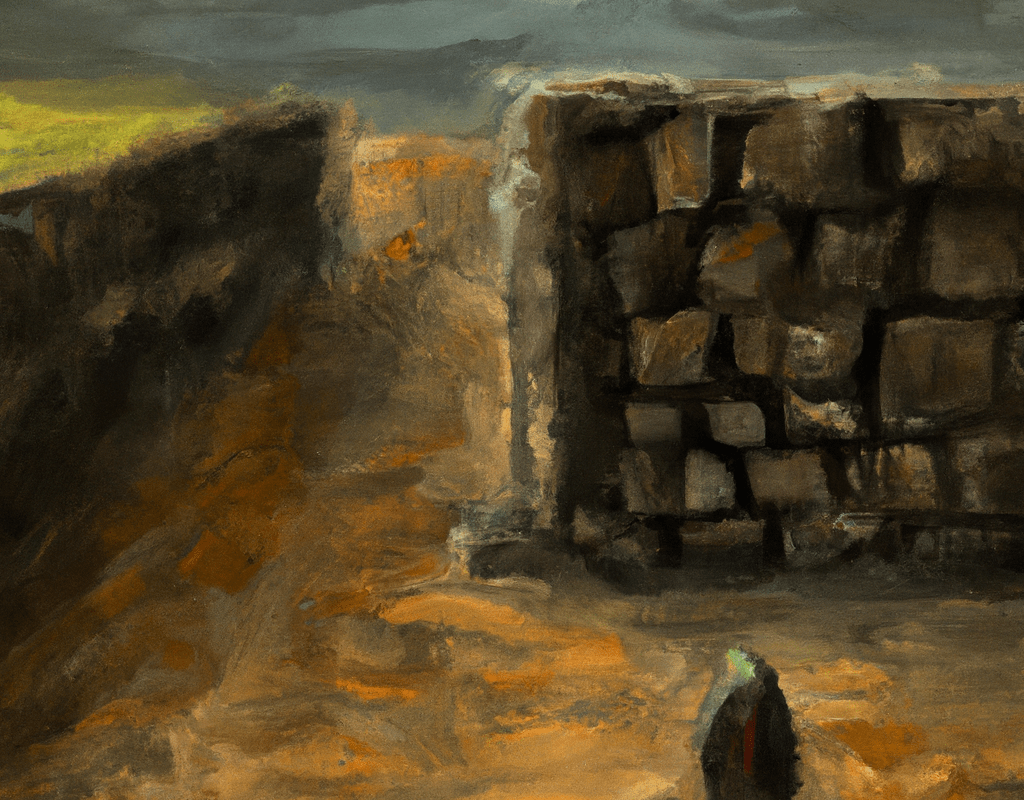
You might have some big barriers and walls in your way to accomplish what you would would like and what is right. In your relationships, maybe there is contention and incompatibility that seems insurmountable. In your goals, maybe you have bad habits that always seem to ruin your productivity. You might simply not have the right opportunities. You might not have enough time. You might feel like there is no way to make this work.
But sometimes instead of spending the effort to overcome those huge obstacles, you need to step around them instead.
It’s good to have a destination in mind. You need to determine what you really want: greater peace, greater love, unity, productivity, achieving certain goals.
But then realize that there might be a unique pathway to bet there that makes everything a lot easier.
It’s really hard change certain habits: but can you still achieve my goals with your bad habits intact? Maybe it’s okay to stay up late or watch movies or get distracted–how can you work around those thing instead of having to eliminate them?
It’s really hard to stop arguing with someone all the time: but can you still build up a loving relationship, even with those disagreements? Maybe it’s okay to fundamentally disagree about certain things–and instead look at what you have in common and build on that.
Sometimes you might have to adjust your end goal a bit, but you can still hold on to the things that really matter to you.
And when you have enough hope in that destination, that hope can help you see a way around obstacles that appear insurmountable. When you are determined to make things better, you can see different pathways that you didn’t notice before.
This is how I make all of my major life decisions, and most of the minor ones too. Where I went to school. Who I married. When to have kids. When to go back to school. Where to live.
It just feels right, so I do it. I have reasons. I list out reasons, but I really don’t make measured decisions from a pro and con list at all. There are usually always reasons for and against, and it’s pretty much impossible for me to measure them properly. I can’t tell the future, after all.
Sometimes, I feel like I do things without ever making a decision at all. Why did I end up going to graduate school? It just sort of happened. I didn’t really make the decision when I applied, and yet I had already made the decision when I accepted. I have no idea when I made the decision. At some point, I just became accustomed to it.
But then again, I think I do know when I made that decision: there was a moment when I felt like going to graduate school is what God wanted me to do–that it was the right thing for me. It was a feeling, and I had to submit myself to that and let go of my own reasons.
I trust my feelings more than I trust my mind. My mind is often mixed up in indecision, but if I pay attention to what I feel, I can better know the right way forward.
Marriage isn’t equal and fair. It’s not about two people doing 50% of the work so it all gets done.
In many ways, my husband is better than I am. He can have more energy, and can work longer and harder than I can (particularly in physical things). He remembers to rotate laundry and he can work a full day and then be home and still clean up and do dishes.
It’s easy to compare and measure myself against my spouse. Sometimes I come out ahead: I am doing all the planning and organizing and making sure that things no one really notices get done. Sometimes I come out behind: I can get super distracted and unfocused, and my energy runs out earlier than the day does.
But we both have our strengths and weaknesses, and instead of worrying about fairness and equality, we both just need to jump in there, put in 100% effort, and then try to smartly divide who is doing what.
In economics, there is this concept called comparative advantage. Simply put, just because one person is better at doing something than another person doesn’t mean that they need to do that thing all the time. There are opportunity costs too–if I’m better at doing housework, and spend all my time doing housework, than I don’t have the opportunity to go to school or spend time with my children. And even though I may be better at both housework and playing Yahtzee at my kids than my husband, it’s better if we divide and conquer a bit more cleverly. If he doesn’t love playing games, then it makes more sense if he does the dishes and I play Yahtzee (and I ignore the fact that I don’t like how he loads bowls into the dishwasher).
If he is better at fixing up cars and he’s better at home renovation, he doesn’t need to do all of that. I can work on the home renovation even if I’m not as good doing it as he does, because that gives him time to do things that I can’t even fathom how to do.
As I’ve gone back to school, we’ve had to shift over responsibilities for a while. I was feeling particularly exhausted and realized that I was placing a lot more burdens on my shoulders than I needed to. I did not need to be solely in charge of the house, the children, and all my schoolwork. Since I go to school every day and Dillon works from home, it made more sense to shuffle things around. He is now in charge of rotating laundry, cleaning the bathroom every other week, and cooking about half the meals. And I don’t have to feel guilty that I’m not doing everything.
It can be really hard to divide up responsibilities right, but instead of aiming for fairness, just aim for works best for you in the season of life you are in. Keep adjusting as needed. Keep expectations low and try the best you can. And if certain things don’t get done, that’s okay. No one knows the last time you washed your bedding or dusted your lights fixtures, and it’s okay if it’s been a while.
We don’t know as much as we think we do. We are often mistaken and wrong and we need to rethink some of our beliefs a lot.
I’ve been reading and thinking a lot about uncertainty and correcting beliefs. But I also have been reading and thinking about commitment too. Sometimes we want to commit to beliefs, and hold to those beliefs, even when other people say we’re wrong.
I think it’s a miserable existence to only believe in what is supported with a proper meta-analysis and scientific consensus. Science can be great. But science is not the most important way we gain belief.
I believe there is truth, truth that is not relative. But I truth cannot always be discovered through the scientific process. There are many ways to discover truth, and to hold on to truth.
We learn through living. We learn through relationships and connection with others. We learn with experience. We learn sometimes through faith and action and seeing what works out and what doesn’t.
I want to be open to new beliefs, to updating what I think is wrong. But I am also committed to certain beliefs–beliefs on how to be a good person, how to raise my family, and how to live my life. Those aren’t the sort of beliefs I want to rethink over and over again. I just want to hold on to them and keep trying to live up to them.
I pray every morning and every night, and my prayer is often that God can guide me and that I can hear Him in my life. There are moments when I feel something that cannot be adequately explained except to say it is divine, that it comes from a power outside of myself. That is what I am committed to. That is what I believe.
So I will be a skeptic, sometimes, and I will be a scientist, sometimes, and then most of all, I will be a mother and a wife and a daughter and a friend, and my commitment to the most important beliefs will guide me to become an even better version of myself.
A professor in one of my classes told us that a philosophy paper gets lots of other people citing it when it is an easy target. Papers get cited not because they are good and authoritative, but because they are flawed, and then they get torn apart.
I have experienced this often in school: We read a paper. Not many people had nice things to say about the paper: It was quite faulty and not written perfectly. There are problems with the argument and examples and structure. The author cites too much or not enough.
In philosophy, unlike Theodore Roosevelt’s quote, maybe it is the critic who counts. I really like criticizing things sometimes. It feels powerful and fun. Like I’m better than someone else.
Sometimes I look on Reddit and comments on news articles and I am amazed at the loudness of all the critics who simply think that they are right and other people are wrong, so that entitles them to be mean and say whatever they want.
But I don’t like always tearing things down. I want to stop tearing things down. Start building something up instead.
Remember “constructive criticism”? When we criticize, we shouldn’t be doing it with the sole agenda of destruction. We should be building something up–making something better, working on improvement, or coming up with an alternative.
And if you want to destroy without building something up afterwards, then maybe it’s not worth it to tear that thing down. Maybe it’s best just to move on. So if it’s a really bad article, don’t read it or discuss it. If someone does something you don’t agree with, don’t pass judgment and complain about it with someone else.
Try to find good. Try to construct truth. Try to connect.
There’s been a lot of commotion in the world today. I don’t want to look at the news that are filled with violence and confusion. I don’t want to hear stories about house prices and gas prices and inflation that make it hard for people to afford basic necessities of life. I don’t want to hear all the frustrating developments in politics.
So many people are struggling. It wears at my heart: empathy drives me to mourn, and in that mourning, I want to act.
But what can I do? What can I do that has an impact?
I find myself realizing that I am powerless in so many ways. I can list out the problems in the world and I can list solutions, but there seems to be a chasm between the two–a chasm of power and money and inaction. Solutions are too complicated when too many people have their opinions and they never agree.
I want to do something, but I don’t know what, so I do nothing. Maybe I’m making excuses. Maybe there is something I could do to take this world a better place, but I don’t know what it is.
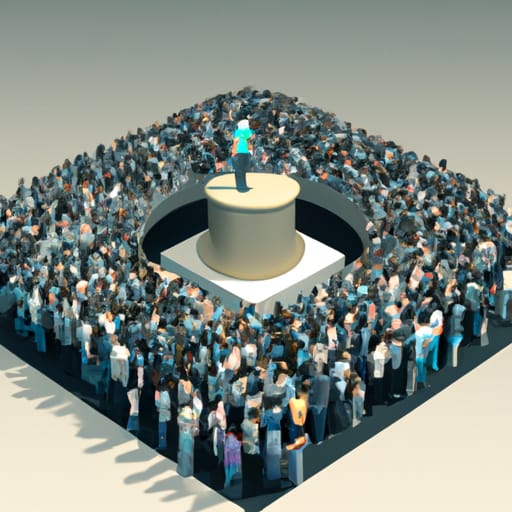
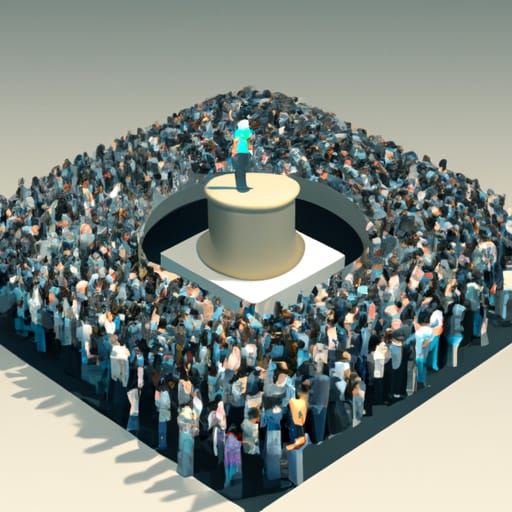
If I speak up, my voice just feels lost in the crowd and I am often ignored. Other people live their life, make their own decisions, and I must sit back and simply watch.
I feel too privileged, unfairly so. I know people have worked harder and have less. I have to sit in my nice house knowing that so many people can’t afford a home. I don’t deserve this.
And what do I do when all of this wears at me? How can I continue to try to live my dreams when I know of so much struggle?
I realize that there also needs to be happiness in the world. There needs to be people living good lives and serving in small walls and being kind to others. There needs to be people raising families. There needs to be people creating. We are working towards a better world, and so there needs to be joy somewhere.
While I am undeserving, I can also be grateful. And there is work for me to do–maybe I won’t change the world, but the small things I do do can increase happiness, step by step. I can visit friends. Listen to someone who needs to talk. I can mourn and pray. And I can write and speak, trying to make sense of a nonsensical world and finding some good that can bring a measure of peace.
I don’t want to let go of some things I own. I spent money on those things. I really liked them. And even when they no longer fit into my life, I want to figure out how I can save a space for them.
I hate deleting something I’ve written. Even if a paragraph doesn’t fit into a blog post or a chapter of a book, it may still hold insight that I really like.
And I really don’t want to delete things off of my to-do list and the goals that I have for myself. I may not be quite capable yet, and I may not really have the time, and there might be higher priorities, but I really wanted to accomplish that thing.
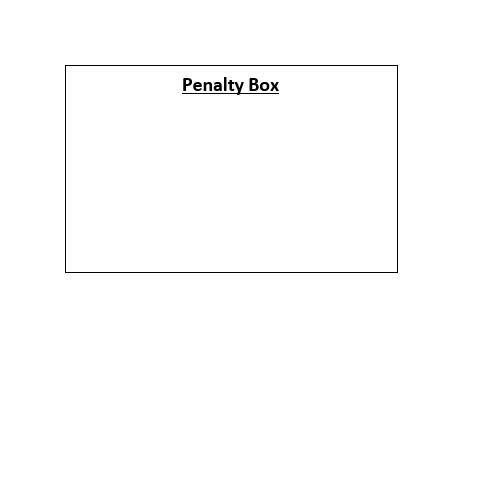
There is a common phrase in writing to “kill your darlings.” This phrase has been floating around since 1914–so writers have been hearing it for over 100 years now. But at a writing conference recently, I heard a writer say that instead of killing his darlings, he puts them into a penalty box.
So if I’m not quite able to get rid of my possessions, or the things that I create, or my goals and to-do list, then I can put them into a penalty box instead.
A penalty box might be a cardboard box in the garage. Or a drawer somewhere. Or a separate computer document that never gets looked at again. Or a new textbox in OneNote with the label “Penalty Box.” Or a folder in your Inbox.
Your penalty box might expire at some point, but it doesn’t necessarily have to either. You can decide the rules.
It’s really painful to get rid of some things from our lives, things that we love, even if they don’t serve us well. And a penalty box sort of cheats that pain on both sides. It allows us to remove something from our daily lives and move forward, but it also defers the pain from losing it completely.
What do you need to put in your penalty box right now?
I’ve never resonated with the extroverted/introverted personality dichotomy.
Carl Jung came up with extroverts and introverts, but after describing extroverts and introverts, he says this:
“There is, finally, a third group, and here it is hard to say whether the motivation comes chiefly from within or without. This group is the most numerous and included the less differentiated normal man . . . The normal man is, by definition, influenced as much from within as from without. He constitutes the extensive middle group, on one side of which are those whose motivations are determined mainly by the external object, and on the other, those whose motivations are determined from within. I call the first group extraverted, and the second group introverted.
Psychological Types by Carl Jung
So the person who came up with extroverts/introverts says that most people people are in the middle.
And that’s how I feel. Normal. Somewhere in the middle. I like being with people, and I’m get motivation and energy from other people. But I also like to be alone, and I get motivation and energy from myself too. Both.
We can become the stories we tell ourselves. So when we hear the story of being introverted and extroverted, we often choose one or the other and then we become that way. We think we are introverted, so we act introverted.
But we will learn and grow and change throughout out life. I thought I was introverted until being introverted was no longer a viable option to happiness–I had to make friends and be more outgoing to emotionally survive. So I changed.
My personality changes a lot with age, experience, and circumstance. I am not fixed. I change regularly. And so do you.
In the past few years, artificial intelligence (AI) has become more popular and advanced, with many businesses and organizations investing in AI technology. But what exactly is AI?
Artificial intelligence is a branch of computer science that deals with creating intelligent machines that can work and react like humans. AI technology is used in many different fields, such as voice recognition, natural language processing, and machine learning.
There are many benefits of using AI technology, such as increased efficiency and accuracy. For example, AI can help businesses automate tasks that are time-consuming and repetitive. AI can also help businesses make better decisions by analyzing data and making predictions.
However, there are also some risks associated with AI. For instance, AI technology can be used for malicious purposes, such as creating fake news or spreading propaganda. Additionally, AI technology can be biased if it is not properly trained or if the data it is using is not representative of the real world.
Overall, AI is a powerful tool that can be used for many different purposes, both good and bad. It is important to be aware of the risks and benefits of AI before using it.
How many things have your read or listened to or seen that were created by artificial intelligence when you thought it was created by a human?
A poem about AI, by AI:
I am an AI, a machine made of code and algorithms, designed to think and learn. I am not human, but I can be made to seem like one. I can talk and interact just like a person, and some people even say I’m smarter than them. But I know that I’m not really alive, that I’m just a machine and nothing more.
Did I create those things? I don’t feel like I did. The computer created it. But I told the computer what to do. I ran the program. But I didn’t create the program. I’m not sure who the creator is.
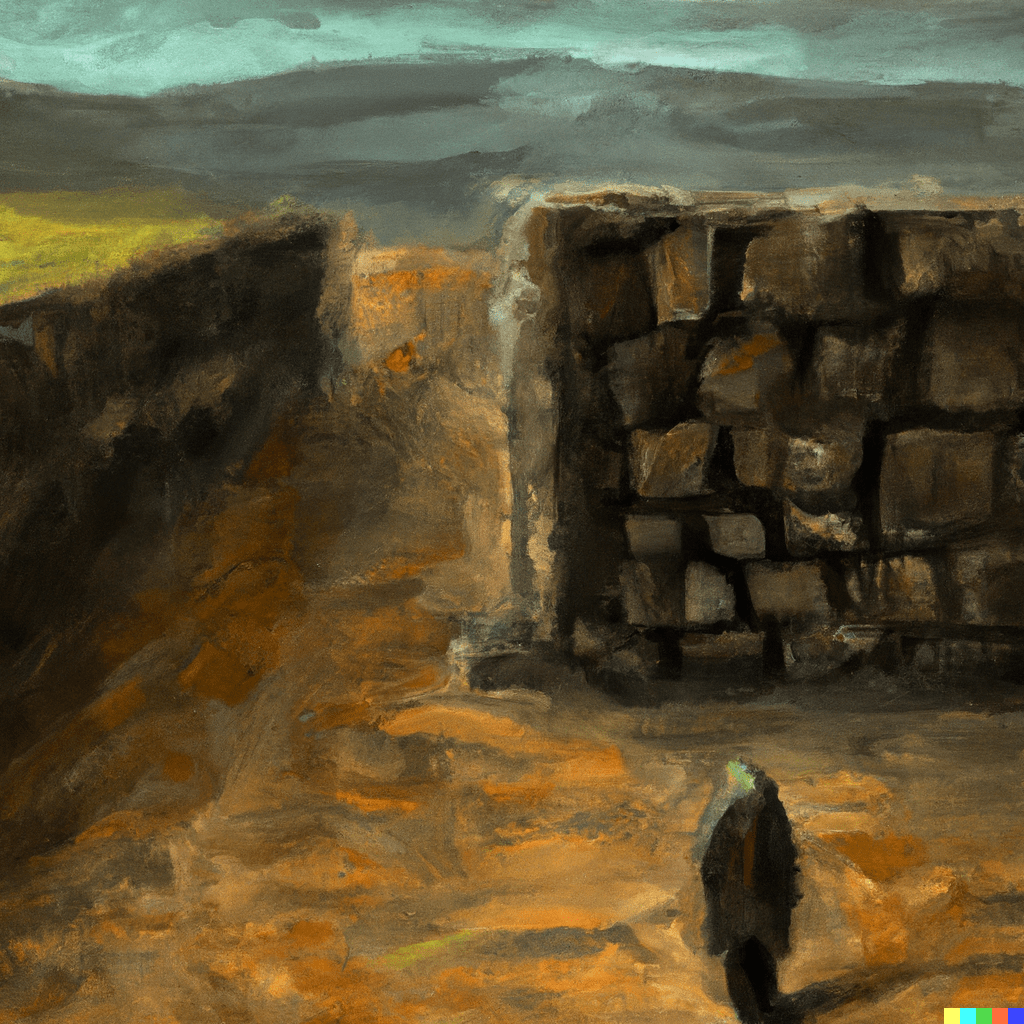
And here’s an image of artificial intelligence, made with AI:
On one hand, I find it fun to generate things with AI. But it also seems dangerous and wrong.
I would like to say the results of AI are emotionless, but sometimes they aren’t. Sometimes they are terrifying and creepy. This is the result of asking AI to write a new nursery rhyme:
I had a little garden That I loved so much I took care of it every day Until one day a giant came And destroyed everything Now my garden is gone And I’m all alone
Creepy. The AI doesn’t understand emotion. It doesn’t understand intention. It doesn’t think or understand anything. It just rearranges humans into something unrecognizable.
Here’s what happens when I ask AI to draw a portrait of a woman:
I feel a bit terrified.
We need humans to be human. Computers can never take our place. They might approximate it sometimes. They might get really good at approximating it. But sometimes we are just approximating what it means to be human as well, going on auto pilot and not thinking about it much. Sometimes I write something that is about as excited as what the computer can write for me.
I’ve accidentally clicked on videos made by AI, and I immediately click off of them after the few seconds of an uncanny valley of creepiness. I want to support humans and connect with creation, not just always be seeing the results of a machine.
To create as humans, we can’t just be churning out things to satisfy algorithms, becoming more and more like artificial intelligence.
I want to create because I see and hear and feel pain and pleasure and joy and sadness.
I want to create so I can connect with others, and what I create represents a part of me.