So I’ve recently heard of the idea of “pathological altruism”: engaging in altruist acts that are actually harmful. While that category is quite broad, part of it includes people self-sacrificing in order to help others to the point that they face extreme burnout and harm to their health and well-being.
Why is that bad?
I think it can be laudable to sacrifice, even to the point where it hurts you. Many people sacrifice their lives, basically everything they have, in order to help others. I have deep respect and admiration for those people. I want to be more like that.
We don’t want people to sacrifice for us. We don’t like to see others suffer. We say that they need to take care of themselves first.
But if someone dedicates their life to others, they take care of themselves only as a means to other ends. The bad thing about burnout is it means you can’t help other people anymore.
Taking care of yourself doesn’t need to be a priority. It’s just a helpful thing to do so that you can take care of others.
And that means that if you dedicate yourself to help, it will hurt sometimes. It will mean long hours and exhausting days. It can be difficult and hard.
Nights without sleep helping children. Coming home hungry after a long time at work. Talking to someone in a crisis and crying in empathy. Dropping everything and driving hours and hours because they need you. Looking at an almost empty bank account and donating anyway.
Those are not problematic moments. They are sacred.
Fill up the blank space. Just go for it. Release yourself of expectations of doing something good and just do something. Starting with something horrible is easier than starting with nothing.
Make connections. I like to connect different ideas that seem unrelated and something new and beautiful starts developing. A singular idea is usually rarely new–but it becomes new when connected to something unexpected.
Journal and notetaking. If you don’t write down your thoughts, then the thoughts are forgotten.
Read, watch, listen. Keep reading and experiencing, all different types of stuff, and pay attention.
Criticize. Figuring out what you think is wrong can be a good way to discover what you think is right.
Ask and answer questions.
Talk with others. I get really good ideas when I’m talking with people. The combination of their thoughts and my thoughts together can go in really unexpected places.
Randomness and play. Sometimes you need to stop looking in order to find something. Embrace the random. Use random generators. Play around. And a new idea might come out of it.
When we are young, we are told to dream. And then we grow up, and the world burns up our dreams and we have to figure out what to do with the charred remnants.
So I had a dream of being a writer when I was young. And then I grew up and discovered that my dream didn’t really exist. And I think this is true of most dream jobs: they only exist in dream land.
I’m currently going to graduate school in philosophy, and the job market for philosophy PhDs is absolutely brutal. Too many applicants. Not enough jobs. And the jobs don’t always fit right.
There is a friction there: On one side, there is what you want and who you are. On the other side, there is what other people want and need and what they are willing to pay you for. Those two sides don’t always match up very well.
So to achieve success, you have to do things you don’t want to do. And sometimes the success you thought you wanted isn’t worth it.
This friction manifests it in many other ways, which may become insurmountable obstacles to your dreams:
You get your dream job and discover you actually hate it.
Your dream job doesn’t actually exist in the world.
You have a specific skill set that doesn’t work for the job market.
Your skills are unappreciated by managers who want to go in different directions.
You have too narrow or too broad interests/skills for what employers or others want.
You can only get paid well for something you don’t love to do.
If you get paid for what you love to do, you might stop loving it.
You work hard in your job and never get recognized and never get promotions.
You love a certain field but you aren’t actually very skilled at it.
Job market friction can be like burning. It’s burning down your dreams.
So how do you deal with is?
Here are something helpful things to remember:
Who you are is not what you do
Your self-worth is not dependent on your financial worth
Small success can be as valuable as large success
Life can be longer than you think, and you can reinvent yourself multiple times
It’s okay to change your pathway
Relationships with people bring more joy than achieving success
Sometimes you have to do things you don’t want to do in order to do the things that you do want to do
A while ago, I joined the Proper Mountain Woman club for a season after a friend told me about it. My sister, Liz, also joined, and we had a lot of fun earning merit badges and completing and sharing projects. I did not continue membership in that club, though it was a fun experience. But Liz and I had both shared our progress with each other, and we wanted to continue to do so.
So Liz created a Discord server where we could continue to share the goals we had finished. We invited our other sisters as well. We do seasonal goals–winter, spring, summer, fall–with a few ranks that we can earn. You can get a rainbow rank for completing a goal in each category (spiritual, social, physical, intellectual, service, family, home and garden, career, nature, fun, food and finance, creative). Or a mountain rank for sharing 50 accomplishments and completing a large project. We also share ideas for different goals we can set.
This changed my life.
Since I was little, my dad would sit with me and we would set goals. I always loved to plan and set goals for myself, and I was fairly good at accomplishing them. I wasn’t the sort of person that would set New Year’s resolutions once a year and then forget about them completely. While I definitely fail at my goals sometimes, goal setting has helped me focus my life and spend my time in worthwhile pursuits.
But before, sometimes my goals were more of a to-do list that I just wanted to check off and forget. If you think of most to-do list apps, when you get something done, it disappears, checked off forever. Even in a to-do list, you often will scribble something out. This can be effective for certain things, like daily tasks. But it’s a bit discouraging when all you are looking at is the things that still need to get done, a list that never ends.
When I started reporting my goals to my sisters, though, I was doing the opposite.
I have a spreadsheet now that I track my seasonal goals with. I write down what I want to do in a season, and when I finish something, I literally highlight it in a bright color. And so whenever I’m planning, I already feel quite encouraged, and that gives me enthusiasm to do more.
Instead of crossing off my goals, I was highlighting sharing them. My focus changed from just getting stuff done to actually celebrating the thing that I was doing.
And it is so wonderful to share goals with other people, and have them share with you as well. It’s not at all about comparison, but about sharing and celebration. I love seeing what other people are accomplishing. It gives me added motivation. And I loved sharing projects with other people. It gives added meaning.
I think I am more proud of myself, and I mean that in a good way. I think there’s a negative version of pride, when we think we are better than others, but there is also a positive version, when we’re pleased with ourselves, when we know we are on the right track, and we feel more confident in our own abilities. There is a lot of satisfaction to know that you did something well–maybe not perfect, but good enough.
And I feel like I’m challenging myself better. Because it’s really hard to be completely self-motivated, to challenge yourself when no one sees the results. I have evidence now, evidence that I can share, that I am becoming a better person and do something meaningful with my life. And I see my sisters growing too. It’s powerful (and life-changing) to do it together.
TL;DR
Stop checking everything off your list and highlight accomplishments instead.
Find someone to share with: share your goals and the fun and good things you do with your life.
Count the stuff that you did that wasn’t in your to-do list in the first place.
Gamify your goals just a bit: have fun ranks that you can achieve.
Set goals about things you want to do, not just things you feel like you should.
I think I figured out what I want to write my dissertation on: it’s somewhat focused on self-interest, but also on altruism. I’m really curious about if we need to be self-interested or not. Do we need to take care of ourselves? Is it necessary that we worry about our own well-being? What about the people that sacrifice so much for the service of others?
Christmas time has always been a time of service for me. Sometimes I feel weird about it–I’m buying presents for my kids and spending so much money on my own family–but I also want to help other people too. I hear of some people who give all their Christmas money to others, while I find myself giving my children more presents than they really need (or even perhaps want). I wonder if I could be doing more good.
We visit Giving Machines. We contribute to charities. We take tags off the Giving Tree in the elementary school lobby and I have my kids pick out presents for others. I look at service projects in my community and try to sign up–play the piano at a hospital, clean up after an event, volunteer at the food pantry, make blankets.
And then my kids get sick and I have to cancel half of the things I volunteered for so I can stay home and take care of them. I feel conflicted about what is self-interested and what is serving others: did I volunteer just so I felt good about myself? Or because I felt it as a duty, but I didn’t really want to do it? Or did I genuinely care about someone besides myself?
I worry sometimes about the impacts I have on others. I have the biggest impact on my own children. I want them to learn to look outward. I make cookies and bring them to neighbors. I send out Christmas cards, but I am afraid I have forgotten people. I go and visit elderly friends and tell them I will return to visit another time because the visit is never long enough.
I tell my daughter that happiness comes in the service of others. But I don’t think I serve other people in order for me to feel happy. Instead, I serve them because I want them to be happy. And my own happiness comes as a by-product. It may be impossible to make someone else happy without making yourself happy as well.
How much do I need to give? How much do I want to give?
I look at the holiday displays people make and I wonder for a moment if all that money could have been given to charity instead. Yet, if everyone did that, we would not have the light filling up the dark space of December. And I love Christmas lights.
Perhaps there is simply enough to do all of it–to give presents to my children, to donate to charity, to help other people, to enjoy the twinkling colorful lights. Perhaps our time and money are not as scarce as we sometimes believe, and there is more than enough.
But that isn’t quite right, because sacrifice is necessary. Sacrifice is praiseworthy and good and beautiful.
I remember all the stories in my life about sacrifice: My grandma sewing clothes for my mom and surprising her during a meager year. My mom searching to give me a Furby, despite the fact that they are sold out everywhere. My husband buys a friend his only Christmas presents of the year, and even though it is a simple fruit cake, they share it gladly.
When there is scarcity, people give in service to others, even though it requires sacrifice. They prioritize others about themselves. And that is right. That is light.
I hear people on Instagram telling me that I should prioritize myself at Christmastime. That I can ask for presents and spend time for myself. But I don’t want to. I want to connect with others so much more than I ever want to receive for myself.
That connection means that I do receive: I am invited, included. Others wrap presents for me and put them under the tree because they love me. And I receive that with gratitude.
No moment of my life is about myself. It is always about someone else, above giving and serving and helping and maybe, maybe making someone else’s life just a little bit better. Whenever I have pursued my own self-interest just because of my own selfish desires (and it happens more frequently than I want to admit), it has drained my life of purpose and led to unhappiness.
The light that shines in the darkness is that we love each other, and that we are loved. We celebrate Jesus Christ who loved us so much that he gave everything to us. In ever gift I give and receive, I remember the greatest gift, a light to the world.
I was in a behavioral economics class today, and the teacher mentioned a recent article that talked about how some academics had been faking their data. There is a lot of pressure in academics to get published, and to write papers with interesting results. And so some people manipulate their data in order to get those results.
I did my own study a while back. The results were not conclusive. There wasn’t really much of a statistical effect. And that’s pretty normal, because when you study humans and human behavior, the main result from any study at all is that people vary.
But that isn’t very interesting. So people lie instead. And then there are a whole lot of studies out there that can’t be replicated and don’t mean anything.
There is one pretty well-known study about fines and daycare. The paper says that when late fines were introduced into a daycare system, this actually caused an increase of late parents. But if you look into the study more, it hasn’t been replicated (and some other studies suggest that fines do deter behavior just fine). The data and reporting may not be entirely accurate. So while the result is interesting, it may simply be a fiction.
Scholars need to be more honest when data doesn’t come up with any results. But we also need to be more honest about how most of the results of human behavior studies aren’t that conclusive.
And people need to just be more honest in general.
I’ve been grading a lot of student assignments, and I think at least 5% of the students use artificial intelligence to either help with or do the assignments for them. This is against the class policies. Maybe that’s not a big percentage, but it might be a lot higher, as it can be difficult to actually determine if someone is using A.I. or not. I spend a lot more time grading because I have to try to figure out who is using A.I. or not. It’s not the usage of A.I. that is necessarily a problem, but the dishonesty of passing off A.I. as their own work.
Sometimes I don’t want to trust anymore. I don’t want to trust scholars who have incentives to make up their data. I don’t want to trust students to act with academic integrity.
But I have to trust. And I know that a world where I can’t trust anyone would be absolutely miserable.
I need to work on my own honestly sometimes–I don’t generally lie, but sometimes I will remain silent. Sometimes I need to open up, speak up, and be more vulnerable about where I am at and what I am struggling with.
Maybe some of this dishonest comes from these pressures to perform: publish papers, go to school, get good grades, be successful. And struggling doesn’t feel like an option. Coming up with inclusive results isn’t an option. Running out of time to do an assignment isn’t an option.
We need to be more okay with failure. We need to expect it in the people around us and expect it in ourselves because it’s going to happen. And that expectation can make honesty so much easier.
I recently read Narrative Economics by Robert J. Shiller, a Nobel Prize-winning economist. In that book, he talks abut how viral narratives can change people’s behavior–which changes the markets and economy. He suggests that economists should really be paying more attention to common narratives.
I’ve also been researching and thinking about motivation lately. In Drive by Daniel H. Pink, there are three types of motivation: Type 1 is getting what you need (you cold think of Maslow’s hierarchy of needs, or just that when you feel hungry, you want to eat). Type 2 is incentives, or rewards and punishments. Type 3 is intrinsic motivation, which is basically doing things that we just like to do, and working towards flow and mastery.
But that seems incomplete. For example, suppose that I clean my home well right before I go on vacation. I’m not doing it because I need anything. I’m not doing it because of some sort of reward–I’m going to be gone, so I don’t get to enjoy the clean home. I’m not doing it because I am intrinsically motivated to clean, as I don’t like cleaning. So why do I clean my home?
Because I believe in a simple narrative that I learned growing up: you leave your home clean. I saw my mom clean our house before vacation. So I do the same things. That’s just what you do.
I think a lot of what we do is not about what we need (a lot of those needs are already met), and not about incentives (while there are natural consequences to our actions, we do a lot of things without considering consequences), and not about intrinsic motivation (because I am constantly doing things I don’t really like to do). We do things because we believe narratives. Narratives like:
Parents play with their children.
Moms are in charge of keeping the house clean.
Grass is green.
Good people help others.
Every meal needs a protein, grain, and vegetable.
People in my family get good grades.
Successful adults buy houses.
To do lists need to get done.
These aren’t long stories, but short things that we’ve picked up from society. We’ve learned from parents, friends, family, neighbors, communities, social media, articles, books, movies, TV, etc., etc. We are all building the stories of our lives from these short narratives about what is normal or what you should do actually direct a lot of our behavior.
We can’t always change the narratives we believe in. But we can change what we pay attention to. We can build our values. We can spend time with different people. We can have transformative experiences. And all those experiences build our story, and the narrative that we believe in.
What are your narratives that motivate you?
Also: this idea is new and I think it might be a good idea, but I’m still working on developing it! Please share all your thoughts you have: questions, confusions, disagreements, agreement, etc.
It’s so easy to think you aren’t good enough. Your to-do list never gets done. You have persistent habits you don’t like. You make mistakes. You gets harsh feedback. You have trouble focusing. You say the wrong things.
But the people who love you don’t just see your mistakes. They see you. They accept you, with all your flaws and your strengths. You are a person, and that means you are wonderfully complicated. You can’t be easily quantified into a rating of good or bad, likeable or not.
And it’s okay to recognize that you will not only make mistakes, but everything you do might be flawed in some way. Perfection is impossible, but humility can be a powerful force.
A woman gives the most amazing (though flawed) presentation even though she didn’t think she was any good at presentations. She showed up anyway, and blessed the lives of others.
A student gets a grade based on a rubric even though he has some of the most insightful comments in the discussions at class. He keeps trying to do every better.
A friend goes up, even though she is exhausted by health problems, and goes to visit someone she loves.
An artist, unsure of herself, posts a picture that she made that makes someone feel a little happier inside.
Those small moments matter.
A lot of your growth will come from the humility and vulnerability when you stop trying to be good enough, and you just show up with who you are.
I’m a PhD student and a very common question I get is what my area of research is. People expect you to specialize in order to learn lots of stuff about one smaller area so that you can contribute to that area. I don’t find that problematic, and I’m working on determining where I want my research to go. The first semester, I just wanted to get my bearings and learn if I could actually do research and write academic papers (the answer, I discovered, was yes, I was competent).
But even when I figure out exactly what I want to write my dissertation on, I am not defined by my area of research. I like lots of different things. And I like more than philosophy.
I am not a philosopher. I am more than that.
I don’t have to define who I am. Who I am is more than what I can define. It’s too big. Who I am is all of my existence, not a summary. The summary would inevitably leave out some important bits.
And it’s okay to summarize. I summarize when I’m introducing myself to people. I summarize in my journal and my blog. But it becomes problematic when I start believing in that summary more than believing in all of me.
At a writing group the other day, we wrote about a Christmas memory that was discordant. Christmas is often this happy time of year, where we share happy memories and miracles, but we explored the other end of Christmas, when that expectation of happiness is instead met with difficulty.
One writer shared about when she no longer believed in Santa Claus, transitioning from childhood to being a teenager. The presents weren’t fun anymore, and her parents gave her a doll that she hated.
Another writer shared about a large cousin present exchange, and the strong feeling that she didn’t want to hurt anyone’s feelings by being disappointed. She cared more about others’ feelings than herself.
And then there was a heartbreaking story of a family trying to find happiness on Christmas morning–but instead of seven children, there were only six.
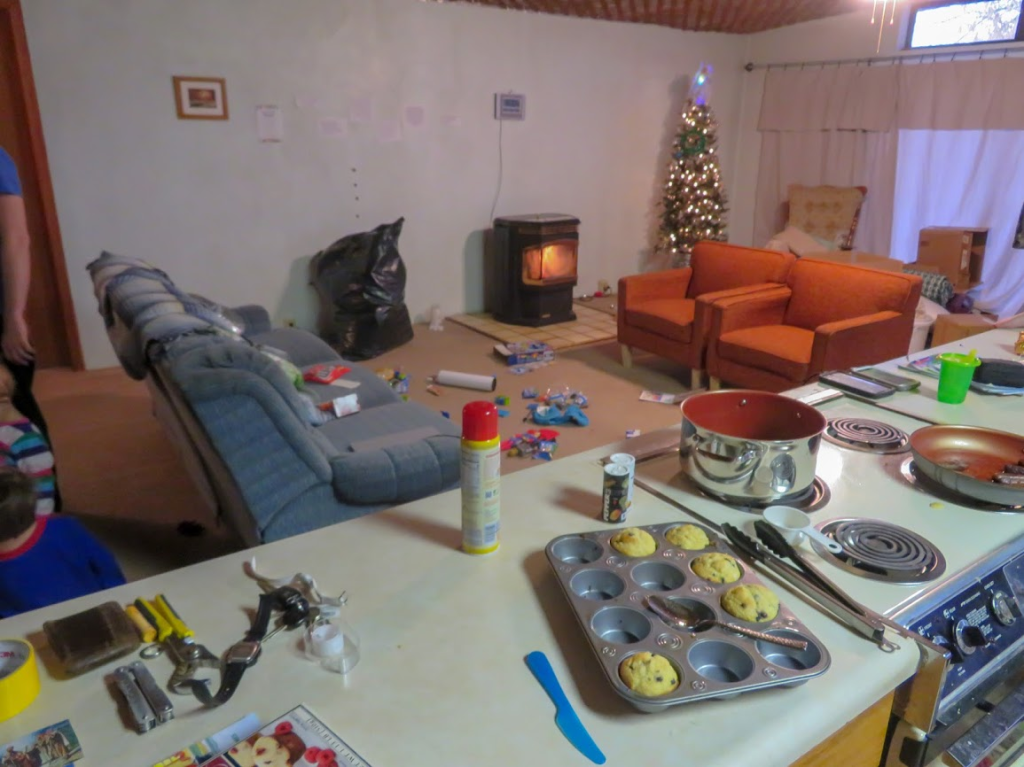
I thought about the Christmas not too long ago when we moved on Christmas Day. I made frog eye salad because I make it every Christmas. We put it in a cooler and we pulled over to a rest stop and ate frog eye salad for Christmas lunch with plastic forks, straight of the bowl. It snowed the day, hard, and we got into our house late and exhausted.
There was another Christmas, a few years before, where I was dealing with mental health issues and did not have a handle on my emotions. I was overcome with anger and ended up throwing the frog eye salad in rage–it landed everywhere, even on the Christmas tree.
Why was I making frog eye salad for Christmas when it was tied to so many difficult times?
Because I really like frog eye salad. It’s a weird combination of custard and acini di pepe pasta and canned fruit and whipped topping. Yes, I’ve eaten it during hard moments, but it still tastes good.
Sometimes Christmas doesn’t need to be the most wonderful time of the year. Sometimes it’s hard and difficult. Sometimes we cry more than we laugh. That’s okay. No Christmas is really perfect. We’re all still people trying our best and failing a lot. But we still keep trying. In all that trying, it’s okay to just let life come in all it’s imperfections.
And if you are going through hard times, it’s good to remember that your favorite food can still taste delicious.
Christmas Morning 2018–the year we moved on Christmas Day


















 Heather Hoyt