-
81. Can I read 100 pages every day?

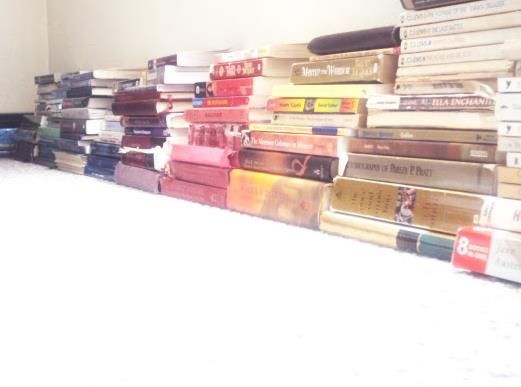
At the beginning of my adult like, I set a goal that I would read 52 books a year for the rest of my life. (Not including picture books, but graphic novels and audiobooks are okay.) And I’ve done it successfully since 2007, when I started keeping track. That’s 14 years and more than 728 books. If I finish this year, I’ll get to 780.
But this year, I’m behind. I’ve used GoodReads to keep track of my reading for quite a few years, and I am 8 books behind schedule. (I was 10 books behind schedule a few days ago, but then I finished two books this week–more on that in a few paragraphs.)
I want to read more, but I’m often reading the internet more than I’m reading books. And I also like television, to be frank, and I’m adult, so I can watch television whenever I want, which takes away from reading.
So I challenged myself: could I read 100 pages every day?
Weeks after setting the goal, I was unsuccessful–I had a few 50 page days, but mostly I was reading somewhere around 15 or 20 pages. Then two days ago, I sat down and I finished The Problems of Philosophy by Bertrand Russell and I read quite a bit of The Secret Life of Bees. I read well over 100 pages.
Yesterday, I finished The Secret Life of Bees. My page count was only around 55, but still substantial. And today, it is 10:30 in the morning and I have already read 100 pages: I skimmed over a nonfiction book that did not require in-depth study.
So I have two days where I read 100 pages. When I was young, this would not have been unusual. My daughter regularly reads over 100 pages. But I’ve gotten out of the habit.
I will keep trying. I need to read 19 books between now and the end of the year. There are 71 days remaining. That means I could read 7,100 pages if I did a hundred pages a day–so, hypothetically, I could read 19 books that are 373 pages long.
I don’t think I will be that successful, but it’s good to try.
(And if instead, I read the Animorphs collection on my bookshelf the last week of the year, I won’t feel bad.)
-
80. How do you remodel a house?

- Obtain a house.
- Assess your house and try to figure out what needs to be changed and what you would like to be changed.
- Try to find professionals to help you.
- No one returns your messages/calls/requests for help.
- You realize that you’re going to have to do it yourself.
- Study building codes and download Sweet Home 3D and spend months studying and figuring out how to do your own building permits.
- Clean out your home from everything that previous owners left/start demoing things that need to go.
- Fix the water system in the house (or whatever pressing project needs to get done even before you get a permit).
- Submit building permits.
- Be incredibly surprised when you are actually issued a building permit.
- Work on sealing out the home from the outside elements by building any necessary exterior walls. (This may require months of digging out footings with a jackhammer and shovel)
- Move into the house full-time right before you need to take the roof off (or do something else that seems incredibly odd in hindsight).
- After finishing exterior walls, put a new roof on the house if required.
- Make sure your land is graded properly.
- Finish out exterior such as windows and doors and siding and all of that.
- While you are working on the exterior, also start working on the interior as well. Start with demoing anything necessary (including things like a squirrel nest) and then framing in any new walls.
- Update electrical and plumbing as needed.
- While doing the plumbing, halfway renovate your bathroom.
- Update HVAC systems.
- Get a 4-way inspection.
Well, I don’t know if I can go any further, because we haven’t even finished that much. And it’s taken over two years. It will take more time and money than you think (my budget has actually been quite accurate, but I was trying to estimate high).
When we finish all of that, we’ll go on to kitchen, flooring, insulation, sheetrock, and painting/finishing, not necessarily in that order, because we’re making it up as we go. We haven’t gone in the right order for a lot of things, because we are living in the house, and we’ve had to make it livable along the way. This takes up a lot more time, but it is a lot cheaper.
We’ve only hired people do our garage doors and some of our doors/windows. We also need to hire an electrician for a bit of the electrical. The rest we have worked on ourselves.
Sometimes I get really discouraged. But sometimes I don’t think renovation is that bad at all, if you take it slow and steady, though sometimes we’ve just been slow and not very steady.
There are mistakes we’ve made that I have to live with. We’d do things different if we did it again–this is our first renovation, and no matter how much we study and try to do it right, we overlook important details and make mistakes. Sometimes we just figure things out by ourselves–while there are lots of YouTube videos, there are certain things about our house that are incredibly unique. Like the spring water coming up in our laundry room that we pump out and use for our house.
But I’ve always wanted to renovate a house. And for the most part, I’ve loved it.

How it looked before we got started 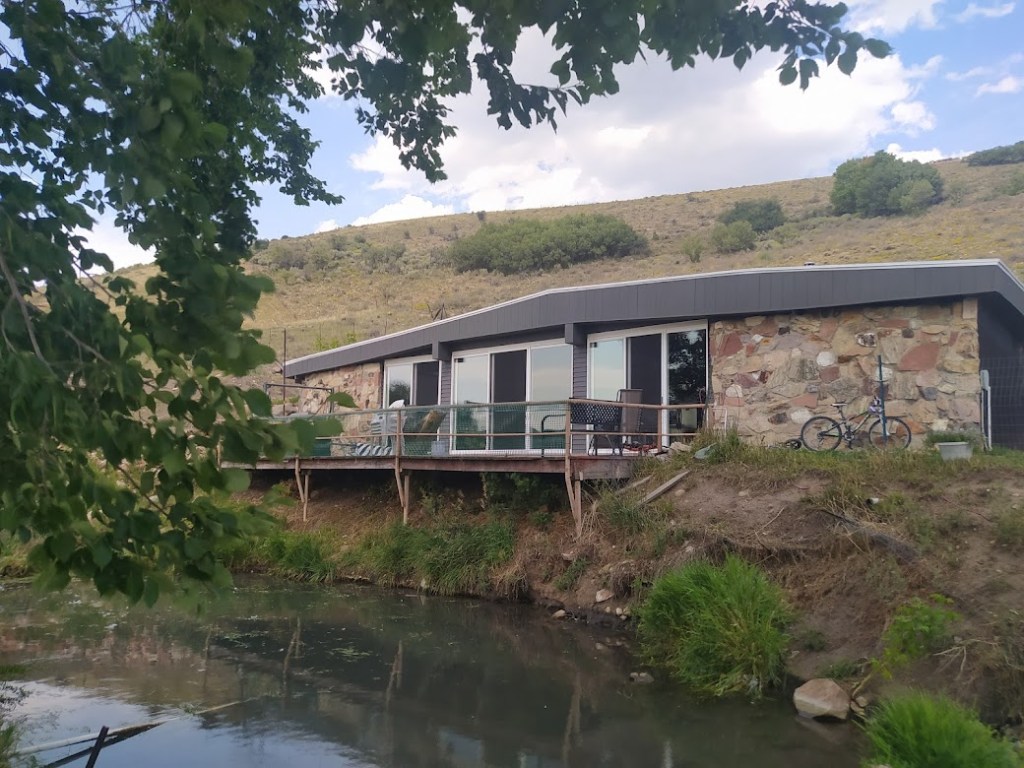
What it looks like after almost two years of work. We still need to work on the deck and the crumbling hillside. -
79. How can I make a decision and stick with it?
I’ve been floundering about what to do with my career/extra time for quite a while. I went and got an economics degree. I had an internship for a while (it didn’t go very well). I’ve applied for jobs, then withdrawn my application. I’ve started to prepare for graduate school, only to rethink what I want to study.
Here’s the thing: none of these choices are really that significant. I’m a stay-at-home mom right now, and if I was a stay-at-home mom for forever, life would be pretty amazing.
But I still would like to do some good in the world, and I will have the time to do it. I just am not sure what I want that to be.
When I was younger, I wanted to write novels. Except for the failure rate of this choice is really quite high, as it’s spending hundreds of hours for hundreds of rejections. I still love writing.
More recently, I wanted to be an economist. And I love economics. I often read and think about economics (as you’ve noticed from a few posts on this blog). But I’m not super interested in or prepared for the graduate level math and statistics that a graduate program would require.
I’ve thought about getting a PhD in philosophy, but Bertrand Russell’s defense of why to study philosophy made me rethink that. He mentions that philosophy is only useful to the people who are studying philosophy–so what good can I do spending five or more years in something that is fun but doesn’t really matter or help other people?
I love school, so I’ve looked at other graduate programs as well. Even dreamed about it last night–my sister made me a recommendation in my dream to go get an instructional design degree.
I’ve looked at jobs, particularly in nonprofit and government, and thought about getting an MPA.
And I want to write books. This is the one thing that never changes.
But then I think about writing articles or getting a job as a writer for some company, and I get less excited.
I also really want to teach college classes. I’ve wanted to do this since I was 19 years old.
So what do I do?
I feel pretty vulnerable sticking all of this out there. I don’t want to share with
everyonethe few people who read my blog that I am wishy-washy and have no clue what I’m doing.I can’t do everything. And I don’t know if what I choose really matters; I just want to choose it and be done with it. I’ve had so many career plans over and over again, and then I fail to act on it as much I think I should.
I need to act more than I need to plan and rethink my decisions. But I am just always planning and rethinking my decisions instead.
-
78. What would your perfect day look like?
Maybe not a perfect day, but what if you had a really good day tomorrow? What would you do? How would you spend your time? What would you not do?
I would wake up early but not too early. I would have time by myself to study and think. I would exercise and go outside. I would read and write and work on my home. I would spend time playing with my kids and I would spend time with my husband. I might go on a hike or take photographs. I would see and visit friends and help others.
Mostly, if I had a perfect day, I would make really good decisions.
-
77. What is the most beautiful thing you have ever seen?
My kids holding hands and playing with each other.
Snow on autumn leaves or spring blossoms.
Fog in the desert.
A finished project that took a long time.
Sunrises and sunsets.
Huge waterfalls.
Tiny flowers.
Falling snow.
-
76. What would God have me do?

This might be one of the most important questions I ask myself, and I should ask it more often. I can charge through life wrapped up in my thoughts and my own wants, and forget that God has a different plan for me.
There are some things that I regret: I feel that I have failed or I have given up. But I forget that God knew where I was going in life, and prepared a way for me to do His will.
I can get overly focused on big things or on the past or the future. But God wants me to start doing little things right now that matter: spending a few minutes here or there in study, reflection, and service.
When I think of what He wants me to do, I better remember the gospel and the covenants I have made. I think more of other people, increasing in charity and love. I see my children and my family; my neighbors and my friends. And I feel that doing those little things that God wants of me is enough.

-
75. How can we quantify success and does it matter?
I often look at how many followers/subscribers/views that a social media account has. I can look at my own counts. And higher counts generally mean higher success.
If you write a book, it’s more successful if you sell more copies.
If you make a movie, it’s more successful if you have more views.
If you have a career, it’s better if you make more money.
But is it?
We often use other metrics of success imposed upon us from other people. But there is no universal definition of how to quantify success.
You get to determine what success means to you. You get to determine what you want to accomplish and what you are most proud of.
Sometimes, success doesn’t mean more. Sometimes, success doesn’t have to be big and grand.
Success can be found in the little things too.
-
74. How have my beliefs changed?
When I was young, I made a bucket list of things I wanted to do in my life. One of them was to go do humanitarian work in Africa.
There are problems with this goal. For one thing, I was of the opinion that the whole continent of Africa was all sort of the same, and that every one in Africa was poor, and that I could go and do something meaningful to help that.
But the whole continent of Africa is not the same at all. And not every person in Africa is poor. There are other poor parts of the world. And helping in the way that I want to may or may not be helpful to actual people.
In college, we were required to memorize African countries for a geography class, my professor trying to reinforce that Africa is not just one place. Different parts of Africa have different cultures, different problems, and different successes.
The more I learned about the world, the more I realized that so much of what I believe was wrong. For example, you can look at this website, Dollar Street, and you can see actual pictures of how people live in lots of different places. And people aren’t stereotypes.
I also remember thinking that if you had a genetic disease that you would most likely pass down to your children, you would probably not want to have children.
But if you have a disease, your life is still very worthwhile, even if it might be more difficult. You are worthwhile. And even if your children had that same disease, they would also be worthwhile. Their lives would having meaning too.
It’s a more complicated decision than I thought.
I also sort of assumed that if you were disabled in any way, you would want to get rid of that disability. But that’s not true at all. Being disabled does not make someone broken.
I’ve had to challenge other beliefs I had that were racist and mean and not what I want to believe anymore. Like I used to think that being color blind to race is a good thing, but it’s better to acknowledge and celebrate differences and heritages.
I’m grateful for the ability to learn more and I will keep trying to challenge my beliefs. I’m wrong. I’m wrong more often than I like to admit. But I’m going to try to teach my children to be better and to improve myself so that I can be more compassionate, understanding, and believe better.
-
73. What is a game theory model for laziness?
It’s 8:00 in the evening and my house is a mess. I have two decisions to make: I can clean the house, or I cannot clean the house. I could also watch movies, or I could not watch movies.
Now I have two different sort of payoffs: my lazy self, who really likes watching movies, and my productive self, who really likes getting things done.
I have four options: I could not clean the house and watch movies. I could not the clean the house and not watch movies. Or I could clean the house and watch movies. Or I could clean the house and not watch movies.
Let’s look at the payoffs for each option.
- If I watch movies and I don’t clean the house, that makes the lazy part of me happy. 10 points for her. My productive self likes the movie a bit too and is very distracted from feeling guilty, so she gets a payoff of 1 point.
- If I don’t watch movies and I don’t clean the house (just sit around doing nothing), my lazy self isn’t happy (0 points). And my productive self feels guilty (-5 points).
- Now let’s say I clean the house and I try to watch movies. My lazy self is sort of happy, but distracted (5 points), and my productive self isn’t very happy because her attention is being pulled in two different directions (0 points).
- And finally, I clean the house without watching movies. My productive self feels really good (20 points), but my lazy self is indifferent (0 points).
Don’t clean the house Clean the house Watch movies (10,1) (5,0) Don’t watch movies (0,-5) (0,20) (Lazy self, productive self). So what decision would I make?
Well, my lazy self always wants to watch movies. That’s a dominant strategy. So I’m going to turn on a movie no matter what.
So when a movie is on, I would rather get totally distracted by the movie than try to split my focus and watch the movie and try to clean up at the same point. So the equilibrium is that I watch movie and I don’t do anything.
I really would rather clean up the house and not watch a movie—I get a much bigger payoff. But a lot of times, that’s not what happens.
If I want to change my behavior, I need to change my payoffs.
So what could I do to change the game?
Well, if I listen to audiobooks or music, then my lazy self can have a higher payoff when I’m cleaning the house. And if I make movies harder to get, then there isn’t as big of an incentive to watch movies.
And if I have a guest coming over or some other motivation, there’s a much higher cost for not cleaning the house.
I’ve change the game:
Don’t clean the house Clean the house Watch movies (8,-10) (4,0) Listen to audiobooks (5,0) (5,20) In this second game, I want to clean the house and listen to audiobooks. It’s a much better game with better payoffs.
Game theory can be really helpful to try to figure out why we are making the decisions we are and how to change that decisions so that we are happier and following our values better.
(Thanks to Ashley Hodgson—her videos inspired this post.)
-
72. Who is the audience for my life?
I watch YouTube videos or social media posts and people often share their lives to specific audiences: a group of friends and followers who have similar interests. Some people have rather large audiences; some of them are quite small.
If I were to teach a writing class, I would emphasize the importance of knowing the audience you are writing to. In this blog, I’m writing for myself and for a few family members and friends who drop by and read it. That means I have a lot of flexibility to say whatever I want. But writing to a specific, focused audience leads to better writing. For example, when you write a resume, you have to think of the people who will be looking at a resume–and then you have a much better chance of getting a job.
So many aspects of life have audiences. I am my own audience, often, having to live with myself, watching myself, and remember what I did. But my husband, my children, my extended family–they are often the audience of my life. My audience can include neighbors and friends and coworkers. Sometimes I think of ancestors and angels as my audience too.
And God is always there, watching.
I know there is this idea that you dance like no one is watching. But recognizing an audience makes living so much more intentional, and can help bring focus, purpose, and motivation for everything you do.
My main audience is my Heavenly Father, myself, and my children. My children are with me more than anyone else. They are watching; what message do I want to give to them?
When I have an audience, I can perform for them, reaching to be my best self and helping them in the process.
-
Subscribe
Subscribed
Already have a WordPress.com account? Log in now.
 Heather Hoyt