-
Goals and Climbing Mountains
A while ago, I joined the Proper Mountain Woman club for a season after a friend told me about it. My sister, Liz, also joined, and we had a lot of fun earning merit badges and completing and sharing projects. I did not continue membership in that club, though it was a fun experience. But Liz and I had both shared our progress with each other, and we wanted to continue to do so.
So Liz created a Discord server where we could continue to share the goals we had finished. We invited our other sisters as well. We do seasonal goals–winter, spring, summer, fall–with a few ranks that we can earn. You can get a rainbow rank for completing a goal in each category (spiritual, social, physical, intellectual, service, family, home and garden, career, nature, fun, food and finance, creative). Or a mountain rank for sharing 50 accomplishments and completing a large project. We also share ideas for different goals we can set.
This changed my life.
Since I was little, my dad would sit with me and we would set goals. I always loved to plan and set goals for myself, and I was fairly good at accomplishing them. I wasn’t the sort of person that would set New Year’s resolutions once a year and then forget about them completely. While I definitely fail at my goals sometimes, goal setting has helped me focus my life and spend my time in worthwhile pursuits.
But before, sometimes my goals were more of a to-do list that I just wanted to check off and forget. If you think of most to-do list apps, when you get something done, it disappears, checked off forever. Even in a to-do list, you often will scribble something out. This can be effective for certain things, like daily tasks. But it’s a bit discouraging when all you are looking at is the things that still need to get done, a list that never ends.
When I started reporting my goals to my sisters, though, I was doing the opposite.
I have a spreadsheet now that I track my seasonal goals with. I write down what I want to do in a season, and when I finish something, I literally highlight it in a bright color. And so whenever I’m planning, I already feel quite encouraged, and that gives me enthusiasm to do more.
Instead of crossing off my goals, I was highlighting sharing them. My focus changed from just getting stuff done to actually celebrating the thing that I was doing.
And it is so wonderful to share goals with other people, and have them share with you as well. It’s not at all about comparison, but about sharing and celebration. I love seeing what other people are accomplishing. It gives me added motivation. And I loved sharing projects with other people. It gives added meaning.
I think I am more proud of myself, and I mean that in a good way. I think there’s a negative version of pride, when we think we are better than others, but there is also a positive version, when we’re pleased with ourselves, when we know we are on the right track, and we feel more confident in our own abilities. There is a lot of satisfaction to know that you did something well–maybe not perfect, but good enough.
And I feel like I’m challenging myself better. Because it’s really hard to be completely self-motivated, to challenge yourself when no one sees the results. I have evidence now, evidence that I can share, that I am becoming a better person and do something meaningful with my life. And I see my sisters growing too. It’s powerful (and life-changing) to do it together.
TL;DR
- Stop checking everything off your list and highlight accomplishments instead.
- Find someone to share with: share your goals and the fun and good things you do with your life.
- Count the stuff that you did that wasn’t in your to-do list in the first place.
- Gamify your goals just a bit: have fun ranks that you can achieve.
- Set goals about things you want to do, not just things you feel like you should.
-
Light in the darkness

I think I figured out what I want to write my dissertation on: it’s somewhat focused on self-interest, but also on altruism. I’m really curious about if we need to be self-interested or not. Do we need to take care of ourselves? Is it necessary that we worry about our own well-being? What about the people that sacrifice so much for the service of others?
Christmas time has always been a time of service for me. Sometimes I feel weird about it–I’m buying presents for my kids and spending so much money on my own family–but I also want to help other people too. I hear of some people who give all their Christmas money to others, while I find myself giving my children more presents than they really need (or even perhaps want). I wonder if I could be doing more good.
We visit Giving Machines. We contribute to charities. We take tags off the Giving Tree in the elementary school lobby and I have my kids pick out presents for others. I look at service projects in my community and try to sign up–play the piano at a hospital, clean up after an event, volunteer at the food pantry, make blankets.
And then my kids get sick and I have to cancel half of the things I volunteered for so I can stay home and take care of them. I feel conflicted about what is self-interested and what is serving others: did I volunteer just so I felt good about myself? Or because I felt it as a duty, but I didn’t really want to do it? Or did I genuinely care about someone besides myself?
I worry sometimes about the impacts I have on others. I have the biggest impact on my own children. I want them to learn to look outward. I make cookies and bring them to neighbors. I send out Christmas cards, but I am afraid I have forgotten people. I go and visit elderly friends and tell them I will return to visit another time because the visit is never long enough.
I tell my daughter that happiness comes in the service of others. But I don’t think I serve other people in order for me to feel happy. Instead, I serve them because I want them to be happy. And my own happiness comes as a by-product. It may be impossible to make someone else happy without making yourself happy as well.
How much do I need to give? How much do I want to give?
I look at the holiday displays people make and I wonder for a moment if all that money could have been given to charity instead. Yet, if everyone did that, we would not have the light filling up the dark space of December. And I love Christmas lights.
Perhaps there is simply enough to do all of it–to give presents to my children, to donate to charity, to help other people, to enjoy the twinkling colorful lights. Perhaps our time and money are not as scarce as we sometimes believe, and there is more than enough.
But that isn’t quite right, because sacrifice is necessary. Sacrifice is praiseworthy and good and beautiful.
I remember all the stories in my life about sacrifice: My grandma sewing clothes for my mom and surprising her during a meager year. My mom searching to give me a Furby, despite the fact that they are sold out everywhere. My husband buys a friend his only Christmas presents of the year, and even though it is a simple fruit cake, they share it gladly.
When there is scarcity, people give in service to others, even though it requires sacrifice. They prioritize others about themselves. And that is right. That is light.
I hear people on Instagram telling me that I should prioritize myself at Christmastime. That I can ask for presents and spend time for myself. But I don’t want to. I want to connect with others so much more than I ever want to receive for myself.
That connection means that I do receive: I am invited, included. Others wrap presents for me and put them under the tree because they love me. And I receive that with gratitude.
No moment of my life is about myself. It is always about someone else, above giving and serving and helping and maybe, maybe making someone else’s life just a little bit better. Whenever I have pursued my own self-interest just because of my own selfish desires (and it happens more frequently than I want to admit), it has drained my life of purpose and led to unhappiness.
The light that shines in the darkness is that we love each other, and that we are loved. We celebrate Jesus Christ who loved us so much that he gave everything to us. In ever gift I give and receive, I remember the greatest gift, a light to the world.

-
Some Favorites from 2023

Places: Goblin Valley and Disneyland. I love Goblin Valley and we ended up going there twice this year, and it was loads of fun to walk around and explore. But Disneyland is magical, even if it is this weirdly artificial sort of magic, and I’m glad we went.
Discovery: Laziness is okay. It’s okay to not get things done all the time or not to complete assignments when they aren’t really required or to clean your house when you feel like it. I still also value working hard and not squandering away my time, but I don’t always need to be working.
TV: Strange New Worlds. I’ve watched a lot of Star Trek, but Strange New Worlds was the most fun.
Song: Anna Lapwood’s adaptation of Test Drive from How to Train Your Dragon. Not only do I love to hear Anna Lapwood play this, but she published sheet music and I’m trying to learn it.
Movie: What’s Eating Gilbert Grape and Across the Spider-Verse.
Book Series: The Unselected Journals of Emma M. Lion by Beth Brower. I read all of the published books this year and look forward to reading them for years to come.
Fiction book: Left-Handed Booksellers of London by Garth Nix. This was very enjoyable and good fun. I enjoyed the sequel as well.
Self-help book: The Upside of Stress by Kelly McGonigal. Life needs to be a bit stressful. Did a video lecture on this for a teaching assistant assignment.
General nonfiction: Being Mortal by Atul Gawande and The In-Between by Hadley Vlahos These were great books to read together, both a combination of personal experiences and learning about the end of life.
Philosophy books: Choosing Well by Chrisoula Andreou and The Tyranny of Merit by Michael Sandel.
Functional purchase: My desk and office chair.
Most fun purchase: An incubator, since we got baby ducks out of it.
Surprising purchase: Running shoes. I didn’t think I ever would like running, but I ran a 5k and 10k this year.
Podcast: Lateral with Tom Scott. I don’t usually like podcasts, but I love this one.
Ideas/research: I really like learning about narrative economics, intrinsic motivation, self-sacrificing altruism, and self-interest.
YouTube channel: How to Cook That. Consistently great videos that I always look forward to.
Project: Finishing my home renovation.

-
Why I believe

Because I feel God talking to me, inspiring me, guiding me in my life. Because practices like prayer, church, temple, scripture, and ministering enhances that communication and that relationship. Because I have had personal experiences that sometimes I can’t even put into words properly where I feel God’s presence in my life.
The reason I believe is my own experience. And that to me is at the heart of religious knowledge: we believe because of our own personal experience. That is what my religion tells me: not to simply trust others and in their experience, but to get my own experience instead. To pray to God. to hear him speak back. I yearn to feel close to God because that is the best feeling in my life, one of love and peace.
And some, many, people do not have the same experience that I have. So I must respect them for what they believe, whatever that may be. We may come to different conclusions. combinations of doubt and faith and belief in conflicting narratives that I do not always understand. I do not know another’s experience, but I can understand that if experience is where we gain spiritual knowledge, then I cannot force belief, I cannot persuade, I cannot argue. I can only share. And hope.

-
Honesty
I was in a behavioral economics class today, and the teacher mentioned a recent article that talked about how some academics had been faking their data. There is a lot of pressure in academics to get published, and to write papers with interesting results. And so some people manipulate their data in order to get those results.
I did my own study a while back. The results were not conclusive. There wasn’t really much of a statistical effect. And that’s pretty normal, because when you study humans and human behavior, the main result from any study at all is that people vary.
But that isn’t very interesting. So people lie instead. And then there are a whole lot of studies out there that can’t be replicated and don’t mean anything.
There is one pretty well-known study about fines and daycare. The paper says that when late fines were introduced into a daycare system, this actually caused an increase of late parents. But if you look into the study more, it hasn’t been replicated (and some other studies suggest that fines do deter behavior just fine). The data and reporting may not be entirely accurate. So while the result is interesting, it may simply be a fiction.
Scholars need to be more honest when data doesn’t come up with any results. But we also need to be more honest about how most of the results of human behavior studies aren’t that conclusive.
And people need to just be more honest in general.
I’ve been grading a lot of student assignments, and I think at least 5% of the students use artificial intelligence to either help with or do the assignments for them. This is against the class policies. Maybe that’s not a big percentage, but it might be a lot higher, as it can be difficult to actually determine if someone is using A.I. or not. I spend a lot more time grading because I have to try to figure out who is using A.I. or not. It’s not the usage of A.I. that is necessarily a problem, but the dishonesty of passing off A.I. as their own work.
Sometimes I don’t want to trust anymore. I don’t want to trust scholars who have incentives to make up their data. I don’t want to trust students to act with academic integrity.
But I have to trust. And I know that a world where I can’t trust anyone would be absolutely miserable.
I need to work on my own honestly sometimes–I don’t generally lie, but sometimes I will remain silent. Sometimes I need to open up, speak up, and be more vulnerable about where I am at and what I am struggling with.
Maybe some of this dishonest comes from these pressures to perform: publish papers, go to school, get good grades, be successful. And struggling doesn’t feel like an option. Coming up with inclusive results isn’t an option. Running out of time to do an assignment isn’t an option.
We need to be more okay with failure. We need to expect it in the people around us and expect it in ourselves because it’s going to happen. And that expectation can make honesty so much easier.
-
Complications
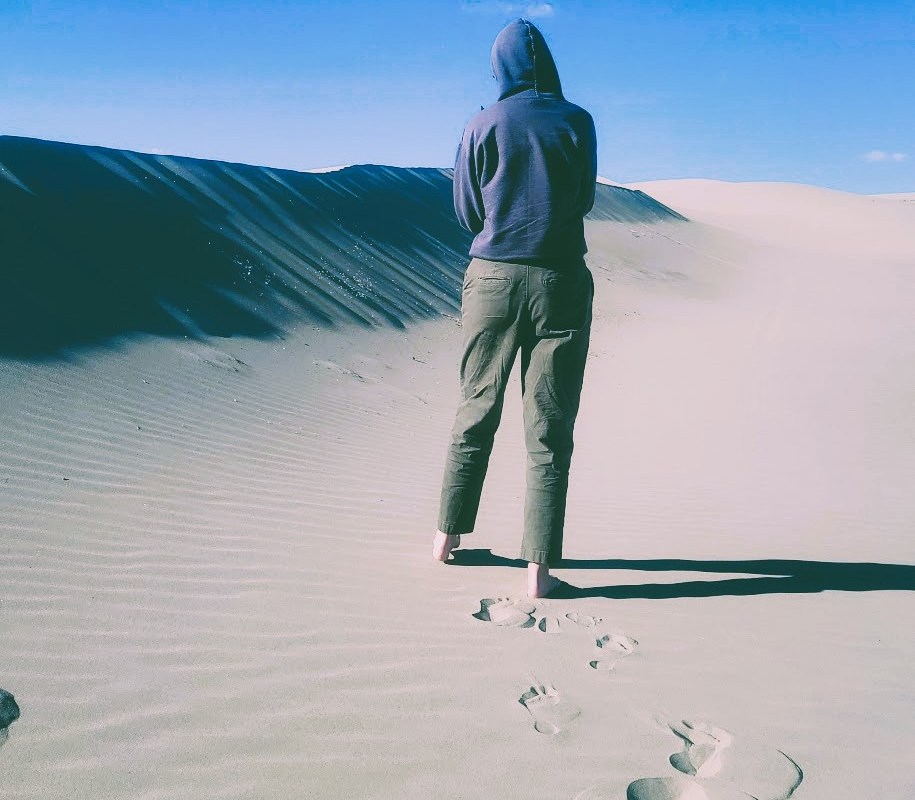
Sometimes we are trying to make sense of the world, and the world doesn’t make sense.
Would it be better to live in a perfect world, where we all do the right thing? Or is it better that we can make mistakes and fix them and become better? I am inclined to think that I need a world where people mess up. That I would not want a world where mistakes rarely happen. There is something beautiful about failing and then getting up and trying again.
Mistakes mean that I can get hurt, and that others get hurt, and that really horrible things can happen. But people can also change. People can improve. And people can be loved even when they aren’t perfect.
Suffering can bring transformation. I love who I am right now, even though I am imperfect, and I love seeing myself grow and transform into someone a little better, a little different.
I learn to love others not because they are prefect, but because they are flawed. It is in the moments when a person makes a mistake when I rely on my love for them. I hold them close when they think they are failing, and they often reciprocate when I fail too.
We work to make the world a better place, but in order that work to happen, the world has to be full of mistakes and wrongs and suffering. Improvement only comes in imperfection.
-
Going down another path

About a year and a half ago, I was looking down two different paths of life. One was writing. Specifically, writing inspirational nonfiction. I had written the book. I had the ideas for another book in my head. So I went to a workshop to get better. I learned. I kept editing one book and outlining the other. I thought I could do this, if I kept working hard and improving and learning. I have always wanted to write and publish books.
I was networking with people and following social media accounts where people shared wonderful things. Sometimes they shared how they felt called to speak and write, and then success came. I wanted to feel that way too, but I didn’t.
There was a second path. I applied to graduate school, in philosophy, at only one school. They only let in a few people. And I was waitlisted first. I wasn’t sure I would get in at all. But I also felt it was the right path for me.
I’ve really wanted to be successful in certain ways: like having people read my blog, or read my books, or follow me on social media. I wanted to get things published and out there for people to see. But that never happened.
The second nonfiction book I outlined is called The Joy of a Simple Life. It’s about how success and failure often need to be reframed. Helping others in a small sphere of influence is a good and successful. Even if that means you’re a mom spending all the time on your kids. Or a teacher, spending hours just so a person can understand what a metaphor is. Or a neighbor, patiently checking in with your friend. Those things matter. Those things matter more than the big things that we put labels of success on.
I recently got a rejection letter for my book. It was expected, but it did finally close that chapter of my life. I still love writing, but I also am starting to really love teaching and education even more.
I don’t know if I’ll ever get a book published. I still want to. But that isn’t really what success looks like for me anymore. I think the more important work I do is interacting with individuals. It’s small and simple, but small and simple is the best kind of impact I can have.

-
No right answer: it’s not an optimization problem

The great majority of all our decisions are not between right and wrong, where there is only one good pathway to take.
Our decisions are often between one good option and another good option. Sometimes they are between five bad options and no good options. Sometimes we have no idea how many options we have, and we just pick something that’s good enough.
I have had the hardest time making decisions regarding my kids’ extracurricular activities. I am actually grateful I live in a smaller town so there are less options. But even with the few options I have, I feel like I have to figure out how to optimized my child’s potential so that they can both be happy and also become the most capable that they can be.
But choosing extracurricular activities is not an optimization problem, where there is one best answer. I don’t have the necessary information to optimize, because my kids are young and I don’t know if they will like something or not. They have to try it out first. And skill is not just built on natural talent, but also grit and determination, so sometimes I have no idea what a child will actually be good at. There are too many factors, many of them are just chance.
It’s not that my child and I will choose the path that will make them the best version of themselves; we’re just choosing between different versions, and there is no way to determine which version is better.
Acrobatics, choir, drama, soccer, basketball, swimming, art, coding, crafting, fishing, archery–any option is fine, really. There is no right answer. They just need to try something, hopefully find one thing that they sort of like, learn how to work hard and do their best. It doesn’t matter if we decide to play soccer, or take dance lessons, or whatever.
I do think there can be some choices that would be problematic: involving my child in too many extracurricular activities, for example, so that we have more to do than we are able to accomplish. Another problematic option would to have my kids do no extracurricular activities and then give them unlimited screen time.
But in the middle, there are just a ton of options and I can’t tell which was is the absolute best, so we just choose something and hope for the best and make adjustments as needed.
Relatedly, this attitude has helped with menu indecision. I used to view menus as an optimizing problem where I would try to order the thing on the menu that would give me the most pleasure for the least amount of money. But I didn’t have the information that made this possible (usually I haven’t tried anything on the menu yet). So I stopped viewing ordering food as an optimization problem.
It’s an exercise in exploration instead: I’m just going to try things out. I will dislike things. That’s part of the uncertainty of life.

-
Productivity Thoughts
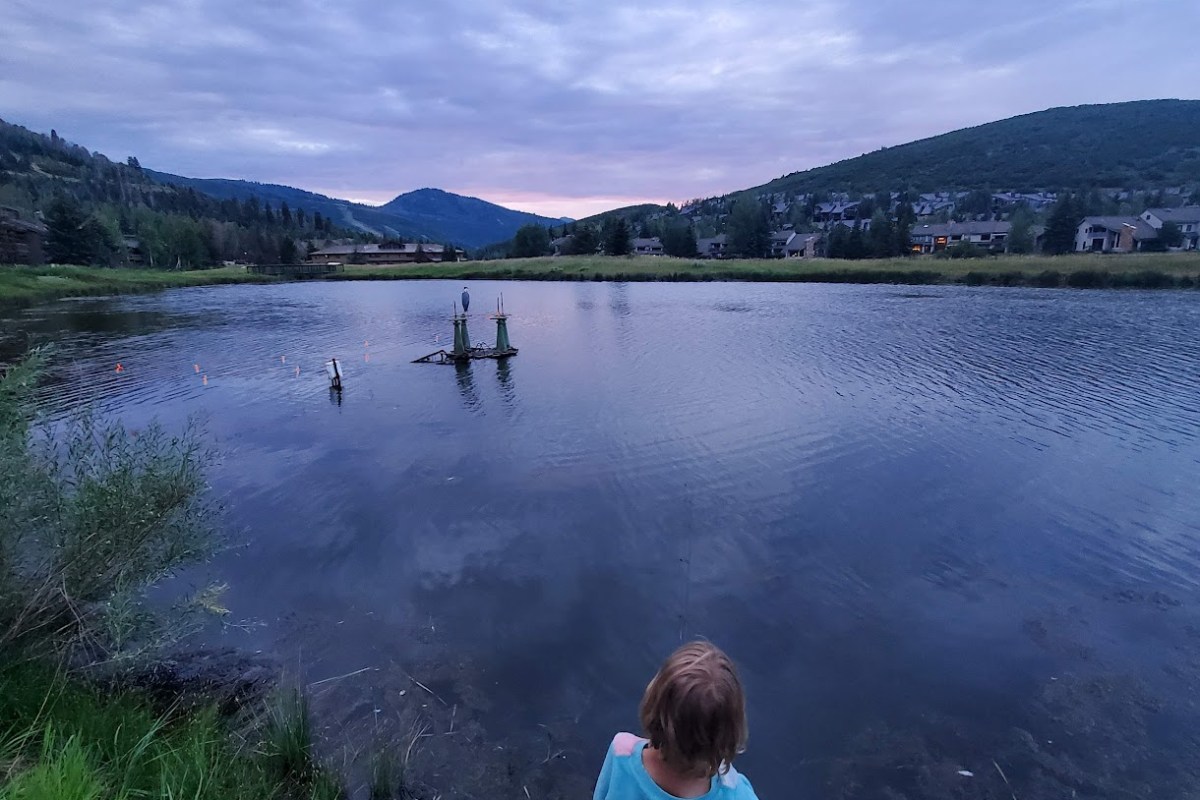
Being productive is more like going on a hike than floating down a river. And sometimes I am floating down a river, going with the flow of whatever happens next. It’s not productive, because I’m not actually going anywhere I need to be.
I need to plant my feet, let the water and the the distractions and the unimportant just flow away, and start heading towards a destination that I really want to go to. I can get momentum that way, but it’s momentum with purpose, instead of just going with the flow of whatever.
I can spend too long trying to figure out what direction I am going. I often just need stop planning and do the thing instead.
But sometimes I am doing the wrong things. I get caught climbing the wrong mountain, or climbing too many mountains, working with purpose towards something that has little worth. I need to simplify my like, because I often plan more than I can ever do. I need to prioritize. I need to eliminate things I don’t want to eliminate.
Sometimes my projects are long and slow, stretching out into years. But if I work small steps along the way, the finish line comes closer and closer.
Sometimes I get things done quickly, and then fix them later. And that can be a good way to work.
Sometimes I only do things poorly, or half-baked, and it never gets fixed, and that’s okay.
Sometimes I have to cross out some of my goals because other things are better.
Sometimes I slowly wade into something instead of jumping in. Sometimes I need to jump in more quickly. Sometimes wading in slowly is still fine–because I’m heading in the right direction. Keep going.
Sometimes I keep trying, but I give myself grace along the way, realizing that I am not perfect, but I’m trying.
Sometimes I have to remember that life is more than getting things done and it’s okay to have leisure time and to do things I want to do.
And sometimes I just mess up and do things completely wrong. But sometimes, I get things right.
-
Doldrums of Summer
I really like structure, but I’m not good at self-imposed structure. Which means that summer break is hard. No structure. Just endless days of trying.
And I’m sort of done with it now. It’s fun in the beginning to have more time as a family and to feel free from the confines of school. But then there are days and days that I just have to figure out, not only for myself, but for the rest of my household. And that household is a lot sometimes. I have an almost-teenager who wants to be with friends all the time, an almost preteen who primarily plays video games, a scattered boy who is often imagining, and a little girl who thinks that I need to entertain her. And I also have two cats who poop by my front door, two geese who like to tear things apart with their bills, one duck who decided to go broody, and two baby ducks who are quickly growing into adults. And a turtle who likes the occasional strawberries. I also have a house and a yard that have their own needs that I don’t always meet very well.
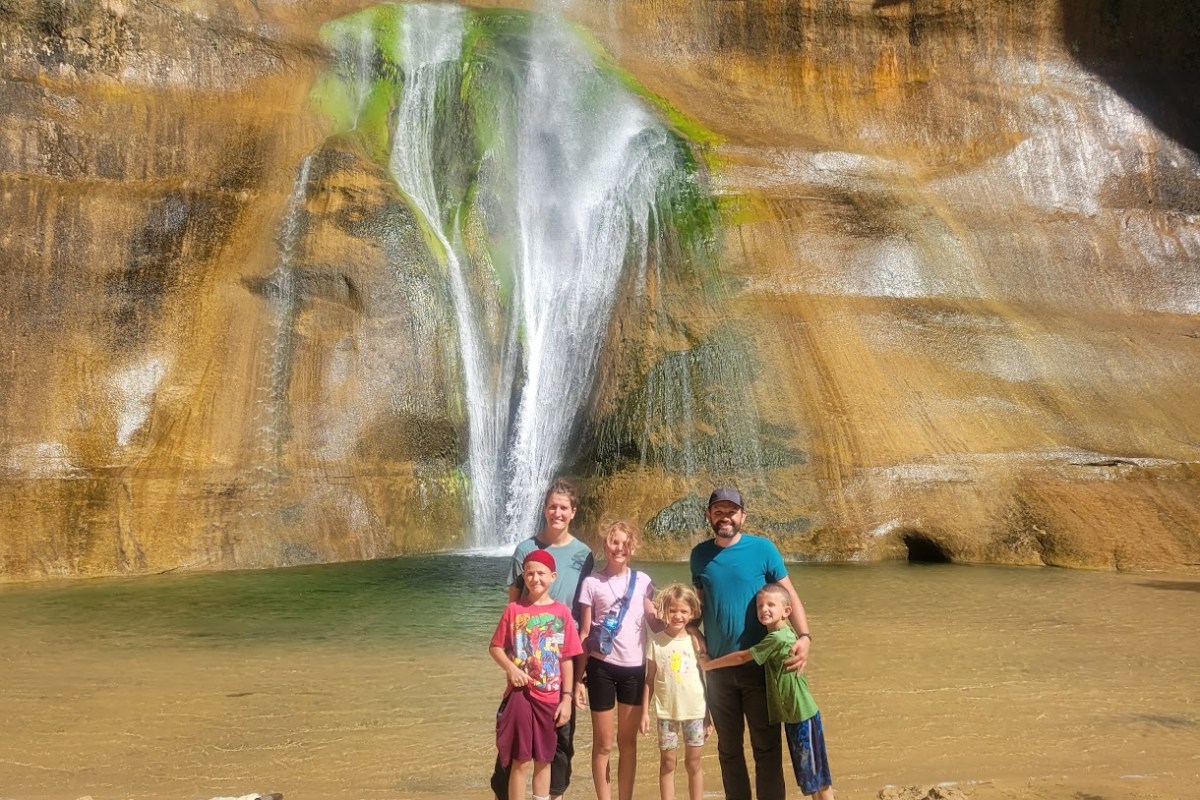
We have gone camping and hiking and swimming and canoeing. We’ve gone on a bike ride and played with a slip ‘n slide. We’ve been to parades. We’ve had birthdays and parties. We’ve seen family. We’ve gone to national parks and state parks and city parks.
We’ve had some awesome experiences. And some really good little experiences too. And I am really grateful for all those good summer moments.
But so many messes. So much complaining.
I miss structure. I miss needing to be places and do things because other people are expecting me to show up. I miss my own school. I miss my kids having structure. I just don’t love being home with them all day for days on end. We usually go lots of places so that we’re not home all the time, but sometimes we get sick of going places too.
I miss school lunch. I miss my kids’ teachers. They are wonderful, and they deserve a good break (and better support and more pay). They enable my kids to be better. They help me so much in raising my kids to be the best version of themselves. It’s hard to do it without them during the summer months.
If you are struggling with summer, you are not alone. It’s hot and tiring and itchy and exhausting.
I will keep going, and do the best I can to enjoy the rest of my summer. We still have great things planned: more camping, more hiking, more canoeing, more fishing.
There are only 26 more days . . . that’s the number of letters in the alphabet . . . maybe I can making something fun out of that . . .
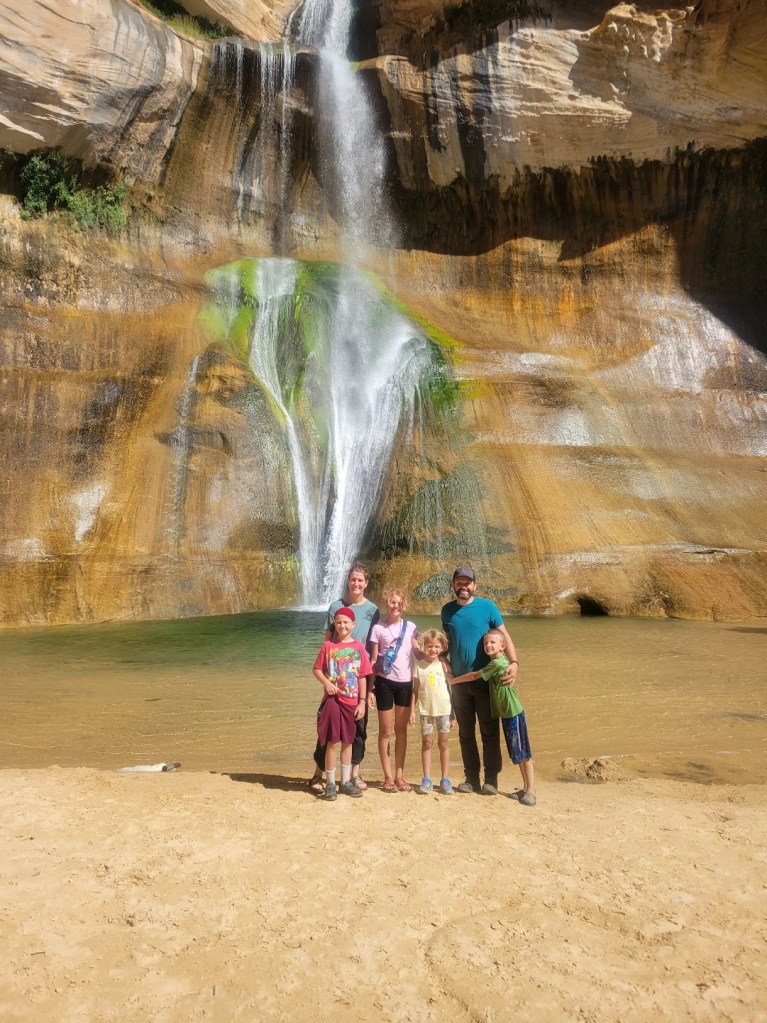
(That waterfall was a highlight so far this summer.)
-
Subscribe
Subscribed
Already have a WordPress.com account? Log in now.
 Heather Hoyt