-
Photos of a warm winter















-
Thoughts

I have a hard time talking about current events on the internet. Recently, I said to some people that the certain things in the world are a dumpster fire right now. I don’t know exactly how to think about it, how to say something that’s not already been said. I believe in caring for people and in protecting rights and freedoms and life. I believe in improving equality and equity, and that we should work to make the world a better place instead of pursuing our own self-interest. I believe in democratic values and honesty and transparency. But sometimes, I mostly just feel powerless, a spectator, and I’m unsure of what I can do that would actually make a difference.
I don’t think we should engage in contention to fight contention, or that we should hate those who are hateful. Sometimes the best way to get rid of the fighting is not by fighting back, but by refusing to engage. Refusing to stoop down to hatred. But it’s so hard, because we can get so angry–and anger can be motivating and useful. But if anger drowns out love, if we can’t see hope anymore, then maybe we’ve gone too far.
I do have hope in a better world. I’ve seen a lot of things get worse in my lifetime, but I know that there are good people working toward good things, and good changes have happened too.
My son was once frustrated with all the ideas that he had. He knew they wouldn’t all happen, that they couldn’t happen. And he was sort of mad that he had all these ideas that would always just be ideas.
But we don’t want to get rid of all the hopes and dreams of what we wish the world could be. The world is better with our ideas and our hope, even if things are still hard, and those ideas and those hopes aren’t realized.
I used to make goals and to-do lists and scribble things out, always feeling like I never got things done–never on top of things, never the better version of myself that I want to be. But I’ve tried to remember the good things that happen in life and the good things that I have done. I write down the accomplishments.
We hope for a better world, and we work towards it the best that we can. We recognize progress we make, even if it’s slow and halting. We keep approaching life with kindness, towards ourselves and others.

-
Why the label “tradwife” is harmful to caregivers
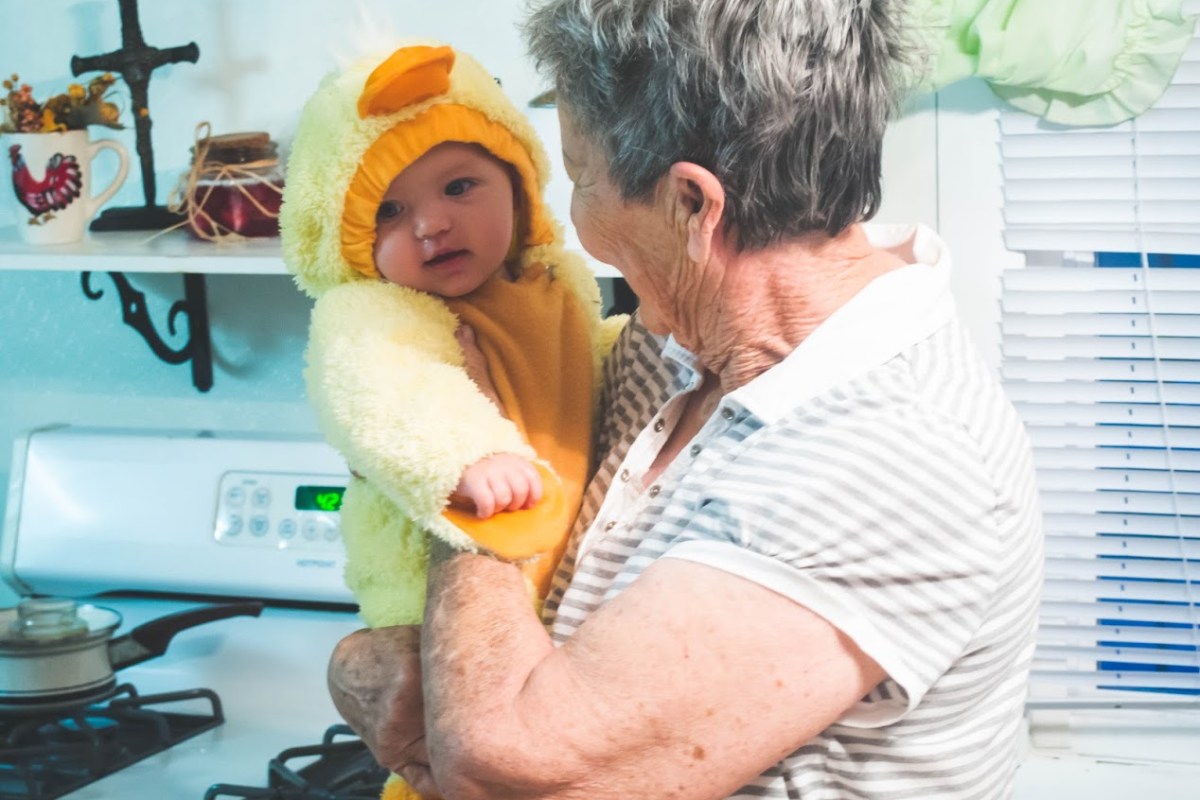
If I could, I would through the “tradwife” label in the garbage. And we just wouldn’t use it anymore and we wouldn’t talk about it anymore, and we’d talk about more important things.
It’s a divisive term. Either it’s used as a derogatory label, or it’s used as a label of pride, and in both cases, people are saying that one way of living is better than another. It’s also a label that is ill-defined and it ends up labeling good behavior as problematic.
Care work is something that is really important and something I have passionate about. Caring for children, caring for the elderly, caring for those who deal with disability, caring for each other. Care work is often unpaid, and when we do pay for care work, we don’t pay enough. If you think of teachers, daycare workers, nursing assistants, and many, many more, they are often overworked and not paid very much for the work that they do. It’s often a labor of love, which is a weird of way of saying that they aren’t properly compensated.
But a huge amount of care work is simply not paid for. Mothers and fathers take care of their children. And then those children grow up and have to take care of their mothers and fathers too. Families are primarily about caring for each other, but care work is not limited to families: we care for neighbors and friends and those who don’t have family.
Since we are accustomed to valuing things with money, the lack of payment usually means that we don’t value care work. There are other ways to value things besides money, and I’m not going to argue here we need to start paying for all the care work that is going on. But I do think it needs to be valued.
Unpaid care work is not a part of GDP and how we measure the value being produced in a country. And it’s not often a part of policy discussions. There are real problems with certain structures of our society and how it relates to care. For example, if you need to care for a sick child, but you have a job, they can just fire you if you miss too many days. They don’t need to give you time off. Many are stuck in this situation where they have to work in order to get money to care for people they love, but they can’t care for people properly because they have to work. Some have good, stable family support that makes it possible, but sometimes that falls apart.
Care work often falls to women, but it is not and should not be limited to women. Everyone can be involved in care, and we need all sorts of people to care for each other. But we need to start valuing it better and protecting and enabling those who spend most of their time caring for others.
Caring for others is not a selfish, leisurely endeavor. It adds value to society in absolutely essential ways. We cannot function without all the unpaid care work that is being done. But it also not the only valuable work that is being done either. We need people in all different spheres of life.
When we label mothers as “tradwives,” we’re not entering into a helpful conversation. There should be no split between “traditional” and “modern” values. There are simply the values of existing, of being human. We’re often really just valuing the same things, even if we do it in slightly different ways. Those values are pluralistic and they are complicated, so sometimes it’s difficult to figure out how to make them work with our circumstances.
- We value education and learning.
- We value family and care work.
- We value contributing to society in a worthwhile career.
- We value the hard work that people put in at home and in their job.
- We value treating people with respect.
- We value peace.
Sometimes people make choices that we don’t agree with. Sometimes they make stupid decisions. We all do. But more often they are simply choosing to focus on different values in different ways. We all have to figure out how to make our lives work, and it’s all going to be slightly different, and it’s never going to be perfect.
- Some people are going to be full-time caregivers, doing unpaid work in order to help those they love.
- Some people are going to balance work and home and try to figure out how to make money and how to care at the same time.
- Some people are going to spend more time working than on caregiving.
We can respect all of those decisions, instead of criticizing them, either outright or subtly.
I recently heard a mother at a social event being asked who was taking care of her children while she was away, and then further asked who was raising her children while she was working. That is microaggression. Mothers and fathers work really hard to try to balance everything, and we don’t need to challenge them and the decisions they have made.
We need to spend less time criticizing others and more time supporting others. We can recognize the plurality of circumstances that exist. I know it’s fun to get all snarky and to gossip and to explain how people are living their life wrong. But it’s not helpful!
We need to do real work to help support caregivers. And this isn’t done over social media, in entering into endless critical conversations on who is right and who is wrong. Instead, we should do two things:
First, we should make sure we are helping, supporting, and caring for our neighbors, our friends, and our family. Sometimes we need to have a real conversation with a friend. Sometimes we need to provide babysitting and meals. Sometimes we need to give encouragement and advice. This should be done with people who we know and love.
Second, we should work on better policies for caregivers. Some caregivers have jobs and careers. Some caregivers stay at home. All caregivers need support and can’t do it alone. I don’t know exactly what those policies need to look like, but they need to lend support to a wide variety of circumstances.
-
Buying and Owning Books

I don’t like buying books. Sort of. Let me explain.
When I own a book and I haven’t read it yet, it makes me feel guilty and weird. It feels overwhelming, like a huge responsibility that I need to read this book, and if I don’t do it soon, I’m doing something wrong.
I know lots of people who own books and they like collecting them and having them and reading them when they feel like it. I am not that sort of person.
What I like to do is read books first and buy them second.
I recently purchased three books. I’ve read them all before, but I loved them, and I want to refer back to them. Those are the sort of books I like to own.
I’m not a big physical book reader. I prefer reading audiobooks and e-books. But I still find physical books handy for reference. I just pulled out an economics textbook the other day to check on something. I like having books on the shelf that remind me of what I’ve read and what I’ve loved.
So this is my ideal way of interacting with books: listen to the audiobook, read it on my Kindle, or read/highlight a pdf. Then if I really love it, I want to buy an actual version of it that I probably won’t ever read, but I will refer back to on occasion.
Sidenote: I got rid of all my philosophy books after I graduated from school the first time. I didn’t think I would ever need them again. I sort of regret that, but I also moved a lot, and it isn’t fun to move lots of books around.

(My books in 2013. I got rid of a lot of them.)
-
The Emotion of Collective Intention

Collective intentions make me cry sometimes, and I’m not sure why.
We often think about intentionality as individuals, but we can also form and execute intentions as groups as well. So individually, I intended to write this blog post. Most of the goals and the things that I do are my own individual intentions and choices.
But then sometimes . . .
I do things that are beyond just me. There are things that we have to do together. For example:
- Sports. Not only playing the game but also cheering for a team. Or even things like running a race together.
- Games. Board games, card games, other games that we do together.
- Music and singing. I often accompany the organ and piano to people who are singing and creating music together. There are also concerts where everyone is singing along and creating something.
- Family. We need to coordinate a lot, support each other, work towards common goals and values.
- Conferences and classes. Listening together, asking questions, having those conversations.
- Volunteer work. Helping out others as a collective group.
- Some religious practice.
- Political protest.
As a philosopher, I’ve studied collective intention a bit, but usually philosophers talk about the mind and agents and reasons and phenomenology and things like that. It gets sort of technical.
But my experience with collective intentionality is often incredibly emotional and perhaps aesthetic. I find it beautiful and moving. I end up crying sometimes, and I’m drawn to both participate in that collective intention, and to watch others do it.
I don’t think I’m alone. A lot of our entertainment is focused on watching collective intentions. Sports games. Parades. Music performances. Flash mobs. Not only is most entertainment a result of group intentions, but that collective intentionality is the thing that entertains us.
Collective intentions seem intertwined with art and beauty in some way. There is something incredibly moving about witnessing a group musical performance, and I feel more emotional watching group performances than watching an individual perform.
I’m not sure it is exactly aesthetic, or some other emotional experience.
Is it something more about function? Is it because we are social creatures? Are we somehow acting in some higher and more perfected way when we work together? Or maybe it’s about morality and sentiment? Feeling that this is the right thing?
I don’t know right now. But I do know that I seek out groups and group intentionality quite a lot. It’s a huge and important part of my life, and I am a happier person when I am not just doing my own thing, but I am intentionally working with others.
And the most moving, the most emotional experiences I’ve had in my life are almost all about groups of people, acting together. They seem really, really important, even if I don’t understand why.

-
This is hard
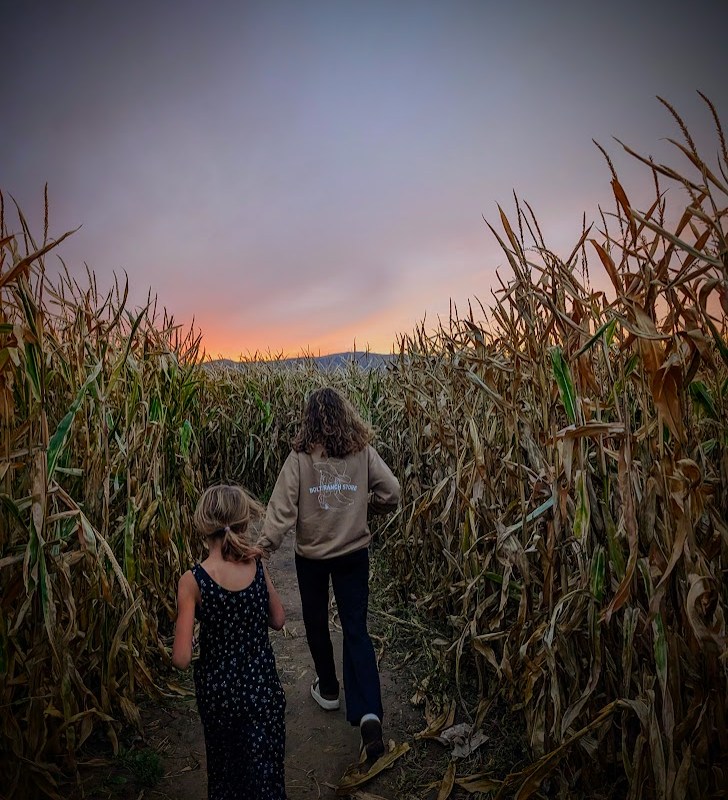
I’m writing a dissertation for the first time in my life, and it’s harder than expected. Not that I expected it would be easy. I am making progress, but it feels like it is often a few steps forward and a few steps backward. Instead of going straightforward in a line, I am winding myself through a maze with quite a few inevitable dead-ends.
Sometimes I write thousands of words and then immediately think how I am going to reframe the whole thing. And often, despite working on a chapter for weeks, I don’t have much to show for it at all, but I know I’ve been working, and I know that the work was necessary. Sometimes you don’t know where to go until you’ve explored around a bit.
But I’ve also felt terrified of my dissertation. I wondered at that, because I’ve written book-length projects before, and I’ve written academic papers, and there is nothing about this dissertation that I haven’t really done before. Except for one thing: I have a committee who will read this. I’ve never had a committee before, and they are made up of exceptionally talented people who are all more intelligent than I am. It’s intimidating, even though I know that they are there to help me.
I have written over 20,000 words on my dissertation, but I do believe I will rewrite and redo almost all of that, so it’s as if I’ve written nothing. And yet, the next 20,000 words will be a whole lot easier because of that foundation I have.
I think one conclusion is that when things take longer than you expect, it’s not necessarily your fault. Maybe you are doing something wrong, and maybe there are quicker ways of doing it, but you learn a lot from going the wrong way for a while. You build yourself up by making mistakes. Projects are not straightforward, and in the turns and curves and backtracks, they become much richer and more interesting.

-
Leaving and Staying

I have great respect for personal experience and where that takes people.
Almost two decades ago, when I started college and I was barely an adult, I thought that I wanted to stay a republican and not become a democrat. I was worried that the influences at college might sway my political views. But my opinions and political views changed, for lots of reasons. I went to political meetings and found myself frustrated with the attitudes I found there. I cared more about compassion towards others, and listening more than shouting. I left. I am very glad that I did not stick with my naïve18-year-old views.
Sometimes we leave. Sometimes we stay.
Commitment is often really helpful: it helps us get through the hard moments. When we commit fully to a goal or value, that commitment can help get us through some tough decisions. I once committed not to eat desserts for a month, and that commitment led to some health benefits and a greater sense of self-mastery. We might commit to not check social media, or to get out of comfort zone, or go to bed early. We can also commit to values, like honesty, truth, and love. These are good commitments.
But commitment can be harmful too if it’s not fully informed or is not adaptable to needed change. I don’t want to commit to some sort of dogma that I later learn is flawed and problematic. And because there is lot I don’t know, I need to leave myself open for change.
When I started graduate school, I was again worried that school would change my beliefs. I wanted to commit to where I was at right then, to be able to stay in the exact same beliefs that I had. But that sort of commitment felt wrong to me, and I realized that I needed to have an open mind and let me experience change me. There is so much I don’t understand; so much I don’t know yet.
I am religious person, and my faith is important to me, but it’s changed and evolved a lot over my lifetime. I was a good girl when I was young, and I didn’t have many questions. I didn’t rebel, and I didn’t swear, and I always did what I should. But now I do have a lot of questions, and I feel more rebellious and sometimes I push the boundaries. It’s not a big change, but it’s there.
Somedays I felt like I was on the precipice of leaving or staying–I wasn’t quite sure what was next. I know of really good people who have made radical changes in their beliefs and their religion. Most of it is intensely personal and can be painful as well. When our identities shift and change, we can feel untethered, uncertain, unknown to ourselves.
But there was one day when I realized that I was no longer on that precipice anymore. That I was staying. Staying for now and maybe staying for forever. But I don’t know where the future will bring. I will keep changing throughout my life.
Knowledge and belief and commitment are an experience that is not always linear. Sometimes we leave and then come back. Sometimes we stay when we want to leave. Sometimes we leave and feel relief. Sometimes we stay and find peace. Sometimes we go through a lifetime of all of that in various areas of our life.
It’s okay to leave, if that is where your journey is taking you. It is also okay to stay.
Most of all, it is good to let your journey be your journey. And in that process, we also do not judge other people for where they are at. We can realize that we’re all just trying the best that we can.
-
Who Gets Saved?

Salvation is a common concept in religion. It may mean lots of different things, but perhaps it can be summarized as individuals becoming something beyond their own selves. It is something that is not only desirable, but it is often the entire purpose of existence.
But who gets saved?
Do you need to believe certain things? Do you need to practice certain things? Is it available to all, or only to a few?
Many different religions and different denominations have different answers to this. For some, it seems that only a few get saved, those that are most righteous, or who engage in certain practices, or have a certain amount of knowledge (salvation is exclusive).
But that may seem unfair. Shouldn’t everyone at least have the chance to be saved? Some people want a more inclusive view of salvation instead.
And is there only one way to get saved, or are there many?
I’m a member of The Church of Jesus Christ of Latter-day Saints, and I have recently heard some misconceptions about who gets saved, according to that faith. Some people think that the Church only teaches that a few select people get saved, and the rest of the people are condemned, and that seems way too exclusive.
But I don’t think salvation is really exclusive. Much of the Church’s teaching about salvation are in Doctrine and Covenants 76. While Christian churches believe in heaven and hell, this section goes beyond that and describes three degrees of glory: a celestial, terrestrial, and telestial kingdom.
What is sometimes forgotten is that these are all degrees of glory, where everyone is in a good place. When this revelation was received, many struggled with it because it was seen as too universal. That everyone receives glory and salvation, not just a few. Instead of a division of heaven and hell that lasts for forever, heaven and hell are temporary, and what is eternal for almost everyone is some degree of glory.
While the degrees of glory are divided up into three categories, there are actually more degrees than that. And these degrees aren’t so much some sort of reward, but reflects what a person wants, and how they want to live forever.
So what if all these things are true?
- Everyone will have a knowledge of truth.
- Salvation is free and open to all.
- You can choose whether to be saved or not.
- So those people who do not want to be saved–they don’t want to become anything bigger than themselves–don’t have to.
This is an inclusive view of salvation, but it doesn’t mean that everyone gets saved in a certain way. Everyone who wants to and choose to be saved is. It’s there. It’s available. It’s inclusive and applies to everyone. Unless they chose not to. Or they only want part of it.
I think that offers a lot of hope.
-
Characters over plot

When you write a novel, you have to get the characters down or the plot doesn’t matter at all. You can have a really awesome plot with great scenes and cool action sequences and whatever, but if you don’t make the reader care about your characters, your reader will hate the book.
But that is just art mimicking life. Because in life, the characters (people) matter a lot more than the plot.
A lot of times we are focused on plot. That’s what a to-do list is, really. The actions that you go through in life. Our goals our often focus on the plot of our life: what we do and where we go.
But who we are with is more important.
I often remember times in my life not by what I accomplished, but by the people that were there. Family and friendship simply matter more than aspirations and achievement.

-
Slipping into extremes

One time in a class discussion I was leading, a conversation between two students started to get heated. They had opposing views: specifically, one student very much identified as a feminist and the other student did not. But I simply said that there were tradeoffs with both of their views. On one side, they would lose some nuance about unique, person and individual experience. On the other side, they would lose being able to look at and figure out solutions to systemic problems. It wasn’t that one person was right, and one person was wrong, but that they had different possible solutions to the same problem. Both were valid and might work, and both involved both some tradeoffs and different prioritizations.
But when I read things on the internet, I don’t often hear the sort of language. Mostly, I hear people telling others to pick one side or the other and that there is nothing good on the other side. I have heard this in many different discourses: politics the most strongly, but also in workplace, religious, and other environments as well.
Some problematic examples:
- We should not trust experts who came from an elite, problematic academic setting.
- Anyone who is pro-Palestinian is also antisemitic; anyone who is pro-choice is pro-abortion; anyone who is pro-LGBTQ rights is anti-family; anyone who is anti-racist is anti-white.
- If you are a member of a certain church, you are part of a cult and have been subject to brainwashing.
- MLMs are evil and anyone associated with them should be avoided.
- If you are crunchy, you are also anti-vax and part of the alt-right pipeline.
- Homeschooling is the only right way to raise your kids. -or- Homeschooling is child abuse.
The opposite of some of those views can also be problematic.
There is a lot of rhetoric that is simply “anti-” right now. Anti lots of different things, on all sides of the spectrum. But maybe we should just be anti-extreme? Maybe we should focus more on being good people instead of arguing and vilifying others?
I have a professor who gave some really good advice: until you understand the appeal of a different viewpoint, you can’t really argue against it. You have to understand enough that you can see why people think that way and that it makes sense. And then you can argue against that view.
I remember listening to a student who was arguing against a specific viewpoint, but did not yet understand it. That viewpoint seemed almost nonsensical to them, so it was easy to argue against it. But I knew and had talked to a professional who worked in that area, I realized that the student’s formulation was simply incorrect. They had completely missed this whole piece of the puzzle.
Not understanding other people and other views quickly leads to extremism. Extremism is not simply holding an extreme view, but thinking that any other view is incorrect, evil, or something to be feared.
Sometimes, when someone holds a reasonable view, they can get attacked by those who disagree with them. This sort of attack usually doesn’t lead to a change of a views, but to doubling down, moving to a more extreme side, and sometimes engaging in hate and bullying behavior.
We need to return to a better understanding of one another. I have my own views and my own opinions, but usually things are so nuanced and complicated. There are problematic views and solutions that don’t work very well, but there’s very rarely only one side of an issue and only one solution that would work. Even if truth is simple, life is still complicated.
There are good things that I am going to stand up for: I believe in compassion and care to individuals. I believe that we should support those who are struggling and need help. I believe that we should often refrain for judgment and get to know people first. I believe that the world needs to be improved, and that we should work on creating value and solving problems.
I believe that sometimes, I don’t understand an issue, and that I should spend more time listening.
I have tried to avoid snark and judgmental rhetoric that, while entertaining, is not uplifting or useful. I have tried to view sources and news stories that give multiple sides to an issue. I have tried to remember that things can get complicated and people make mistakes.
I want to see more respect in our rhetoric, a movement away from extreme views and towards more kindness to each other. We won’t always get it right, but we can keep trying.

-
Subscribe
Subscribed
Already have a WordPress.com account? Log in now.
 Heather Hoyt