-
Herd Behavior: Comfortable and Necessary

I don’t follow herd behavior. I think of myself as a creative and independent thinker. I don’t always go with the crowd and I do my own thing. You might think of yourself the same way.
Hah.
The truth is, we pretty much all just follow herd mentality most of the time.
When businesses started to open again after the shutdown, there was not a mask mandate where I lived. And every time I went somewhere, I looked around to see if people were wearing masks or not. If the majority of people seemed to be wearing masks, I would wear them too. If they weren’t, then I wouldn’t. I knew I should wear a mask, but I just didn’t want to feel awkward.
When the mask mandate happened, then everyone was wearing a mask and it was easy.
We follow herd behavior even when the information says otherwise.1 So we will literally know better, and then follow the crowd anyway. If everyone else is jumping off a cliff, chances are you will consider it for quite a while.

Is this always a bad thing? Not necessarily, because usually the herd is not jumping off a cliff. Sometimes herd behavior is safe and comfortable. We end up feeling nicely invisible, fitting in and doing what other people think we should do.
But other times, we really need to act differently. Sometimes the herd is not doing what is right, and we know better.
Find Your Herd
Instead of trying to be independent thinkers and have the willpower to always stand out, we should instead simply surround ourselves with better herds. No matter how strong you think you’re are, the pull to fit in is very strong.
We are social creatures and we need the support of other people. There are so many uplifting groups out there, and we can often choose our friends and the people we spend time with. We can realize that the desire to fit in and be safe and normal can be a really good thing–as long as we are choosing where we fit in and what group we are going with.
When we better understand our own values, we should work to create herd behavior that follows those values. We can work to make the world a better place, by elevating and expanding those groups that want to do what is right.
-
Plan Your Endings
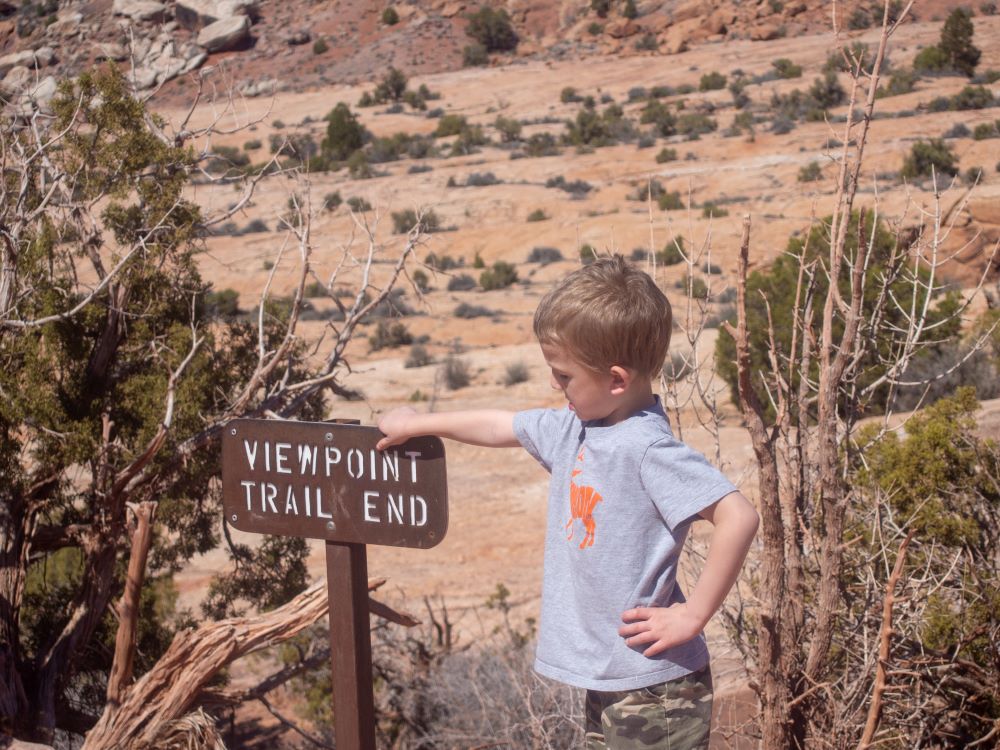
Plan your endings.
I woke up, feeling uncertain about the direction of my life. My to-list was very full: write a blog post, work on framing the back wall of my house my house, clean out my kitchen cabinets, read stories with my kids, talk with my husband, finish reading about econometrics, etc. I don’t have a career, but I have wanted a sort of clarity: should I focus on writing or economics or renovation or blogging or something else?
My main priority is to take care of my kids and my family, but then what do I do with my time (especially now that I actually have time without my kids)? How do I contribute to my community and the world?
As I thought over all the things I wanted to do, I realized that everything that I was thinking about was a project that would someday end.
I need to plan for those endings.
Looking back on my life, I am very satisfied with the projects that I started and finished, such as writing novels, , web design, or learning the piano and organ–I don’t do those things very much anymore, and I don’t feel any pressure to do so. They had an ending.
I am studying economics right now, but I will finish my current degree in December. My home renovation will eventually be completed. I will finish the book I am writing.
Instead of saying generalizations that I want to write or study or renovate, I feel a lot happier when I make it a more specific project with an ending: I am going to work on writing this specific book. I am going to renovate this house. I am going to get a degree.
Goals are so much more motivating when they have an ending to them.
Even when we think about long-term projects, like being in a career for years and years, eventually all of it will end.
Our biggest accomplishments and the things that we are most satisfied with eventually end, and that ending is the frosting on the cake and the wrapping on the present that made everything worth it.
Because who we are is not what we do. I get so discouraged when I think about what I want to be when I grow up. So I change the question. I actually asked my son the other day, “What is one thing you want to do when you grow up?” He said he wanted to be a fireman. And that seemed like a good answer–he could be a volunteer firefighter, or work seasonally on wildfires–and it would end, and he would go and do something else.
Make Exit Plans
If you start a business, plan for the end. What happens at the end of it? Do you hope to sell it, for example? Pass it down in the family? Or maybe you realize it’s a temporary solution and eventually you’ll just have to close up shop and move on.
If you start a career, make an exit plan. When do you want to retire? What promotions or other job opportunities interest you? Is there any more education could you get? What other jobs are interesting to you?
What is your exit plan for vacations, hobbies, where you live, temporary relationships, leisure? When do you want it to end and how do you want it end?
What do you want the ending of your entire life to look like?
I don’t want to do one thing in life. I like doing lots and lots of things, and that’s okay. There are times when I will focus on just one thing for a time, and then it will end, and I can move to something else. I don’t have to live my entire life all at once. My identity does not need to be permanently categorizable.
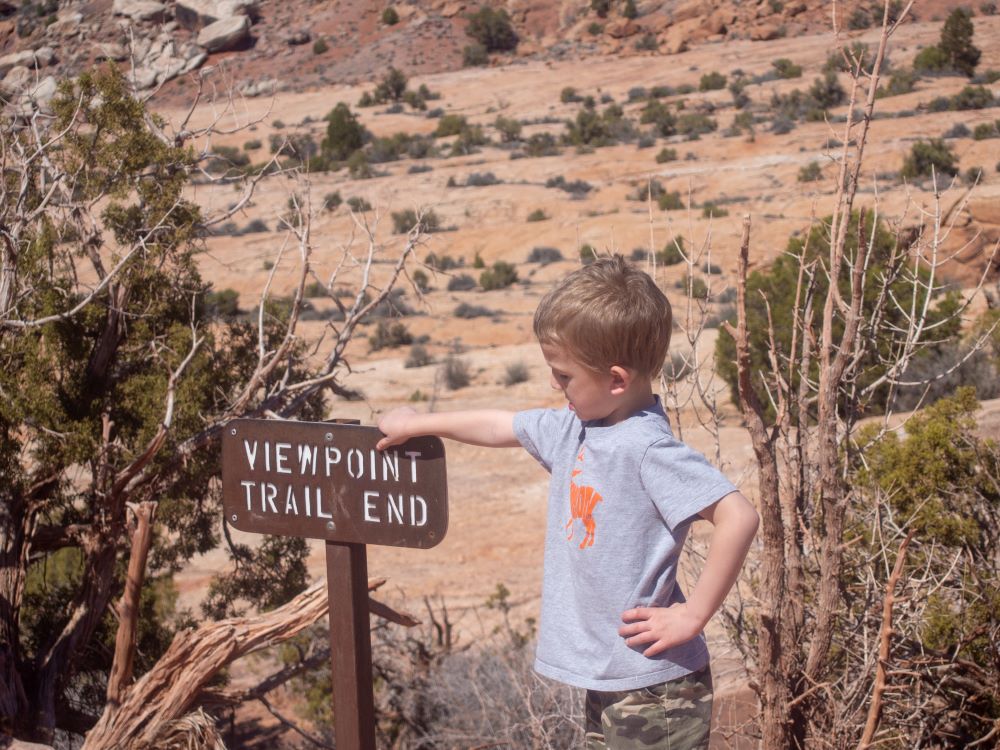
What is the best work I can do in this temporary season of life–and where does it end?
Further reading:
-
Honesty: How to Fix Your Life

Honesty can solve a whole lot of problems.

I always thought I was a very honest person: I never told lies or cheated or tried to steal anything, so I was good.
But here’s the thing: I still very much care what other people think about me, and sometimes dishonesty creeps in as I fail to admit my shortcomings and mistakes, both to myself and to others. Admitting what I do wrong has been my biggest struggle with honesty. I want to be an awesome person that doesn’t make many mistakes. But I am not: I yell at my kids, I pick my nose, I get discouraged, I waste time, and I support political candidates without knowing much about them.
My lies are plentiful: I want to hide things from the building inspector. I pretend that I heard someone speaking when I wasn’t paying attention at all. I tell a friend I’m doing fine and everything is great when it really isn’t. When I don’t know something, I fabricate information. And at the store, when my kid breaks the top off a bottle of soap, I stick it on a random shelf and walk away.
Some of these may be trivial. But when dishonesty starts to creep up in small ways, it becomes a lazy way to deal with hard things. Dishonesty just pretends that those hard things don’t exist.
But honesty is when I have to face life as it actually is, giving up my idealized version of reality.
So how can honesty solve life’s problems if it seemingly makes life harder? Because denying the truth doesn’t make the truth go away, and when I face the truth, then I free myself.
Honesty can help solve depression.
Almost all depressing thoughts are lies.
LIES: I am not worth anything. No one likes me. Life is too hard. I can’t do this anymore.
TRUTH: I am worthwhile. Lots of people like me. Life isn’t too hard (what does that even mean, anyway?). I can do it, and I will do it.
Honesty can solve anxiety.
Anxious thoughts are lies.
LIES: This will never go away. People are looking at me and judging me. Bad things are always happening everywhere. I’m stuck here forever.
TRUTH: Everything does go away. People are often too caught up in themselves to notice others very much. Good things happen just as much as bad things.
Honesty can solve parenting difficulties.
I lie so often to my children, and they respond a lot better if I just tell them the truth.
LIES: Clean your room or else. I will take that away in five seconds. If you do not do better, I will punish you. You are so difficult. Because I said so and that’s all that matters.
TRUTH: I love you. I’m proud of you. This is really hard for me right now. I don’t want to yell. I make a lot of mistakes. The house is messy. I don’t want to clean it alone.
Honesty can solve problems at school or at work.
LIES: I don’t have any questions. I understand everything. Sure, I can do that. I haven’t done anything wrong.
TRUTH: I have so many questions. I don’t understand what is happening. I’m not sure I can do that, but I can try. I messed up and I will try to make it better.
And honesty can help solve everything else.
Do you have a job interview? Just be completely honest and then there is no reason to be nervous.
Did you make a big mistake that’s keeping you up at night? Just admit what you did wrong and ask for help.
Do you have unpopular opinions? Don’t make excuses. Stand up for what you believe is right.
Are you angry with someone for some reason? Talk with them and see if you can calmly work it out.
Want to improve your relationships? Stop gossipping, tell the truth about others, and tell the truth about yourself. Be vulnerable.
Truths
There are a few truths that can get you through extremely difficult times:
- First, that you are always worth something.
- Second, that everyone, including you, makes mistakes.
- Third, that so much of life, including mistakes, is temporary.
When you face truth, you can find peace by releasing the expectation of perfection and finding true meaning in life as it actually is.
Further reading:
-
Being a Parent
Parenting is a concept where we act in order to have results. We parent our children so that they can go to bed, do well in school, act in certain ways, and think how we want them to think.
But what if we switch from parenting our children to being a loving parent? Instead of working to have certain outcomes (the verb form–parenting), we instead focus to be the best we can, regardless of what happens next.
Today at bedtime, I wanted my kids to calm down and go to sleep. So I decided to employ some good parenting techniques: we played a few games, I read stories, sang songs, and tried to show love and attention to my children. But I wanted results. I was parenting: if I did it right, then my kids would calm down and go to sleep.
Do you know what happened? They would not calm down. They giggled and they would not listen. I was trying to do the right thing, or so I thought, but I was doing the right thing only for a certain conclusion that was not happening. (And then I got very frustrated, which did not help anything.)
Parenting (working for specific results) is not effective because kids are people and people make choices. That means that even if we parent perfectly, we may not ever be able to get our kids to think and respond in the ways we want.
But being a better parent is not dependent on the outcome. It’s just doing what is right no matter what happens. If the kids are misbehaving and disrespecting and being horrible, I can always be a loving parent. I can control what I do–and this is a lot easier if I’m not attached to results.
I have to let go of my parenting goals and those expectations I want. Which means I have to stop thinking and googling things like “how do I make my kids (go to sleep, do well in school, stop hitting each other, listen to me, respect others, etc.).” I have to realize that my kids will make choices that I do not like. And that they will do this a lot, and I cannot control it.
I can guide them, love them, and teach them. There can be consequences to actions. I can tell them what is right and wrong.
But at the end of the day, I will never be able to force them to go to sleep (or do so many other things). Instead, I can only force myself to love them even more.
-
It’s not that complicated, except for it is
Everyone has been talking about racism lately. I have been listening and thinking, but I have largely been silent on the internet, though I have talked about it with others. I have felt unsure of what to write–and I don’t tend to just go along with what is trending. I want to be more genuine than that.
I talked with my kids and things seemed really simple: we need to treat people with kindness and fairness. People haven’t done that, and we need to do better.
But it isn’t all that simple. This is about police brutality right now. That’s where the conversation started. I support police reform–my husband was a law enforcement officer for a few years, and I witnessed problems with training, policies, and attitudes. Black lives matter, and there have been horrific and horrible acts, many of which do not make the news and do not ever find any justice or resolution.
But in all of that, there are some issues without clear solutions.
We need to learn to compromise and not maintain all-or-nothing thinking. Public policy is rooted in ethical assumptions that can be complicated–do we value freedom, equality, justice? What do we value most? What does freedom and equality and justice even mean? These are also important questions and we can’t skip over them, assuming that they have easy answers.
And there are many things missing in the conversation, such as gun control, education, the support of families, and building up better communities.
I don’t always have the right words, but not many people do. I feel uncomfortable in my own experience sometimes, uncertain that I have something to say that is helpful or relevant.
There are a lot of problems in the world, and we can’t fix everything at once. But we can just try to be a little better, and to support good causes, and to be compassionate to others even if they don’t agree with us on everything.
-
The Only Life Hack That Works
I just finished reading a book about habits. I guess part of me wanted to read the book and then immediately have better habits. But it doesn’t work like that.
I really love self-help books. But self-help books don’t change my life. If I read a book about habits, I still have to have the determination to change my own habits. If I read a book about marriage, then I have to do the work to improve my relationship. If I want to improve my parenting, I have to try better to treat my children with more love.
I can’t read something and have it immediately change my behavior. While thinking about behavior in a better way and educating myself can help me improve, there is no one idea or one method that will help me become the person I want to be.
Except for there is one thing: following Jesus Christ is the one solution to fix bad behavior, heal relationships, and become the person that I want to be.
When I am trying to better follow Jesus Christ, that is when I start to make the biggest progress in my life. I feel different. I am happier and my capacities increase. The pain from past mistakes goes away and I am left with peace. I find increased patience and love. Through the atonement of Jesus Christ, I find the strength and ability to overcome any of life’s challenges.
-
Gulf of misery and endless wo

For our family scripture study, Dillon started reading a familiar scripture:
And now, my sons, remember, remember that it is upon the rock of our Redeemer, who is Christ, the Son of God, that ye must build your foundation; that when the devil shall send forth his mighty winds, yea, his shafts in the whirlwind, yea, when all his hail and his mighty storm shall beat upon you, it shall have no power over you to drag you down to the gulf of misery and endless wo, because of the rock upon which ye are built, which is a sure foundation, a foundation whereon if men build they cannot fall. (Helaman 5:12)
As he read, I realized I hadn’t paid much attention to the scripture. I just thought it was about building your foundation on Jesus Christ: you keep the commandments, you build on the rock, and you’ll be okay. But there is more to that scripture.
I suddenly connected to the phrase “gulf of misery and endless wo,” because I have felt that way before: discouraged and miserable and horrible. I thought I was building my foundation on Jesus Christ–I read my scriptures, pray, repent, and keep the commandments. Why do I get so miserable sometimes?
Temptations can be different than I expect. Sometimes I am tempted to lie, steal, cheat, waste time, or be mean to someone else. But more often, I am tempted with doubt, questions, pride, and discouragement.
What if my emotional foundation was built upon Jesus Christ? What if I was able to build patience and faith and hope–so much so, that no matter what happened, I would never be discouraged because I believed in Jesus?
My faith is often too reliant on my circumstances, and when things are difficult, I wonder if God cares. But He does care, and he provides for me over and over again. Maybe it isn’t in huge miraculous ways–in fact, the most powerful way that He helps me is that when I rely on Him with humility and gratitude, I never feel discouraged or miserable, no matter what happens to me. I feel happy.

-
Some ideas I’ve had

Sometimes I think a lot about ideas sometimes. Maybe some of these thoughts will be interesting. Maybe you won’t know what I’m talking about. Do you ever have random ideas that you don’t know what to do with?
***
When I’ve had some spiritual questions and thoughts and doubts, I’ve often thought that spiritual knowledge functions differently than rational knowledge. I can’t prove spiritual things through being rational, and if I reject spirituality based on rationality, then I have to throw out spirituality in general. The best way to seek spiritual knowledge is to ask God and to trust that answer.
***
Null hypotheses are sort of how we operate in life in general. We assume something to be true, and then we have to find enough evidence to convince ourselves we are wrong. We usually don’t set out to learn something; we set out to prove something. But sometimes we are wrong and need to reject the null.
***
So utilitarianism tries to maximize happiness, but you could have an ethical system that maximizes something else, like freedom or justice or something like that. And you could also have an ethical system were you could maximize ethics–so if a choice maximizes good choices, that would also be a good choice.
***
Money is really only an incentive for the utility it brings us right now instead of the utility it will bring us later. We save because of the security it brings us now. We say we save for the future, but we are really just saving for the future we are imagining in our own head, not the actual future that is unknown.

-
Change

We were putting on our masks to go to the grocery store. As we went to check out, we waited as the cashier sprayed down the register. Things are different now.
I remembered how 9-11 changed how you fly on an airplane, and I thought that maybe certain things will always be a little different now. Maybe we will disinfect things a lot more often. Or wearing face masks will be more common. Maybe people will stay home more when they get sick. Perhaps in 20 years, things that seem weird now will be common and people won’t think about it much.
We adapt to change so quickly sometimes that we forget that the change ever happened.
Do you know that bananas used to be different? There was a certain variety of banana that everyone ate, and then they all died, and now we have different bananas.
Kodak wanted to be the best filmmaker around, but then digital photography came along and Kodak basically went out of business.
We used to call and talk to people on the telephone. Now I connect to people without talking in a myriad of ways on my phone. And I can do calculus on my phone now, if I want to.
Statistics used to be doing manual calculations and now it’s basically learning how to use coding to manipulate data.
I used to live in a small town when I grew up; now that town is huge and all the traffic patterns are different.
Our lives are always changing. And it’s okay. Change can be good or bad or neutral, but things always change.
Except for the few things that stay the same: ancient trees, rocks, mountains, religion.
And the nature of life sort of just stays the same. We are born, we live, we struggle, we die. With all of the changes that happen, our struggles and our joys have always been the same–we strive to do the right thing, to help each other, and we make mistakes and we fight, and we seek meaning and purpose and happiness. We increase in knowledge and then make stupid mistakes anyways.
Things have been changing. And yet, so much has stayed the same. I am still here, and in a shifting landscape, I find that the most important things are still here with me.

-
A poem for Sunday

Blossoms bloom.
Petals unfurl towards sunlight.
I rarely notice until
they are almost gone.Sometimes, I find the blooms
sailing down to the water,
floating and then washed away.Everything right in the world,
because temporary blossoms
keep coming back.
Their demise
brings fruit and that fruit
brings more blossoms—
years passing into lifetimes.
-
Subscribe
Subscribed
Already have a WordPress.com account? Log in now.
 Heather Hoyt