-
Trust

In one of my classes, we’ve talked a lot about trust. We covered three basic account of trust:
- Trust is attributing good will to other people.
- Trust is about keeping commitments/contracts.
- Trust as an unquestioning attitude .
And I came up with my own version:
- When you trust something or someone, you think it’s not dangerous and won’t harm you.
I was leading a class discussion and I asked two questions: what do you trust that you probably should not trust? And what should you trust that you probably should?
It was easier for us to find answers to the first question. Social media. Smart phones. Bureaucracies that don’t care about you. Grades.
But people didn’t really have an answer to the second. Here was my answer: People who love you, who have your best interest at heart, and who give you really good advice and feedback. And here’s another answer, that I couldn’t say in class: we often can trust God a whole lot more. We can not question his plan for our life, and trust that he will take care of us.

-
Thoughts on being good enough

It’s so easy to think you aren’t good enough. Your to-do list never gets done. You have persistent habits you don’t like. You make mistakes. You gets harsh feedback. You have trouble focusing. You say the wrong things.
But the people who love you don’t just see your mistakes. They see you. They accept you, with all your flaws and your strengths. You are a person, and that means you are wonderfully complicated. You can’t be easily quantified into a rating of good or bad, likeable or not.
And it’s okay to recognize that you will not only make mistakes, but everything you do might be flawed in some way. Perfection is impossible, but humility can be a powerful force.
A woman gives the most amazing (though flawed) presentation even though she didn’t think she was any good at presentations. She showed up anyway, and blessed the lives of others.
A student gets a grade based on a rubric even though he has some of the most insightful comments in the discussions at class. He keeps trying to do every better.
A friend goes up, even though she is exhausted by health problems, and goes to visit someone she loves.
An artist, unsure of herself, posts a picture that she made that makes someone feel a little happier inside.
Those small moments matter.
A lot of your growth will come from the humility and vulnerability when you stop trying to be good enough, and you just show up with who you are.

-
3 Lessons in balance
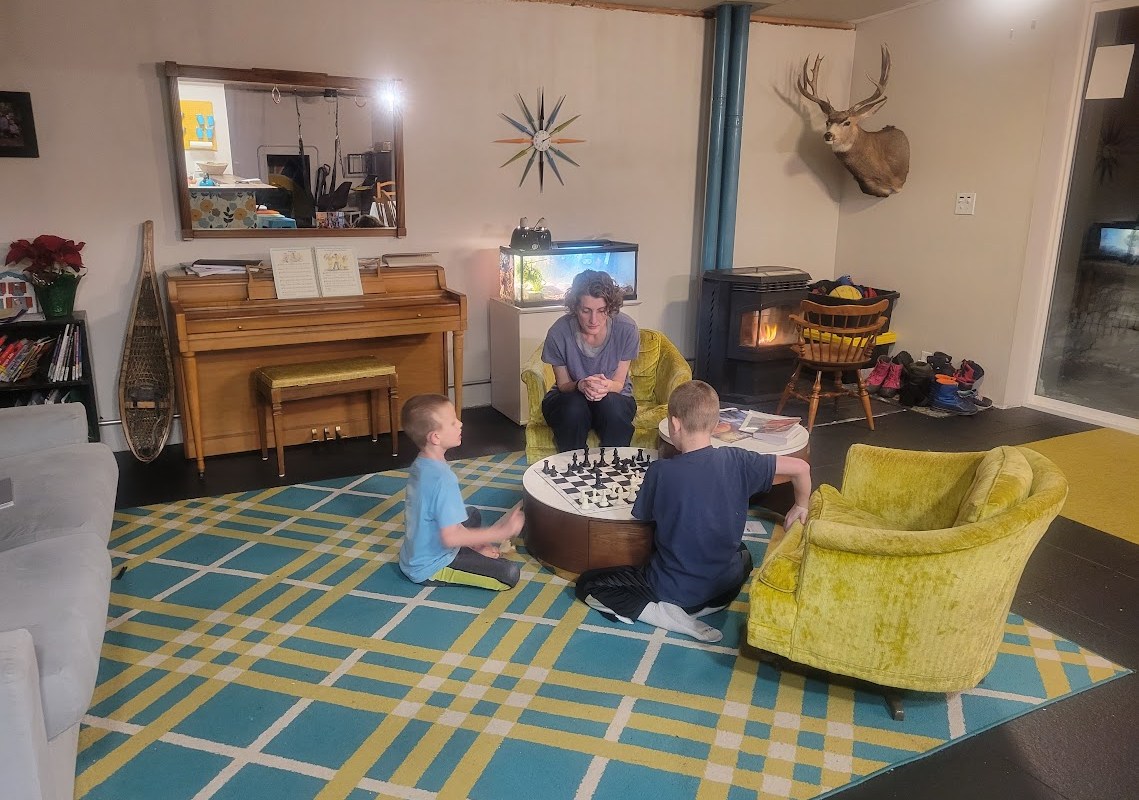
1. If you eat the frog first, you may not have energy to do anything else. So do the smallest, most important things first. Sometimes I just want to get something done, but I am happier when I exercise, read scriptures, eat breakfast, spend a bit of time with my kids and my husband before I get started on my to-do list.
2. “I can’t be intentional if I’m wasting my bandwidth on thinking about what people might be thinking about me” (Dillon Hoyt).
3. Setting boundaries includes taking time to care for others, time to care for yourself, time to spend with the people you love, time to focus on work, time to move your body, time to cook and eat, time to be outside, time to create–and only one thing at a time. I have a big project due soon, but I’ve had to set the hours in which I’m going to complete the project. I don’t want it to take over my whole life.
-
I’m not that busy

I’m not that busy. I’m not too busy to respond to your text message. I’m not too busy to say hello. I’m not too busy to see how you are doing. I’m not too busy to say yes. I’m not too busy to visit and talk.
I can help you out. I can answer a question. I can show up. I can volunteer. I can play with you. I can hold you if you need comfort. I can smile. I can listen when you need to vent. I can offer advice when you’re confused about what to do. I can go and have fun with you.
I can laugh. I can create. I can learn.
I am not too busy with doing stuff. I have time for the people who are most important in my life: you. You matter. And I have time for you. I will make time for you. All that other stuff can wait.

-
Defining who you are

I’m a PhD student and a very common question I get is what my area of research is. People expect you to specialize in order to learn lots of stuff about one smaller area so that you can contribute to that area. I don’t find that problematic, and I’m working on determining where I want my research to go. The first semester, I just wanted to get my bearings and learn if I could actually do research and write academic papers (the answer, I discovered, was yes, I was competent).
But even when I figure out exactly what I want to write my dissertation on, I am not defined by my area of research. I like lots of different things. And I like more than philosophy.
I am not a philosopher. I am more than that.
I don’t have to define who I am. Who I am is more than what I can define. It’s too big. Who I am is all of my existence, not a summary. The summary would inevitably leave out some important bits.
And it’s okay to summarize. I summarize when I’m introducing myself to people. I summarize in my journal and my blog. But it becomes problematic when I start believing in that summary more than believing in all of me.
-
2022 In Review

I feel so blessed this year in so many ways. It was just a good year. I’ve had a lot of hard years to get to this point, so I feel so grateful. A lot of things I was working towards for so long have been realized in amazing ways. I own a home. I am building a career now. My kids are older and much more self-sufficient. Life changes–and sometimes it gets better.
I started graduate school this year. I always wanted to get a PhD, but it more seemed like a dream, not something that would actually happen. And now I am in a program, starting my research. I feel incredibly lucky that things worked out–that I ended up in a place where I could do this.
We are almost done with our home renovation. We actually finished rooms this year. Lots of rooms. Bathrooms. Laundry rooms. Toy rooms. Office. Bedrooms. Living rooms (except for the ceiling). We are really close to finishing and I LOVE my home now. It’s the first time I really feel like I have my own home. We also worked a lot on the yard–doing an in-ground trampoline and a clubhouse.
I did the Proper Mountain Woman Club for the summer and it was life changing for me. I usually just set goals based on what I want to get done or think that I should do, and they often feel like an obligation. But this was a program where I did things just to do the things. It changed how I set goals and thought about my own progress. I became more well-rounded by recognizing the good I was already doing and being able to try and explore new things. I now do a Discord server with my sister where we share our goals and accomplishments with each other. Being able to share and recognize the accomplishment of small goals has really led me to be a lot happier.
We had a lot of fun as a family this year. We went on a vacation to the woods and the beach, but we also did a lot of hikes and adventures–going to a baseball game, trampoline park, corn maze, swimming, camping etc. My favorite moments in the whole world are being outside with my kids and my husband, whether we are throwing snowballs at each other, climbing rocks, exploring somewhere new, sledding, swimming, building a fire–those small moments are simply the best.
And I loved going backpacking for the first time in a long time. And snowshoeing. And climbing mountains (well, most of a mountain). We even went tubing down a river and hiked through a cave. And we have a new cat and a new turtle.
I made a lot of new friends, from a writing group, a writing workshop, going to school, and the parents of my kids’ friends as well. All those new relationships mean a lot to me.
I improved as a person, in getting better habits. I did weekly piano lessons with my kids, for example. And with the added structure of going to school, my mental health improved a lot. I found better boundaries between my family life and my own career.
The small moments are often the best moments. Recognize the good you do in your life. Write it down! Share it with others!
I celebrated my life more this year, and it led to a great deal of happiness for me and my family.

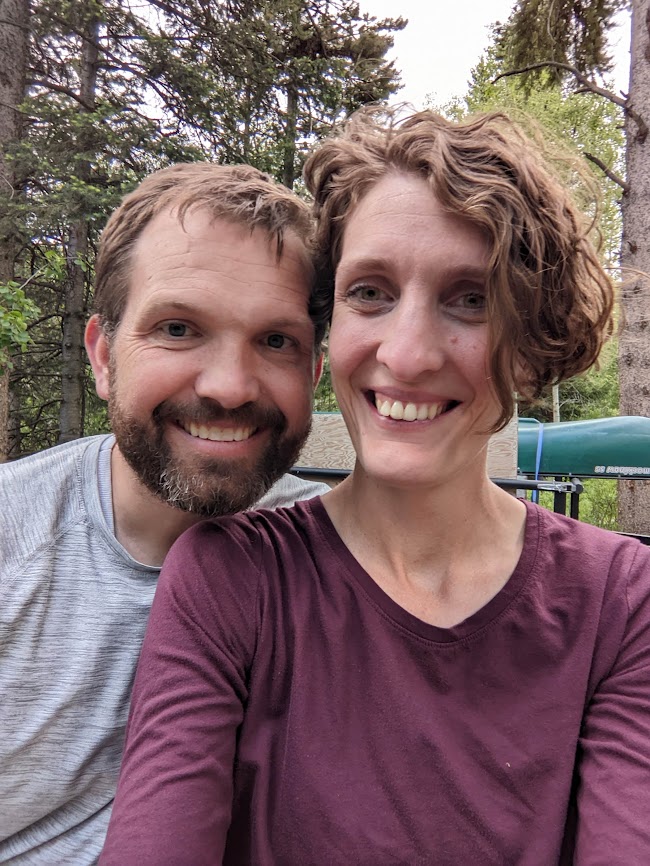

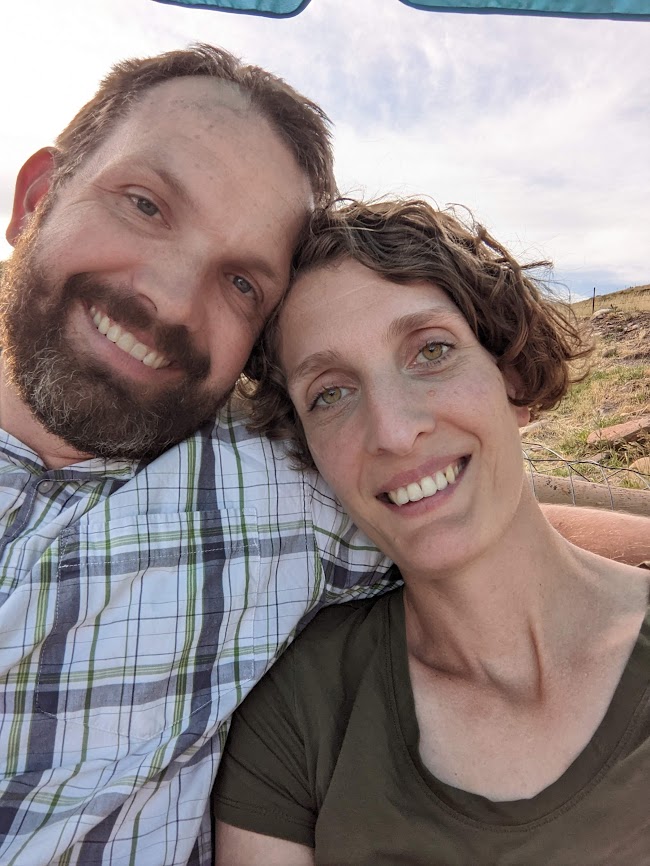

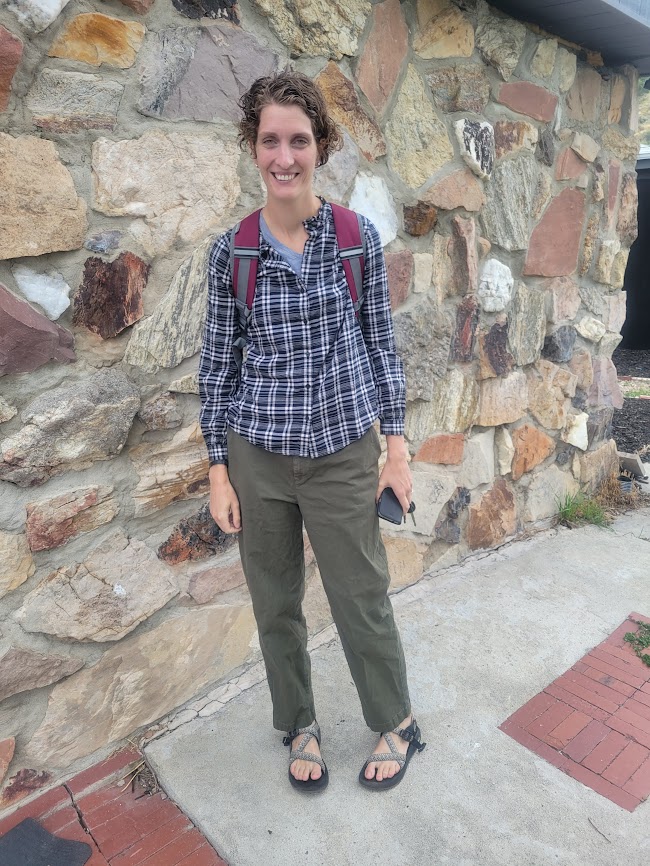
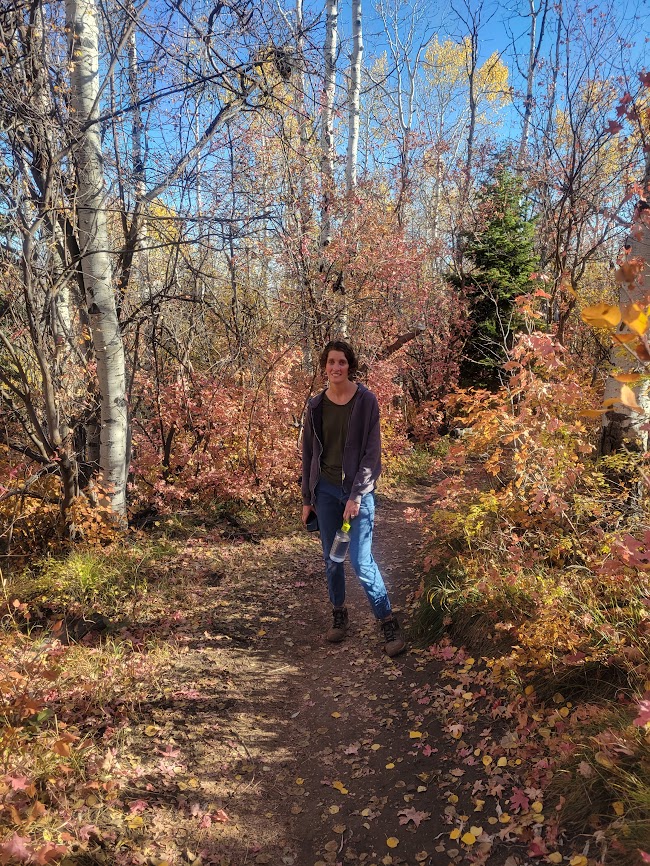

(I do have many lovely pictures of my kids too, but I try to keep them a bit more private.)
-
Christmas Dissonance

At a writing group the other day, we wrote about a Christmas memory that was discordant. Christmas is often this happy time of year, where we share happy memories and miracles, but we explored the other end of Christmas, when that expectation of happiness is instead met with difficulty.
One writer shared about when she no longer believed in Santa Claus, transitioning from childhood to being a teenager. The presents weren’t fun anymore, and her parents gave her a doll that she hated.
Another writer shared about a large cousin present exchange, and the strong feeling that she didn’t want to hurt anyone’s feelings by being disappointed. She cared more about others’ feelings than herself.
And then there was a heartbreaking story of a family trying to find happiness on Christmas morning–but instead of seven children, there were only six.
I thought about the Christmas not too long ago when we moved on Christmas Day. I made frog eye salad because I make it every Christmas. We put it in a cooler and we pulled over to a rest stop and ate frog eye salad for Christmas lunch with plastic forks, straight of the bowl. It snowed the day, hard, and we got into our house late and exhausted.
There was another Christmas, a few years before, where I was dealing with mental health issues and did not have a handle on my emotions. I was overcome with anger and ended up throwing the frog eye salad in rage–it landed everywhere, even on the Christmas tree.
Why was I making frog eye salad for Christmas when it was tied to so many difficult times?
Because I really like frog eye salad. It’s a weird combination of custard and acini di pepe pasta and canned fruit and whipped topping. Yes, I’ve eaten it during hard moments, but it still tastes good.
Sometimes Christmas doesn’t need to be the most wonderful time of the year. Sometimes it’s hard and difficult. Sometimes we cry more than we laugh. That’s okay. No Christmas is really perfect. We’re all still people trying our best and failing a lot. But we still keep trying. In all that trying, it’s okay to just let life come in all it’s imperfections.
And if you are going through hard times, it’s good to remember that your favorite food can still taste delicious.
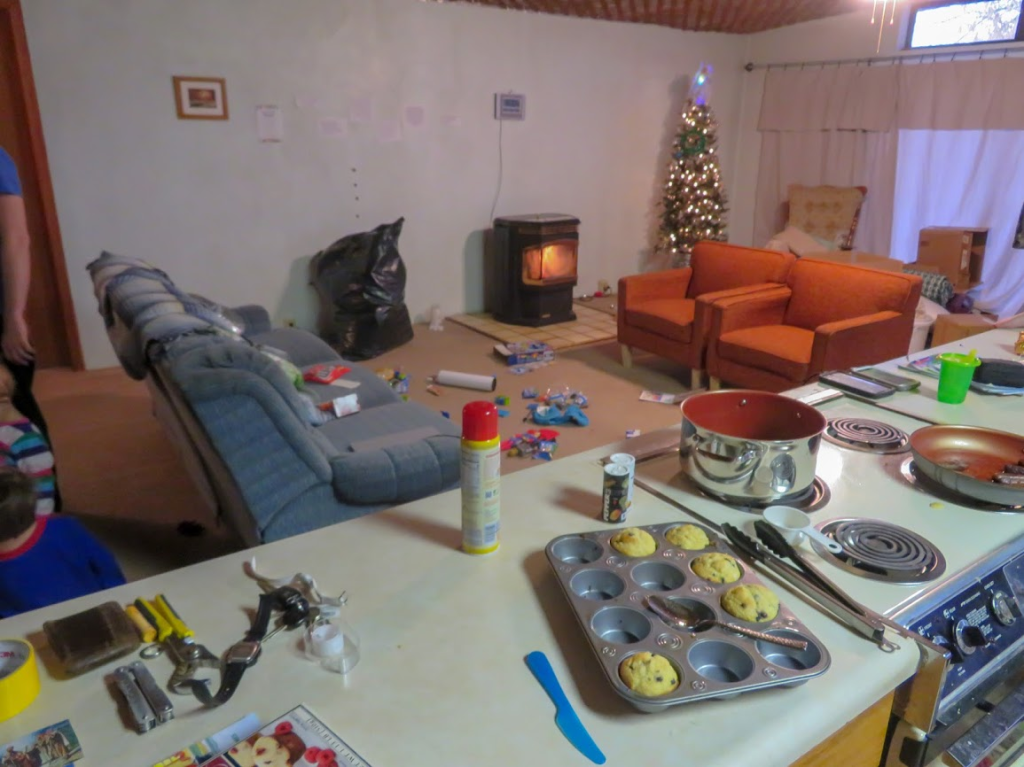
Christmas Morning 2018–the year we moved on Christmas Day -
Accepting Feedback

A while ago, I got some brutal feedback from people in two different areas of my life. I think one person said, “I don’t want to be discouraging, but . . .” He then proceeded to be say something very discouraging.
It was hard to hear. To be honest, some of the feedback I didn’t even fully understand, making it that much more difficult. I’m not even good enough to understand what I’m doing wrong . . .
I’m not great at accepting feedback and criticism. I think I do okay, but then when it comes down to it, I want to be praised. I want to be doing a good job. I want approval. And that’s actually a good thing! Those desires help me work hard and learn.
But I’m not going to get all the approval that I want. Other people don’t need to believe in me. They might have opinions and feedback, but they think about me a whole lot less than I think about myself. They aren’t going to see everything in the way I do. And it is easy to see flaws when you are being a critic–and a lot harder to actually fix them as a creator.
I need to have a higher opinion of myself than other people do. Because believing in myself helps me keep going–it gives me the optimism to keep trying, over and over again.
So what do I want to do when I receive criticism?
First, I cry if I want to. Crying is a good response, actually. I let myself respond emotionally and accept and validate what that response is.
Second, I want to give myself some time to process. My first reaction is filled up with emotion, which is fine, but I need to let those emotions subside before I go on to the next step.
Third, I decided whether I am going to accept the criticism or not. Sometimes I decided I’m going to make changes, but sometimes I decide that I can ignore what they are saying.
Finally, I start to make changes. Often, those changes don’t need to be major. Minor adjustments can make a huge different.
And I want to try to avoid getting angry or upset at the person giving criticism. I can blame them very easily. I can say that they don’t know what they are talking about. I can say that they are wrong and insufficient. But this way of thinking doesn’t help anyone. I can choose to ignore or accept what they say, but either way, I don’t need to judge them for their words. That just adds insult onto injury.
I know that I will receive a lot of feedback. And I want that feedback to help accelerate my own growth and learning. But it’s good to accept that feedback will always be hard to hear, and to make sure I give myself the time and space to deal with it appropriately.

-
Jonah

Can I run away from the commands of the Lord? Can I flee when it is too hard? Board the ship, pay the fair, sail away.
But the Lord is there, in the wind on the sea, in the violence of the storm. Even when I sleep, the Lord is there.
I cannot awake and pray for deliverance without facing my own shame.
Throw me into the sea. The Lord found me on this boat, and I cannot run from him, and I will face the stormy waters.
Off the boat, and into the Lord’s hands. I do not deserve to live.
But the Lord saves me in the belly of a fish, and in the deep I pray to him: I remember you, Lord.
Onto dry ground, go and do what the Lord commands–but I do not yet understand his compassion.
For the Lord saves even those who run from him.

-
Treat Everyone As Your Equal

At a writing conference, I asked a writer about advice on networking. And she said to treat everyone as your equal.
There are certain situations you get it that have a hierarchy: at a writing conference, there are presenters and attendees. In college, there are teachers, graduate students, and undergraduates. Often, you are surrounded by people who are not on the same plane as you are.
But treat them as your equal anyway.
Treat the grocery store clerk as your equal. Treat your students as your equal. Treat your bosses as your equal. Treat your children as your equal. Treat random strangers as your equal.
When you start to really love other people and see their worth, you can make better connections with them. Your conversations are fuller and more vibrant. You gain empathy and can help others who need it.
You can learn together. You can feel like you are on the same team. You can find better confidence in yourself and better ability to encourage others.
Treat everyone as your equal.

-
Subscribe
Subscribed
Already have a WordPress.com account? Log in now.
 Heather Hoyt